
The Science of Peptides for Skin Regeneration: A Physician’s Perspective
In the evolving landscape of regenerative medicine, few molecules have garnered as much clinical interest as peptides. As we move through 2026, the application of bioactive peptides in medical aesthetics has shifted from simple topical additives to sophisticated, targeted therapies designed to modulate cellular behavior. At Richmond Anti-Aging Clinic (RAAC) in Richmond, BC, we prioritize a science-first approach to skin health, led by Dr. Charles Jiang, a CPSBC-registered physician with over 29 years of clinical experience.
Understanding how these short chains of amino acids function at a molecular level is essential for any patient considering this intervention. Learn more about Peptide Therapy to understand the foundational role these molecules play in our clinic's protocols.
The Biochemical Mechanism of Action
Peptides are essentially fragments of proteins, consisting of short chains of amino acids (typically 2 to 50) linked by peptide bonds. In the context of human physiology, they act as signaling molecules. They are the 'messengers' that bind to specific cell-surface receptors, triggering a cascade of intracellular events.
Cellular Signaling Pathways
When we apply or administer peptides, we are essentially hacking the body's natural communication system. The primary mechanisms include:
- Signal Peptides: These molecules, such as Palmitoyl Pentapeptide-4, trick the skin into believing it has undergone a breakdown of collagen. In response, fibroblasts (the cells responsible for structural integrity) are stimulated to produce new collagen, elastin, and hyaluronic acid.
- Carrier Peptides: These deliver trace elements, such as copper or magnesium, to the basement membrane of the skin. A prime example is GHK-Cu (Glycyl-L-histidyl-L-lysine copper), which is vital for enzymatic processes that stabilize the extracellular matrix.
- Neurotransmitter-Inhibitor Peptides: These target the neuromuscular junction to reduce the release of acetylcholine, subtly softening the muscle contractions that lead to expression lines.
- Enzyme-Inhibitor Peptides: These interfere with the enzymes that break down structural proteins, such as matrix metalloproteinases (MMPs), thereby preserving existing collagen density.
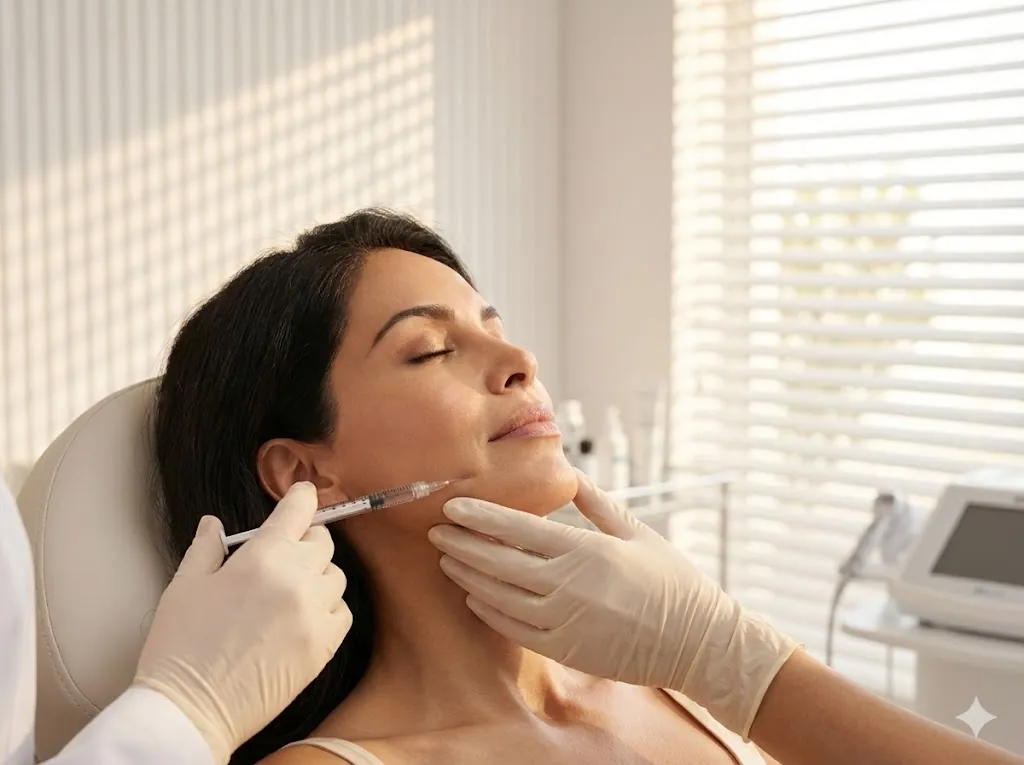
Dr. Charles Jiang emphasizes that the efficacy of peptide therapy is highly dependent on the delivery system and the molecular stability of the compound. Without expert oversight, these fragile chains can degrade before reaching their cellular targets. Book a Consultation to discuss a medically supervised regimen tailored to your biology.
Clinical Evidence: A Review of the Data
To understand why peptides are a cornerstone of modern aesthetics in Richmond, we must look at the peer-reviewed evidence supporting their use.
GHK-Cu and Tissue Remodeling
One of the most researched peptides is GHK-Cu. In a study published by Pickart et al. in the Journal of Peptide Science, researchers demonstrated that the GHK peptide has a unique affinity for copper, forming a complex that promotes the activation of wound healing genes. The study highlighted GHK-Cu’s ability to increase the expression of collagen and decorin, while simultaneously modulating the inflammatory response. This makes it a potent tool for both anti-aging and post-procedure recovery.
Collagen Synthesis and Extracellular Matrix Stability
Research conducted by Siméon et al. in the Journal of Investigative Dermatology investigated the effects of tripeptides on human dermal fibroblasts. Their findings indicated a significant increase in the synthesis of glycosaminoglycans (GAGs), which are essential for skin hydration and structural resilience. This clinical evidence supports the use of bioactive peptides for improving skin thickness and elasticity.
Comparative Efficacy
In a comparative study by Gorouhi & Maibach in the International Journal of Cosmetic Science, the efficacy of topical peptides was evaluated against traditional agents like tretinoin. While retinoids remain a gold standard, the study noted that certain peptides provided similar improvements in fine lines and texture with significantly lower incidences of irritation and photosensitivity, making them an excellent option for patients with sensitive skin profiles.
Comparing Peptides to Adjacent Mechanisms
While many treatments aim to rejuvenate the skin, they do so through different biological pathways. Understanding these differences is key to making an informed decision.
| Mechanism | Peptides (e.g., GHK-Cu) | Retinoids (Vitamin A) | Growth Factors |
|---|---|---|---|
| Primary Action | Cellular signaling & carrier delivery | Cell turnover & gene expression | Cell proliferation & differentiation |
| Irritation Profile | Generally very low | High (redness, peeling) | Moderate |
| Target | Fibroblasts & enzymes | Keratinocytes & DNA | Stem cells & tissue repair |
| Best For | Structural support & healing | Acne & deep wrinkles | Advanced aging & repair |
Candidate Evaluation: Who Should Consider Peptide Therapy?
At Richmond Anti-Aging Clinic (RAAC), candidate evaluation is a rigorous process. Dr. Charles Jiang and our medical team assess each patient’s skin health, medical history, and aesthetic goals.
Ideal candidates often include:
- Individuals in Richmond looking for preventative anti-aging solutions without the downtime of aggressive lasers.
- Patients with compromised skin barriers who cannot tolerate high-strength retinoids.
- Those seeking to enhance the results of clinical procedures like microneedling or radiofrequency treatments.
- Individuals focused on long-term skin health and biological optimization.
During your assessment, we look for specific biomarkers of aging, such as loss of dermal density and slowing repair cycles. Book a Consultation with our Richmond team to see if your skin profile aligns with these advanced molecular therapies.
Limitations and Contraindications
While bioactive peptides are generally safe, they are not a "magic bullet." Their success is cumulative. Patients should be aware that:
- Results take time: Because peptides work by influencing cellular production, visible changes in skin density often take several weeks to manifest.
- Formulation matters: Peptides are easily oxidized. Using medical-grade, stabilized formulations is non-negotiable for efficacy.
- Contraindications: While rare, individuals with specific protein allergies or certain active skin infections may need to defer treatment.
Health Canada and the FDA regulate the claims and safety of peptide-based products and treatments. As a physician-led clinic, RAAC adheres strictly to these regulatory standards, ensuring that every treatment we provide is both safe and clinically indicated.
Why Choose Richmond Anti-Aging Clinic (RAAC)?
Choosing a provider for peptide therapy in the Greater Vancouver area requires looking beyond the surface. RAAC offers a unique combination of clinical expertise and patient-centered care:
- Physician-Led Care: Dr. Charles Jiang (CPSBC-registered) oversees all clinical protocols, ensuring medical-grade safety and precision.
- Personalized Treatment Plans: We do not believe in a one-size-fits-all approach. Your peptide regimen is integrated into a broader strategy that may include energy-based devices or injectables.
- Advanced Technology: We utilize the latest diagnostic tools to monitor your skin’s progress at the microscopic level.
- Bilingual Service: Our staff is proud to serve the Richmond community in both English and Chinese, ensuring clear communication regarding your care.
Many of our clients in Richmond have found that adding peptides to their routine has significantly improved their skin's resilience and glow. Patients often tell us that their skin feels "stronger" and more capable of handling environmental stressors.
Frequently Asked Questions
How long does it take to see results from peptide therapy? Individual results depend on the specific peptide used and the patient's baseline skin condition. Generally, cellular signaling takes time; most patients notice improvements in skin texture and hydration within 4 to 6 weeks, with more significant structural changes occurring after 3 months of consistent use.
Are peptides safe for all skin types? Yes, bioactive peptides are typically very well-tolerated across all skin types, including sensitive and acne-prone skin. Unlike some acids or retinols, they rarely cause inflammation or purging.
Can I use peptides with my current skincare routine? Peptides are highly versatile but can be deactivated by certain ingredients like strong AHAs or BHAs if applied at the exact same moment. We recommend a staggered application. For a personalized plan, Book a Consultation with us.
What is the cost of peptide therapy at RAAC? Pricing varies based on the specific formulation and whether the peptides are being used as a standalone topical or as part of a clinical procedure. Contact us for current pricing.
Next Steps
If you are ready to move beyond basic skincare and into the realm of molecular skin optimization, the next step is a professional assessment. Our team will evaluate your skin's unique needs and determine the most effective peptide complexes for your goals.
Ready to See What Peptide Therapy Can Do for You? Our medical team at Richmond Anti-Aging Clinic (RAAC) in Richmond is ready to create your personalized treatment plan. Book your complimentary consultation today — available in English and Chinese.
Disclaimer: This article is for educational purposes only and does not constitute medical advice. Please consult with a qualified healthcare professional before undergoing any treatment.