Chemical Peel in Richmond, BC The Longevity Peel
A physician-assessed peel for dullness, uneven tone and fine lines
A chemical peel uses exfoliating acids to remove the top layers of skin so fresher skin forms underneath. The Longevity Peel is our medical peel, with depth and formula chosen after assessing your skin type and goals. Expect a few days of tightness and peeling. Results vary.
- 20–45 min
- Typical peel application time
- 3–7 days
- Typical peeling; varies with depth
- 4–6 weeks
- Usual gap between peels in a series
- 20–45 min
- Typical peel application time
- 3–7 days
- Typical peeling; varies with depth
- 4–6 weeks
- Usual gap between peels in a series
What Is the Longevity Peel?
The Longevity Peel is a medical chemical peel. It uses exfoliating acids to remove damaged surface cells, and the skin renews as it heals. Depth and formula are chosen for your skin.
Chemical peels range from light to deep. The Longevity Peel is planned after a skin assessment, so the strength matches your skin type, concerns and how much recovery time you can accept.
Deep Exfoliation
Exfoliating acids (such as TCA or AHA, depending on your plan) remove dead surface cells and can lighten some superficial pigmentation.
Skin Renewal
As the skin heals, it may support collagen and elastin over a series of peels.
Fresher Texture
Many people see brighter, smoother-looking skin once peeling settles. Results vary.
How Does a Chemical Peel Work?
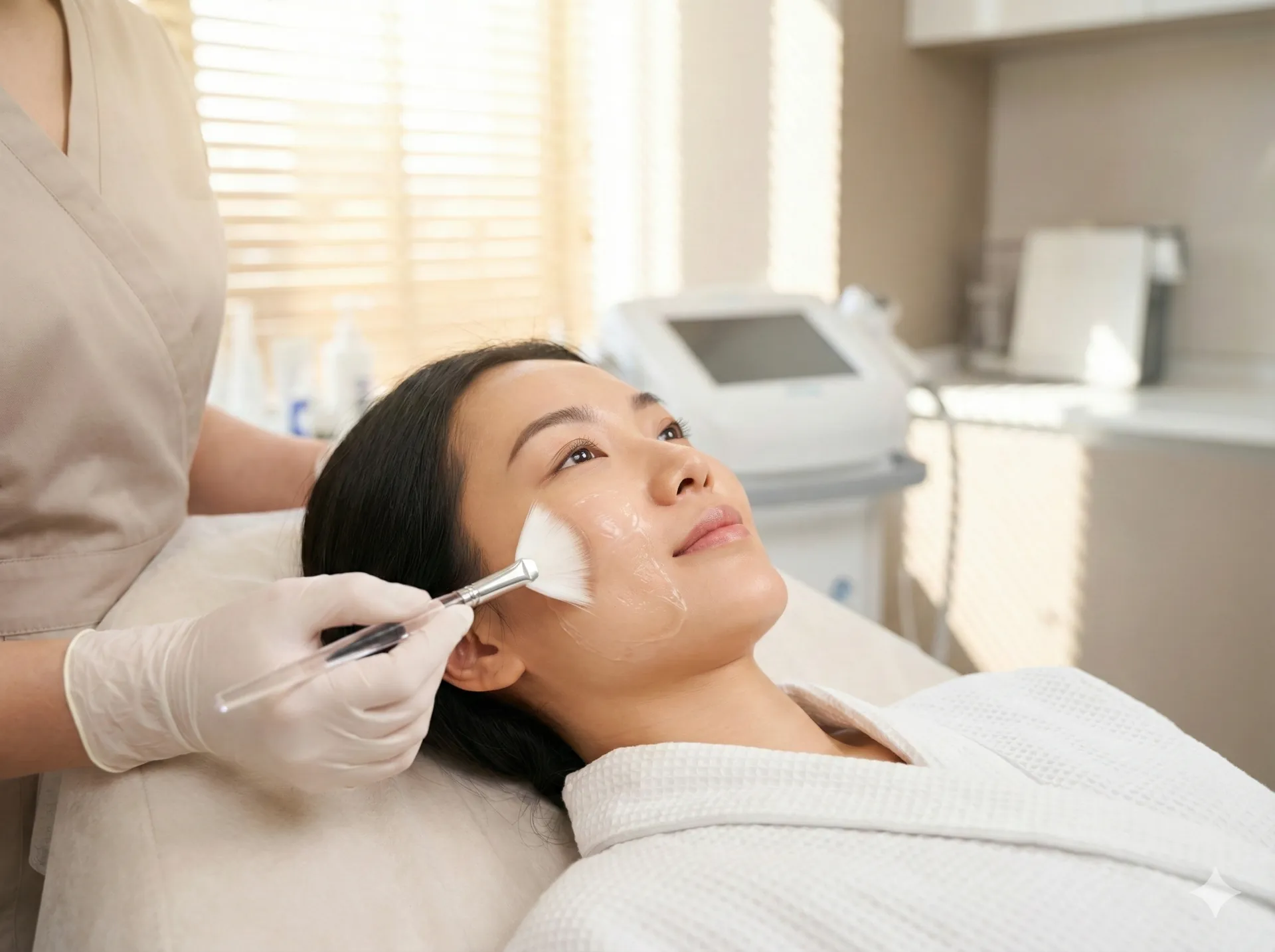
The peel causes a controlled, superficial injury that the skin repairs by renewing its surface.
Preparation
The skin is cleansed and prepared so the peel is applied evenly.
Exfoliation
The acids loosen and remove dead and damaged surface cells, which can help with dullness and superficial pigmentation.
Shedding
Over several days the treated skin flakes and sheds, revealing fresher skin underneath.
Protection
Moisturizer and daily sunscreen protect the new skin while it settles.
Who Is a Chemical Peel Suitable For?
A peel may suit people with dullness, uneven tone, rough texture or fine lines who can accept some peeling. A clinician confirms suitability at assessment.
You May Be Suitable If You
- +Have concerns with skin texture, fine lines, or mild pigmentation
- +Want to improve skin radiance and reduce signs of aging
- +Want a peel chosen after a medical skin assessment
- +Are looking for skin renewal over a short series of peels
- +Can commit to proper pre and post-treatment care
You May Not Be Suitable If You
- –Are pregnant or breastfeeding
- –Have active cold sores, herpes, or other skin infections
- –Recently had other chemical peels, laser treatments, or retinoid use (within 2-4 weeks)
- –Have uncontrolled diabetes or poor wound healing
- –Have a history of keloid scarring or abnormal scarring
- –Have recently taken oral isotretinoin (an acne medication); tell us at booking
- –Have a sunburn or a recent tan
Why Have a Peel at RAAC Richmond?
Chemical peels are medical procedures that need careful depth selection. Safety comes first at RAAC.
Medical Oversight
Dr. Jiang's team assesses your skin to choose a suitable peel depth for your skin type.
Holistic Approach
Peels can be combined with other treatments in a plan set at your consultation.
Planned for Asian Skin Tones
Darker and Asian skin tones are more prone to post-inflammatory hyperpigmentation (PIH), so depth and preparation are chosen with that risk in mind.
Custom Protocols
Peel depth can be adjusted, from lighter peels with little downtime to deeper corrective peels with more peeling.
What Skin Concerns Can a Peel Help?
A peel may help with several common concerns. Response depends on the concern and the peel depth.
Sun Damage
May lighten superficial sun spots, age spots and uneven pigmentation.
Texture Issues
May smooth rough skin and the look of enlarged pores and dullness.
Fine Lines
May soften the look of fine lines.
Acne Scars
May smooth mild post-acne texture and discoloration. Deeper scars usually need other treatments.
Melasma
May be one part of a melasma plan, which is a chronic condition that can return. Needs physician assessment.
Overall Radiance
May improve brightness and evenness of skin tone.
What Happens During a Longevity Peel?
The peel itself takes about 20–45 minutes, plus assessment and preparation. Peeling typically lasts 3–7 days, depending on depth. Fresher-looking skin usually shows once peeling settles, often about a week after the peel. For deeper concerns a series of 2–3 peels about 4–6 weeks apart may be suggested, and maintenance is discussed at follow-up. Results vary.
Pre-Treatment Preparation
Avoid sun exposure and tanning for 2-4 weeks before treatment
Discontinue retinoids, exfoliants, and other active skincare 5-7 days prior
Inform your doctor of any recent procedures or skin conditions
Come with clean, makeup-free skin on the day of treatment
Tell your physician about blood thinners and medications; do not stop prescribed medication without medical advice
During Treatment
Skin Assessment
Thorough skin analysis and treatment planning with Dr. Jiang's team
Skin Preparation
Gentle cleansing and application of pre-treatment solutions
Peel Application
Precise application of the Longevity Peel solution with monitoring (20-45 min)
Neutralization & Care
Professional neutralization and application of soothing post-treatment products
Post-Treatment Care
Keep skin clean and avoid touching or picking at peeling skin
Use the moisturizer recommended and SPF 30+ sunscreen daily
Avoid strenuous exercise, saunas, and hot showers for 3-5 days
Use gentle, fragrance-free skincare products during recovery
Book a follow-up if your clinician suggests one
Avoid makeup for at least 24–48 hours, or until peeling settles
Pause retinoids, scrubs and exfoliating acids until your clinician says the skin has healed
*Recovery time and results vary by individual and peel depth. Several peels may be suggested.
Chemical Peel Questions
What is a chemical peel and what does it do?+
A chemical peel applies exfoliating acids to remove the top layers of skin so fresher skin forms. It is used for dullness, uneven tone, rough texture and fine lines. The Longevity Peel is our medical peel, with depth chosen at assessment. Results vary.
How much downtime does the Longevity Peel have?+
It depends on peel depth. With a medium-depth peel, skin often feels tight on days 1-2, flakes or peels on days 3-5 and looks fresher by about day 7. Plan to avoid important events for about a week. Lighter peels have less downtime.
Is a chemical peel painful?+
You may feel warmth, tingling or stinging for a few minutes while the solution is on the skin. A fan is used to keep you comfortable, and the sensation usually settles soon after the peel is neutralized. Deeper peels can feel stronger. Afterwards the skin may feel tight, a little like mild sunburn, for a day or two. Tell the clinician at any point if it feels too intense.
How many peels do I need?+
Some people see a visible change after one peel. For deeper concerns, a series of 2-3 peels about 4-6 weeks apart may be suggested. Your clinician sets the plan. Lighter peels may also be repeated as maintenance. Before each peel your skin is checked to make sure it has recovered from the last one.
Is a chemical peel safe for Asian or darker skin?+
It can be, with careful depth selection and preparation, because these skin tones are more prone to post-inflammatory hyperpigmentation (darkening after irritation). Risks still exist, and sun protection afterward matters. Tell your clinician about previous reactions.
What is the difference between a chemical peel and a facial?+
A facial cleanses, lightly exfoliates and hydrates the surface, usually with no peeling afterwards. A medical chemical peel uses acids at a strength chosen for your skin to remove more of the outer layer, so it is followed by tightness and peeling for several days and needs aftercare. A peel is planned after a skin assessment and is aimed at tone, texture and fine lines.
What does the Longevity Peel cost at RAAC in Richmond?+
Prices are not listed online. Cost depends on peel depth and your plan. We start with a skin consultation, using VISIA imaging when appropriate, to choose the peel strength before discussing cost. Book a consultation at our Richmond clinic.
Can the Longevity Peel be combined with other treatments?+
Yes, peels are often combined with other treatments. Dr. Charles Jiang (29+ years of clinical experience) may sequence a peel with other treatments for residual pigmentation or rehydration, tailored to each patient. For melasma, a peel may sit alongside a physician-guided plan. Individual results vary.
How long do chemical peel results last?+
There is no fixed duration. Skin keeps renewing, and sun exposure, ageing and your daily routine all affect how long a fresher look lasts. Daily sunscreen and gentle skincare help maintain the change. Pigment concerns such as melasma can return, so maintenance peels or other care may be discussed. Your clinician can suggest a maintenance plan at follow-up. Results vary.
What should I avoid after a chemical peel?+
While the skin is peeling, do not pick or pull at flakes, and avoid direct sun, saunas, hot showers and strenuous exercise for 3–5 days. Skip makeup for at least 24–48 hours, or until peeling settles. Pause retinoids, scrubs and exfoliating acids until your clinician says the skin has healed, and use the recommended moisturizer and SPF 30+ every day.
Who should not have a chemical peel?+
Not suitable if you are pregnant or breastfeeding, have an active cold sore or skin infection, have recently had laser or other peels or used retinoids, have uncontrolled diabetes or poor wound healing, or have a history of keloid scarring. Your clinician screens you first.
What are the risks of a chemical peel?+
Redness, dryness, peeling and sensitivity are expected. Less commonly there can be darkening or lightening of the skin, infection, cold sore flare-ups or scarring. Following aftercare and avoiding sun lowers the risk. Contact the clinic promptly if you notice blistering, oozing, spreading redness or pain that gets worse.
Concerns this treatment is used for
Each of these has its own page explaining the cause, the options, and what recovery looks like:
Considering a Chemical Peel in Richmond, BC?
Schedule a consultation with Dr. Charles Jiang (29+ years of clinical experience) and team to see whether the Longevity Peel suits your skin goals. The clinic is at Unit 110, 5580 No. 3 Rd, near Lansdowne Station, and consultations are available in English, Mandarin and Cantonese.
Related treatments
What our clinical team has written about this
How it works, who it suits, and what recovery looks like:
- Longevity Peel for Dull, Tired Skin: What It Does and How It Compares
Dull, uneven skin that no longer bounces back? What the Longevity Peel does, how it compares with other options, and what a treatment visit at RAAC in Richmond, BC involves.
- How the Longevity Peel Works: Step-by-Step Procedure and Who Should Wait
How the Longevity Peel resurfaces skin, what published research says, the procedure step by step, and the conditions that mean you should wait.
Also offered at our Burnaby location
SkinArt MD offers the same treatment. If Burnaby is more convenient, our sister clinic can help.
#101 - 4378 Beresford St, Burnaby, BC V5H 0H6 · +1 (604) 639-2581