
Hair Loss Treatment Assessment and PRP in Richmond, BC
Find out why your hair is thinning, then choose a plan
Hair thinning has different causes, and they are managed differently. At Richmond Anti-Aging Clinic, Dr. Charles Jiang assesses your scalp and history first, then builds a plan that may include PRP, scalp care and physician-guided medical care. Treatments aim to support the follicles you still have; individual responses vary.
- Cause first
- Assessment before any treatment
- Months
- Hair cycles take time to show change
- 3 languages
- English, Mandarin, Cantonese
- Cause first
- Assessment before any treatment
- Months
- Hair cycles take time to show change
- 3 languages
- English, Mandarin, Cantonese
What does the hair regrowth programme involve?
Hair loss care at RAAC starts with a physician assessment of why your hair is thinning, because pattern hair loss, post-partum shedding, stress and medical causes are managed differently. Dr. Charles Jiang then builds a plan that may include PRP, scalp care and physician-guided medical care. Treatment may help slow thinning and support existing follicles, but it cannot regrow follicles that are gone.
The programme begins with a detailed scalp and history assessment to confirm suitability. Depending on your pattern, the plan may combine in-clinic options, such as PRP (see our PRP hair page) or HydraPeel Scalp for scalp cleansing and care, with medical care guided by your physician and, where appropriate, review of contributing factors such as hormones. Hair grows in cycles, so change is gradual and is checked at follow-up visits. If your hair loss looks sudden, patchy or linked to another health issue, we will advise seeing your family doctor first.
Cause-Based Planning
Your plan is shaped by the type and pattern of hair loss found at assessment, not a one-size-fits-all package.
Supports Existing Follicles
Treatment aims to support follicles that are still active and may help slow further thinning in suitable candidates. Outcomes vary between individuals.
Honest Expectations
We explain what current evidence does and does not support, and where a hair transplant evaluation is the better route.
How does a hair regrowth plan work?
Because hair thinning has different causes, the plan starts by finding out which one applies. Treatments act on the scalp environment and follicle activity; none can bring back follicles that have been lost completely.
Assessment
History, pattern of thinning, medications, scalp examination and baseline photos, so changes can be compared later.
Contributing Factors
Dr. Jiang reviews factors that can affect hair, such as hormones and general health, and coordinates with your family doctor where needed.
Supporting the Scalp
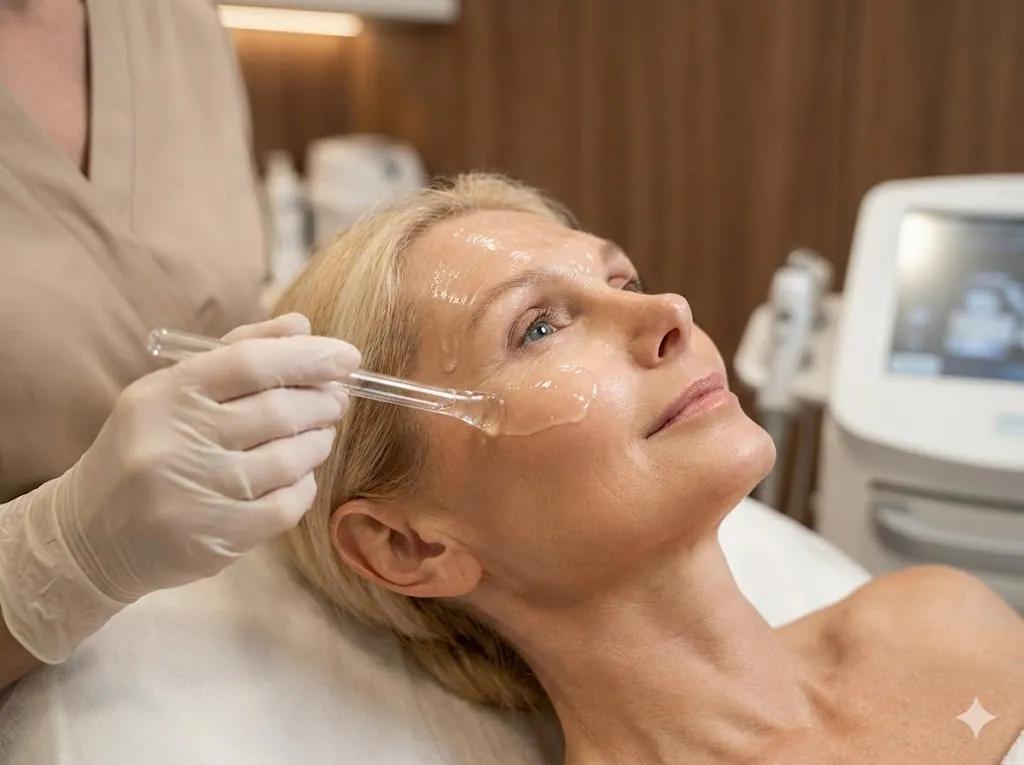
PRP uses a concentrate of your own platelets, and HydraPeel Scalp cleanses and cares for the scalp surface. HydraPeel Scalp is scalp care, not a hair-growth treatment. Either may be used, alone or together, if suitable.
Review and Maintain
Hair cycles take months, so progress is reviewed at follow-up visits and the plan adjusted. Maintenance is often needed to keep any improvement.
Who is hair regrowth treatment suitable for?
Dr. Charles Jiang evaluates each patient individually. Treatment shows the most promise in early to moderate thinning where follicles are still active. It is not appropriate for every type of hair loss.
May be well suited:
- +Early-stage pattern hair loss (male or female) with active follicles still present
- +Women with diffuse thinning, including post-partum shedding that persists after the first months
- +People who want to understand the cause of their thinning before choosing a treatment
- +Post-transplant patients who want to support the new grafts
- +Those combining treatment with physician-prescribed medical care
Not suitable or needs careful evaluation:
- –Active scalp infection (bacterial or fungal); treatment is deferred until resolved
- –Alopecia areata in an active flare; autoimmune hair conditions need medical stabilization first
- –Complete follicle loss in the area; a hair transplant evaluation is the more appropriate route
- –Sudden, patchy or rapid hair loss, or hair loss with other symptoms; please see your family doctor first
- –Pregnancy or breastfeeding; PRP is not done during this time
- –A blood or platelet disorder, or blood thinners without medical clearance (relevant to PRP)
Physician-Led Hair Loss Care
Hair loss is a medical concern as well as a cosmetic one. At Richmond Anti-Aging Clinic it is handled within a clinical framework by Dr. Charles Jiang, Medical Director.
Dr. Charles Jiang, Medical Director
Every hair plan at RAAC is overseen by Dr. Charles Jiang, who reviews candidacy, rules out contraindications and tracks progress.
Options Under One Roof
PRP and HydraPeel Scalp care are available at the clinic, so the plan can follow your assessment rather than a single product.
Combination Planning
Dr. Jiang can combine in-clinic treatment with hormone review and physician-guided medical care where clinically appropriate, working alongside your family doctor.
Mandarin, Cantonese & English
Consultations in English, Mandarin and Cantonese serve Richmond and Greater Vancouver patients through every step. We are open daily from 9:00 to 18:00.
Which areas of the scalp can be treated?
Treatment can be directed at thinning areas where follicles are still active. Dr. Jiang maps the areas from your own pattern of hair loss.
Crown & Vertex
The most common area of pattern thinning in both men and women. Earlier assessment usually leaves more options.
Hairline
Receding frontal hairlines can be assessed when follicles are still active. Dr. Jiang checks follicle viability before suggesting treatment.
Temples
Temple thinning is common in pattern hair loss and stress-related shedding. It may respond better when addressed early.
Diffuse Thinning
For women with generalized thinning rather than focal patches, treatment is applied more widely and progress is tracked at follow-up.
What happens at a hair loss visit?
A physician consultation and scalp assessment come first. Any in-clinic treatment is then chosen to suit your pattern.
Before Your Visit
Arrive with a clean scalp and avoid heavy styling products on the day
Tell Dr. Jiang about all medications, supplements, autoimmune conditions and prior hair treatments
If PRP is planned, tell us about blood-thinning medication and check with your physician before stopping anything
At the Clinic
Consultation and Scalp Assessment
Dr. Charles Jiang reviews your hair loss pattern, medical history and previous treatments, examines the scalp and records a baseline.
Plan
You receive an honest view of what is likely to help, what is not, and whether another route, such as a hair transplant evaluation, suits you better.
In-Clinic Treatment, If Chosen
If PRP is suitable, it is carried out in the clinic. HydraPeel Scalp may be added for scalp cleansing and care.
Aftercare and Follow-Up
You leave with written aftercare for your specific treatment and a follow-up plan to review progress against your baseline.
After Treatment
Follow the aftercare instructions given for your specific treatment, including when to wash your hair
The scalp may feel tender or look pink for a short time; most people resume normal activities the same day
Avoid direct high-heat styling on the scalp for the first couple of days
Attend follow-up visits; courses are usually spaced over months, and maintenance may be advised
**Results are not guaranteed. Individual response varies with the type and degree of hair loss, follicle viability and adherence to the plan. Treatment cannot regrow follicles that are completely lost.
Your Questions Answered
What hair loss treatments are available in Richmond, BC at RAAC?+
RAAC offers a physician-led hair loss assessment, followed by a plan that may include PRP, scalp care and physician-guided medical care. Dr. Charles Jiang first works out the likely cause of your thinning, then recommends only what suits your pattern. These options aim to support existing follicles and cannot restore follicles that are completely lost.
Can a shampoo help thinning hair?+
A shampoo on its own is unlikely to reverse pattern thinning, because it stays on the scalp for only a few minutes. Medicated shampoos can help control dandruff or scalp inflammation, which can add to shedding, and volumising products make existing hair look fuller. We do not recommend a particular brand. For women with a widening part or diffuse thinning, finding the cause, such as iron, thyroid or hormonal factors, usually matters more than the choice of shampoo.
When can I expect to see results?+
Hair follows its natural growth cycle, so progress is slow. Reduced shedding is often the first change, usually after a few months, while hair thickness and density take longer. Earlier-stage hair loss tends to respond more predictably. Individual responses vary and no result is guaranteed.
Does it hurt, and what is the recovery?+
Comfort depends on the treatment. PRP involves a blood draw and scalp injections, and your clinician will discuss comfort measures with you. The scalp may feel sore or look pink for a short time afterwards, and most people return to normal activities the same day.
Should I see my family doctor first about hair loss?+
If your hair loss is sudden, patchy, rapid, or comes with other symptoms such as fatigue or skin changes, please see your family doctor first, because it can be linked to thyroid, iron, autoimmune or other medical causes. Dr. Jiang will also tell you if your hair loss needs medical work-up before any cosmetic treatment.
How much does hair regrowth treatment cost in Richmond, BC?+
We do not publish prices online at the moment. The cost depends on whether you need an assessment only or also in-clinic treatment, which treatments Dr. Jiang recommends after assessing your scalp (for example PRP or HydraPeel Scalp care), how many sessions are needed and how often maintenance is advised. You receive a quote for your own plan after the assessment.
Where is the clinic, and can I come from Vancouver or Burnaby?+
RAAC is at Unit 110, 5580 No. 3 Rd, Richmond, BC, about a 3-minute walk from Lansdowne Station on the Canada Line, so it is reachable by SkyTrain from Vancouver and Burnaby; parking is via Ackroyd Road. We see patients from Richmond and across Greater Vancouver by appointment, every day from 9:00 to 18:00, with consultations in English, Mandarin and Cantonese.
Does hair loss treatment work for every type of hair loss?+
No. Options such as PRP are mainly discussed for pattern thinning and some types of shedding where follicles are still active. Scarring hair loss, complete loss in an area and some autoimmune conditions need other medical care, and sudden or patchy loss should be checked by your family doctor. Dr. Jiang will tell you at assessment if in-clinic treatment is unlikely to help.
Are hair loss treatments suitable for women?+
Yes, women are assessed as well as men. Female pattern thinning often shows as a widening part or diffuse thinning rather than a receding hairline, and shedding after pregnancy, illness or stress is common. Because hormones, iron and thyroid can play a part, the assessment looks at your history first. PRP is not done during pregnancy or breastfeeding.
What happens if I stop treatment?+
Pattern hair loss is gradual and ongoing, so any improvement from in-clinic treatment may fade after treatment stops, and thinning can continue at its own pace. That is why maintenance is often discussed. Shedding caused by a temporary trigger, such as illness or childbirth, may settle on its own. Dr. Jiang will explain what to expect for your type of hair loss.
Does blocking DHT stop hair loss?+
It can slow pattern hair loss in many people, but it does not cure it. DHT is a hormone that gradually shrinks genetically sensitive follicles. Prescription medicines that lower DHT may slow thinning, and some people keep or gain some density, but they work only while they are taken, have possible side effects and are not suitable for everyone, including anyone who is or may become pregnant. A physician decides whether they suit you and monitors them.
What are the side effects of hair loss treatment?+
They depend on the treatment. After PRP, scalp tenderness, pinpoint redness, mild swelling and bruising are common and usually settle within a few days; headache or infection is less common. HydraPeel Scalp may leave the scalp slightly sensitive for a few hours. Any prescribed medication has its own risks, which your physician explains before you start.
Start with a Physician Assessment
Book a consultation with Dr. Charles Jiang at Richmond Anti-Aging Clinic. Consultations in English, Mandarin and Cantonese, with an honest view of what treatment can realistically do for your hair loss.
Related treatments
What our clinical team has written about this
How it works, who it suits, and what recovery looks like:
- How a HydraPeel Scalp Treatment Works: Phases, Sessions and Aftercare
How a HydraPeel scalp treatment softens, extracts and infuses in three phases, who needs a medical assessment first, how many sessions are typical and what to do afterwards.