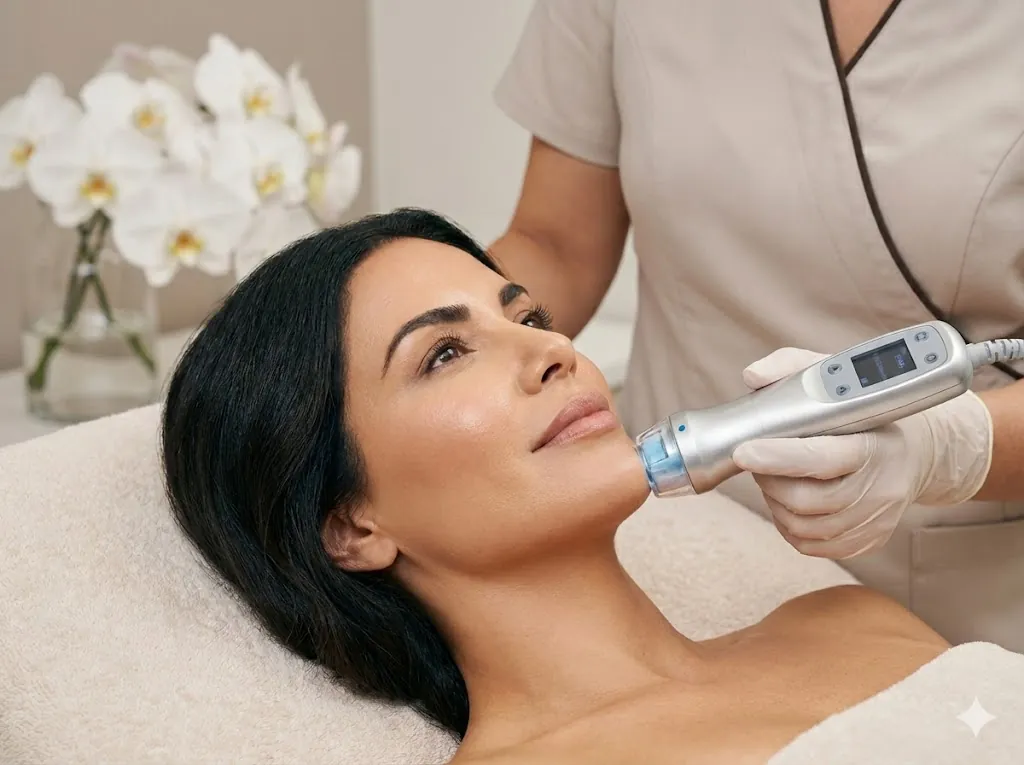
PRP hair restoration is quoted after a physician assessment, not from a fixed menu, because cost depends on how many areas are treated, how many sessions your plan needs, maintenance over time and who performs the procedure. Clinics structure quotes differently, so compare what each one itemises rather than the headline number.
Why is PRP hair restoration quoted after an assessment instead of listed as a price?
Because the plan is built around your own thinning pattern, the number of areas and sessions is not known until a physician examines your scalp. A fixed price list would have to assume a standard head of hair and a standard amount of thinning, and that assumption rarely matches the person in the chair.
At RAAC, every PRP Hair Restoration plan begins with a physician's assessment: your pattern of hair loss, scalp health, medical history and medications. Hair loss can have medical causes such as thyroid or iron problems, so you may be advised to see your family physician first. The treatment areas and number of sessions are then set after your physician reviews your thinning pattern — and because thinning patterns change over time, the plan is reviewed and adjusted as you go rather than repeated unchanged.
RAAC is a physician-led medical clinic in Richmond, BC, and PRP hair treatment follows the same clinical screening as our other medical procedures. Assessment with Dr. Charles Jiang, a licensed physician in British Columbia and RAAC's lead physician, covers your history and scalp before a plan is proposed. Only then can the scope of treatment — and therefore the cost — be quoted accurately.
What actually decides the cost of PRP hair treatment?
Four things move the number most: how many scalp areas are treated, how many sessions the series includes, whether maintenance is planned, and who performs the procedure.
Treatment areas are chosen from your own thinning pattern rather than applied evenly across the scalp, so a plan for a widening part differs in scope from one covering the crown and frontal zone. Response also differs by area and by person, which is why the map of your thinning comes before any costing.
The series length matters because PRP is usually given as several sessions rather than a single visit, followed by maintenance. A plan that includes maintenance is structured differently from a one-off course, and the quote should reflect that.
Physician involvement is the fourth factor. At Richmond Anti-Aging Clinic (RAAC) in Richmond, BC, PRP hair treatment is physician-led: Dr. Charles Jiang, a licensed physician in British Columbia and the clinic's lead physician, reviews your history and scalp before a plan is proposed, and progress is reviewed each visit so the plan can be adjusted rather than repeated unchanged. That clinical time is part of what a quote covers.
Because these four elements vary from person to person, pricing is personalised at consultation.
Why do quotes for hair thinning treatment cost differ between clinics?
Clinics differ in who does the assessment and injections, how the blood is prepared, how many sessions are bundled into a plan, and what follow-up is included.
At a physician-led clinic in Richmond, BC, the assessment is part of the clinical work, not a formality. At RAAC, Dr. Charles Jiang, a licensed physician in British Columbia and the clinic's lead physician, reviews your history and scalp before any plan is proposed. A quote built around that kind of screening reflects the time and oversight involved; one that skips it may look lower for a reason.
How the blood is handled also matters. Sterile technique and preparation in a medical centrifuge are steps that carry real cost, and they are not visible in a headline figure.
Then there is structure. PRP for hair thinning is usually a series followed by maintenance, so a quote may cover a single session or a full plan. Progress is reviewed at each visit, and the plan is adjusted as your thinning pattern changes rather than repeated unchanged.
When comparing quotes, it is worth asking what each one includes: who performs the injections, how many sessions, and what review is built in.
What should a consultation quote itemise?
Ask for a written breakdown covering the assessment, each session, the areas treated per session, maintenance frequency and what happens if your plan changes.
A quote is easier to compare when it separates the pieces rather than giving one lump figure. The assessment comes first: at RAAC, every PRP hair plan begins with a physician's review of your pattern of hair loss, scalp health, medical history and medications, and hair loss can have medical causes such as thyroid or iron problems, so you may be advised to see your family physician first. Dr. Jiang, a licensed physician in British Columbia and RAAC's lead physician, reviews your history and scalp before a plan is proposed.
The quote should then show:
- Sessions: how many are planned, and the cost of each
- Areas per session: treatment areas are chosen from your own thinning pattern rather than applied evenly across the scalp, so the number of areas affects the plan
- Maintenance: how often sessions are expected after the initial series
- Changes: what happens if your plan is adjusted
That last point matters. Thinning patterns change over time, so your plan is reviewed and adjusted as you go rather than repeated unchanged. Ask how a revised plan affects the quote before you commit.
Does PRP hair restoration really work, and does that affect what you pay for?
Evidence is still developing and results vary, so a quote should reflect a realistic plan rather than a promise of regrowth.
PRP hair treatment uses platelet-rich plasma made from a small sample of your own blood, injected into the scalp to support thinning hair. It is usually given as a short series of sessions after a physician assesses your hair loss. Growth factors in PRP are thought to support the hair follicle's growth phase, and PRP may also support the blood supply and tissue around follicles. Research is ongoing and results differ from person to person.
Pattern hair loss shrinks follicles gradually over years without removing them at first, which is why PRP is most often discussed for early to mid-stage thinning, where follicles are still present. Some studies report improved hair density in androgenetic hair loss, but study methods differ and responses vary. PRP cannot regrow hair where follicles have been lost for years.
This is why a quote is built around your assessment rather than a fixed promise. Every plan starts with a physician's review of your pattern of hair loss, scalp health, medical history and medications — at RAAC, Dr. Charles Jiang, a licensed physician in British Columbia, reviews your history and scalp before a plan is proposed. Realistic expectations are discussed before any blood is drawn, and your plan is reviewed and adjusted as you go.
What happens during a PRP hair treatment session?
A full session is typically 60 to 75 minutes, covering the blood draw, centrifuge preparation while numbing cream takes effect, then scalp injections.
It begins with a small sample of blood taken from your arm, similar to a routine blood test. That sample is then spun in a centrifuge to separate the platelet-rich plasma from the other blood components. While the PRP is being prepared, a topical numbing cream is applied to the scalp, so the preparation time and the comfort step happen together rather than in sequence.
The PRP is then injected into the scalp with fine needles across the areas chosen for you. Those areas are selected from your own thinning pattern rather than applied evenly across the scalp, and response differs by area and by person. Because the plan is physician-led, Dr. Charles Jiang, a licensed physician in British Columbia and RAAC's lead physician, reviews your history and scalp before any treatment plan is proposed, and your progress is reviewed and adjusted at each visit rather than repeated unchanged.
The appointment is a short series of sessions followed by maintenance, with changes appearing gradually over months rather than days. Results vary.
Who is assessed for PRP hair treatment, and who should not have it?
Suitability is decided by a physician who reviews your history, medications and scalp before any blood is drawn. At RAAC in Richmond, BC, that assessment is led by Dr. Charles Jiang, a licensed physician in British Columbia and the clinic's lead physician.
PRP may be considered for early to mid-stage pattern hair thinning in men and women, where follicles are still present. It may also be discussed for female pattern thinning such as a widening part, for diffuse shedding after illness or stress once medical causes have been checked, for those who want a non-surgical option to discuss before considering a hair transplant, and for people already using other hair-loss therapy who want to ask about adding PRP.
PRP is not suitable in some situations, including:
- Pregnancy or breastfeeding
- A blood or platelet disorder, or use of blood thinners (medical clearance may be needed)
- An active scalp infection, open wounds or an inflammatory scalp condition that needs treatment first
- A scalp with no remaining follicle activity
- An active flare of patchy hair loss (alopecia areata)
- A low platelet count, anaemia or current cancer treatment, where medical clearance is needed first
Because hair loss can have medical causes such as thyroid or iron problems, you may be advised to see your family physician first. Your physician reviews your medical history and medications and examines your scalp before any blood is drawn.
What are the limits and possible side effects of PRP for hair loss?
PRP is made from your own blood and does not cure hair loss; it cannot regrow hair where follicles have been lost for years. Understanding what it can and cannot do is part of judging whether a quote is worth pursuing.
The main limit is biological. Pattern hair loss (androgenetic alopecia) shrinks follicles gradually over years without removing them at first, and PRP is most often discussed for early to mid-stage thinning, where follicles are still present. Some studies report benefit, but protocols differ and evidence is still developing. Response also varies by area: the crown may respond better while fine hairs remain, while the hairline and temples tend to respond less predictably. PRP supports thinning hair as part of a plan; it does not replace treating a medical cause, which is why Dr. Charles Jiang, a licensed physician in British Columbia, reviews your history and scalp before any blood is drawn.
Because PRP comes from your own blood, with no donor tissue, allergic reaction is uncommon. Possible side effects include:
- Bruising and tenderness at injection sites
- Infection, kept low through sterile handling and a medical centrifuge
- Discomfort during scalp injections
Results vary, and progress is reviewed each visit rather than assumed.
Frequently asked questions
How much does PRP hair restoration cost, and why can't I see a price on the website?
Pricing is personalized at consultation because the plan depends on your thinning pattern, how many areas are treated, the number of sessions and whether maintenance is planned. Your quote is prepared after a physician assessment, so it reflects your actual plan rather than a generic figure.
What decides the cost of PRP hair restoration?
The main factors are the areas treated, the number of sessions in the initial series, the volume of PRP prepared per session, whether maintenance sessions are planned, and who performs the assessment and injections. Because these differ from person to person, quotes differ too.
Why do quotes for PRP hair treatment differ between clinics?
Clinics vary in how they prepare PRP, how many sessions they include, which areas are treated, and whether a physician assesses you first. A lower quote may cover fewer sessions or a different preparation method, so compare what is actually included rather than the headline number.
What should a consultation quote itemise?
Ask for the number of sessions, which scalp areas are included, what the per-session preparation involves, whether physician assessment is included, and what maintenance would involve later. A clear quote separates these items so you can see what you are paying for.
Does PRP hair restoration really work?
Some studies report improved hair density in androgenetic hair loss, but protocols differ and evidence is still developing. PRP is most often discussed for early to mid-stage thinning where follicles are still present, and it cannot regrow hair where follicles have been lost for years. Results vary.
How many sessions will I need, and how long until I see changes?
PRP is usually given as a short series of sessions followed by maintenance, with each session typically taking 60 to 75 minutes including the blood draw. Changes appear gradually over months rather than days, and your plan is reviewed and adjusted as you go.
Is PRP hair treatment right for me?
It may be considered for early to mid-stage pattern thinning, female pattern thinning, or diffuse shedding once medical causes have been checked. It is not suitable during pregnancy or breastfeeding, with certain blood or platelet disorders, or with an active scalp infection. Dr. Charles Jiang, a licensed physician in British Columbia, reviews your history and scalp before any plan is proposed.
Next steps
If you are weighing PRP Hair Restoration, a physician-led assessment at Richmond Anti-Aging Clinic (RAAC) in Richmond can clarify whether it suits you. Book a consultation — available in English and Chinese. You can also read more on the PRP Hair Restoration treatment page.
This article is for educational purposes only and does not constitute medical advice. Please consult with a qualified healthcare professional before undergoing any treatment.