The Longevity Peel is a physician-assessed medical chemical peel that uses exfoliating acids to remove damaged surface cells so the skin renews as it heals. Depth and formula are chosen after a skin assessment. Peeling typically lasts a few days, and results vary with depth, skin type and aftercare.
What is the Longevity Peel and how does it fit the skin longevity trend?
The Longevity Peel is a medical chemical peel planned around long-term skin health rather than a single event. It uses exfoliating acids to remove damaged surface cells, and the skin renews as it heals; depth and formula are chosen for your skin type and goals. That planning is what connects it to the skin longevity trend: instead of chasing one pronounced result, the peel is positioned as one step in an ongoing plan for dullness, uneven tone and fine lines, for clients from Richmond and across Greater Vancouver.
In practice, the strength is set after a skin assessment, so it matches your skin type, your concerns and how much recovery time you can accept. A course may be suggested over a short series, with maintenance discussed at follow-up, and results vary. Because darker and Asian skin tones are more prone to post-inflammatory hyperpigmentation (PIH), depth and preparation are chosen with that risk in mind. Dr. Jiang, a licensed physician in British Columbia and RAAC's lead physician, oversees assessment and depth selection, and suitability is confirmed before any peel is booked. You can read more about the Longevity Peel before deciding whether to ask about it at a consultation.
What happens at the cellular and biochemical level during a peel?
Exfoliating acids loosen the bonds holding dead surface cells, triggering a controlled repair response in the skin. In the Longevity Peel, the acids used — such as TCA or AHA, depending on your plan — remove dead surface cells and can lighten some superficial pigmentation. This is a controlled, superficial injury that the skin repairs by renewing its surface.
At the cellular level, the acids loosen and remove dead and damaged surface cells, which can help with dullness and superficial pigmentation. Over the following days, the treated skin flakes and sheds, revealing fresher skin underneath. As the skin heals, it may support collagen and elastin over a series of peels — a gradual process rather than a single event, which is why a short series spaced weeks apart is sometimes suggested.
Because darker and Asian skin tones are more prone to post-inflammatory hyperpigmentation (PIH), depth and preparation are chosen with that risk in mind. Dr. Jiang, a licensed physician in British Columbia and RAAC's lead physician, oversees assessment so the peel depth suits your skin type. Results vary.
What does peer-reviewed clinical evidence say about chemical peels?
Published dermatology literature supports superficial and medium peels for tone, texture and pigment concerns, with response depending on agent and depth.
Several peer-reviewed papers are worth knowing when considering a peel. Kornhauser et al., Journal of Cosmetic Dermatology, reviewed alpha-hydroxy acid peels and reported that glycolic and lactic acid applications may improve the appearance of photoaged skin, with effects thought to relate to exfoliation and dermal remodeling over a course of treatments. A study by Lee et al. in Dermatologic Surgery examined trichloroacetic acid peels in darker skin types and found that superficial TCA peels may improve pigmentation and texture when depth is chosen carefully, while noting that post-inflammatory hyperpigmentation remains a consideration — which is why depth and preparation are matched to skin type at RAAC. Sarkar et al., Journal of the American Academy of Dermatology, described glycolic acid peels as a possible adjunct in melasma management, with improvement that may be gradual and varies between individuals.
Across this literature, outcomes are framed as modest and variable rather than uniform. Peels may support collagen and elastin over a series, and may lighten superficial pigmentation, but response depends on the agent, the depth, skin type and aftercare. At RAAC in Richmond, BC, Dr. Charles Jiang, a licensed physician in British Columbia, assesses suitability before any peel depth is set.
How does a peel compare with HydraFacial and other adjacent approaches?
A peel and a HydraFacial work through different mechanisms, so the right choice depends on your concern and downtime tolerance.
A chemical peel applies exfoliating acids that loosen and remove dead and damaged surface cells, and the skin then renews as it heals. Depth is a planning decision: the Longevity Peel is set after a skin assessment, and it can range from lighter peels with little downtime to deeper corrective peels with more peeling. Typical peeling lasts 3–7 days, varying with depth, and a series may be spaced about 4–6 weeks apart.
HydraFacial, which is also offered at the clinic, is a non-peel option — it does not use exfoliating acids to remove surface layers in the same way, so it is not a substitute for a peel when the goal is acid-driven surface renewal. Adjacent approaches such as microneedling or energy-based devices work through different pathways again.
Neither route is inherently better; they answer different questions. A few practical distinctions are worth weighing:
- Mechanism: acid exfoliation and renewal versus non-peel cleansing and hydration.
- Downtime: peels involve visible peeling for several days; plan around your schedule.
- Skin type: darker and Asian skin tones are more prone to post-inflammatory hyperpigmentation, so depth and preparation are chosen with that risk in mind.
Suitability is confirmed at assessment with Dr. Jiang's team, a licensed physician in British Columbia, who can help match the approach to your concern. Results vary.
Who is a good candidate, and how is suitability assessed?
A clinician confirms suitability at assessment, weighing skin type, concerns and how much peeling you can accept. The Longevity Peel may suit people with dullness, uneven tone, rough texture or fine lines who can accept some peeling, and who want a peel chosen after a medical skin assessment rather than a fixed formula. Suitability is assessed in person: Dr. Charles Jiang is a licensed physician in British Columbia and the lead physician at RAAC, and his team reviews your skin to choose a suitable peel depth for your skin type. That review matters most for darker and Asian skin tones, which are more prone to post-inflammatory hyperpigmentation (PIH), so depth and preparation are chosen with that risk in mind.
You may be suitable if you:
- Have concerns with skin texture, fine lines or mild pigmentation
- Want to improve skin radiance and reduce signs of aging
- Are looking for skin renewal over a short series of peels
- Can commit to proper pre- and post-treatment care
Suitability also depends on timing and history. Recent chemical peels, laser treatments or retinoid use within 2–4 weeks, a sunburn or recent tan, or oral isotretinoin use should be raised at booking. Pregnancy or breastfeeding, active cold sores or skin infections, uncontrolled diabetes or poor wound healing, and a history of keloid or abnormal scarring are reasons a peel may not be suitable. Tell your physician about blood thinners and medications; do not stop prescribed medication without medical advice.
What does a visit involve, from consultation to aftercare?
The peel itself takes about 20 to 45 minutes, with assessment and preparation around it and several days of peeling afterward. The visit begins with a skin assessment and treatment planning with Dr. Jiang's team, since he is a licensed physician in British Columbia and the lead physician at RAAC. Depth and formula are chosen for your skin type and goals, with extra care for darker and Asian skin tones, which are more prone to post-inflammatory hyperpigmentation.
Preparation matters as much as the peel. For 2–4 weeks before, avoid sun exposure and tanning. Stop retinoids, exfoliants and other active skincare 5–7 days prior, and tell your physician about blood thinners and medications — do not stop prescribed medication without medical advice. Arrive with clean, makeup-free skin.
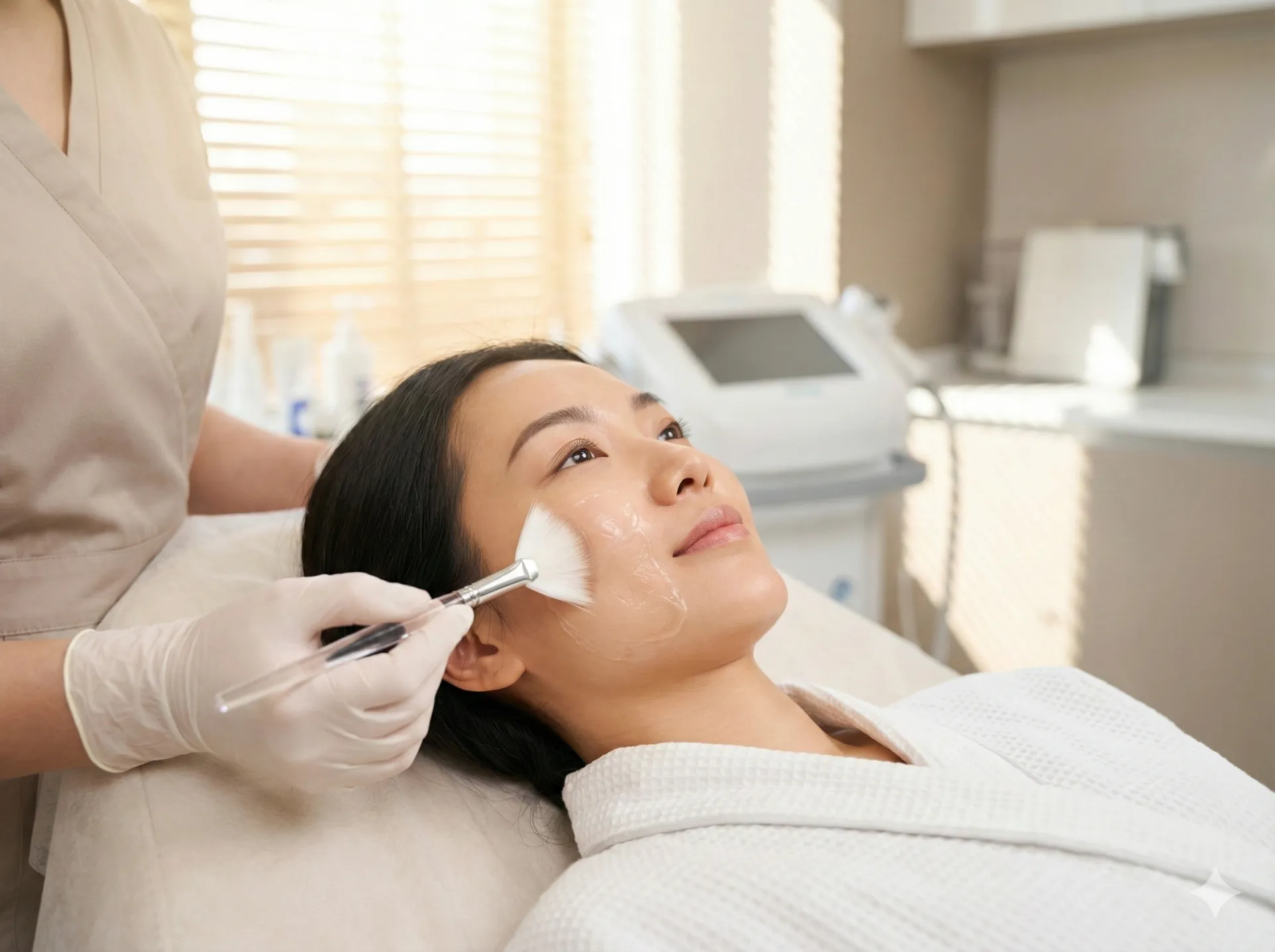
During treatment, the skin is gently cleansed and prepared, the peel solution is applied precisely with monitoring, then neutralized professionally with soothing post-treatment products.
Aftercare is simple but consistent: keep skin clean, avoid touching or picking at peeling skin, and use the recommended moisturizer plus SPF 30+ sunscreen daily. Peeling typically lasts 3–7 days depending on depth, with fresher-looking skin usually appearing once peeling settles, often about a week later. A series of 2–3 peels about 4–6 weeks apart may be suggested for deeper concerns. Results vary.
What are the limitations, side effects and contraindications?
Peels have real downtime and are not suitable for everyone, and deeper scars or melasma usually need a broader plan. The Longevity Peel is a medical chemical peel that removes damaged surface cells with exfoliating acids so the skin renews as it heals, and that controlled superficial injury has a predictable recovery: tightness and peeling for roughly 3–7 days, varying with depth. Results vary, and a peel is not a substitute for treating concerns beyond its reach — deeper scars usually need other treatments, and melasma is a chronic condition that can return, so it needs physician assessment and may be only one part of a plan.
Suitability is confirmed at assessment with Dr. Jiang, a licensed physician in British Columbia and RAAC's lead physician, and his team. A peel may not be suitable if you:
- Are pregnant or breastfeeding
- Have active cold sores, herpes or other skin infections
- Had other chemical peels, laser treatments or retinoid use within 2–4 weeks
- Have uncontrolled diabetes or poor wound healing
- Have a history of keloid or abnormal scarring
- Have recently taken oral isotretinoin — tell us at booking
- Have a sunburn or a recent tan
Darker and Asian skin tones are more prone to post-inflammatory hyperpigmentation, so depth and preparation are chosen with that risk in mind.
How do I get to the clinic from Vancouver or the airport?
The clinic is in Richmond, British Columbia, a short walk from Lansdowne Canada Line station. That makes the trip straightforward whether you are coming from downtown Vancouver or from the airport area: the Canada Line is part of the SkyTrain network, and Lansdowne station sits on it, so the clinic is reachable by train rather than by car. Clients travelling from Vancouver and Burnaby can use the same line, and the walk from the platform to the clinic is short.
A few practical points help the visit go smoothly:
- Plan to arrive with clean, makeup-free skin on the day of your Longevity Peel, as preparation matters for an even application.
- If you are coming from the airport area, allow extra time for the train and the walk, particularly at busy hours.
- Tell the team at booking about any recent procedures, skin conditions or medications, including blood thinners; do not stop prescribed medication without medical advice.
The Longevity Peel itself is planned after a skin assessment, so depth and formula are matched to your skin type, concerns and how much recovery time you can accept. Dr. Charles Jiang is a licensed physician in British Columbia and the lead physician at RAAC, and his team assesses your skin before treatment. The clinic is in Richmond, BC, and serves clients from Richmond and across Greater Vancouver.
Frequently asked questions
What is the Longevity Peel and how does it work?
The Longevity Peel is a medical chemical peel that uses exfoliating acids to remove damaged surface cells so the skin renews as it heals. Depth and formula are chosen after a skin assessment, and the peel causes a controlled superficial injury that the skin repairs by renewing its surface.
Who is a good candidate for the Longevity Peel?
It may suit people with dullness, uneven tone, rough texture or fine lines who can accept some peeling and commit to pre and post-treatment care. A clinician confirms suitability at assessment, and Dr. Jiang's team evaluates your skin type before choosing a depth.
How long does a Longevity Peel appointment take?
The peel itself takes about 20 to 45 minutes, plus assessment and preparation. Peeling typically lasts 3 to 7 days depending on depth, and fresher-looking skin usually shows once peeling settles, often about a week after the peel.
How many Longevity Peel sessions might I need?
For deeper concerns a series of 2 to 3 peels about 4 to 6 weeks apart may be suggested, with maintenance discussed at follow-up. Results vary, and the plan is set after your skin assessment.
What does recovery after a Longevity Peel involve?
Expect a few days of tightness and peeling, which varies with depth. Keep skin clean, avoid picking at peeling skin, and use the recommended moisturizer plus SPF 30+ sunscreen daily while the new skin settles.
Who should not have a Longevity Peel?
It may not suit people who are pregnant or breastfeeding, have active cold sores or skin infections, uncontrolled diabetes or poor wound healing, a history of keloid scarring, or recent oral isotretinoin use. Recent peels, laser treatments or retinoid use within 2 to 4 weeks, and sunburn or a recent tan, should also be discussed at booking.
How is Longevity Peel pricing determined?
Pricing is personalized at consultation, since the formula and depth are chosen for your skin type and goals. Your clinician can explain the plan and associated costs during your assessment.
Next steps
If you are weighing Longevity Peel, a physician-led assessment at Richmond Anti-Aging Clinic (RAAC) in Richmond can clarify whether it suits you. Book a consultation — available in English and Chinese. You can also read more on the Longevity Peel treatment page.
This article is for educational purposes only and does not constitute medical advice. Please consult with a qualified healthcare professional before undergoing any treatment.