There is no single PicoWay price, because cost depends on the area treated, how many sessions your concern needs, the energy and handpieces used, and who performs the treatment. At Richmond Anti-Aging Clinic in Richmond, BC, your quote is given after an assessment, so it reflects your skin and your plan rather than a generic figure.
Why is there no single PicoWay price?
PicoWay is priced per treatment plan, not per device, because two people with the same concern can need very different settings and session counts. A plan is built around the skin in front of the practitioner, and several variables move together.
PicoWay® is a picosecond laser that breaks up pigment and tattoo ink with extremely short pulses acting mainly through pressure rather than heat. At Richmond Anti-Aging Clinic in Richmond, BC, the physician-led team uses it for melasma, sun spots, acne scars and tattoos on Fitzpatrick III-V skin, and most concerns need several sessions. Sessions are commonly planned at 2–6 depending on the concern, with a typical gap of 4–6 weeks between sessions for skin concerns.
What shapes the plan:
- Wavelengths: 1064 nm and 532 nm, plus 785 nm and 730 nm handpieces, chosen by pigment depth and ink colour.
- Handpieces: the Zoom Lens for detailed work on small areas and tattoos, and the Resolve handpiece for skin rejuvenation and collagen stimulation.
- Settings: Dr. Jiang, a licensed physician in British Columbia and RAAC's lead physician, and his team choose settings and treatment intervals for each skin type and concern, since Asian skin needs a careful balance of power and precision.
Because the plan comes first, the price follows the plan. Your quote is personalised at consultation for PicoWay.
What factors decide what you pay?
Four things move the number most: the size and number of areas treated, the number of sessions planned, the energy and handpieces used, and whether maintenance sessions are needed later.
The number of sessions planned is often the largest variable. For skin concerns, PicoWay® is commonly planned across 2–6 sessions, with a typical gap of 4–6 weeks between them, because pigment clears gradually and each pass builds on the last. A tattoo may need a different schedule again, since ink colour and depth vary.
The handpieces and wavelengths chosen also affect the quote. PicoWay® at our Richmond, BC clinic has 1064 nm and 532 nm wavelengths plus 785 nm and 730 nm handpieces, selected by pigment depth and ink colour. The Resolve handpiece is specialized for skin rejuvenation and collagen stimulation, so a plan that includes it is structured differently from one treating pigment alone. Energy settings are chosen conservatively, particularly for Asian skin types (Fitzpatrick III–V), where a "low and slow" approach keeps thermal build-up down.
Finally, maintenance matters. Pigment conditions such as melasma may need periodic sessions later to help keep results stable, and that ongoing plan is part of the overall cost picture. Dr. Charles Jiang, a licensed physician in British Columbia and RAAC's lead physician, oversees assessment and settings, so what you pay reflects a physician-led plan rather than a fixed menu item.
Why do quotes differ between clinics?
Quotes differ because clinics vary in device authenticity, wavelength and handpiece availability, who performs the treatment, and how the plan is structured.
A genuine PicoWay® system carries 1064, 532, 785 and 730 nm wavelengths plus the Resolve handpiece. A clinic running a different picosecond device, or a genuine unit with fewer handpieces on site, may quote differently because the platform itself is different. Wavelengths are chosen by pigment depth and ink colour, and the Resolve handpiece is specialised for skin rejuvenation and collagen stimulation — so what is actually available shapes what can be planned.
Who sets and delivers the treatment matters too. At Richmond Anti-Aging Clinic in Richmond, BC, Dr. Jiang — a licensed physician in British Columbia and RAAC's lead physician — and his team choose settings and treatment intervals for each skin type and concern. Physician-led settings selection is part of the service, and it is reflected in how a plan is built.
Structure is the fourth variable. A plan may cover a single session or a course, since most concerns need several sessions, typically spaced 4–6 weeks apart for skin concerns. Ask what a quote includes:
- Which device and handpieces are used
- Who performs the treatment and who sets parameters
- How many sessions the plan covers
- What pre-treatment assessment and aftercare guidance are included
Comparing quotes line by line, rather than by headline figure, shows what is actually being offered.
What should a consultation quote itemise?
A clear quote should separate the assessment, the treatment itself, the number of sessions planned, the areas covered, and any aftercare, so you can compare like with like. At Richmond Anti-Aging Clinic (RAAC) in Richmond, BC, the pre-treatment assessment is the starting point: it establishes what is being treated, which wavelengths and handpieces are appropriate, and whether PicoWay is suitable at all. That assessment is a distinct step, not a formality folded into the laser time.
The treatment portion should state the areas being treated and the device settings planned. PicoWay at this clinic has 1064 and 532 nm plus 785 and 730 nm handpieces and the Resolve handpiece, and the handpiece chosen depends on pigment depth or ink colour, so the quote should reflect the specific plan rather than a generic session.
Session count matters too. For skin concerns, 2–6 sessions are commonly planned, with a typical gap of 4–6 weeks between them; a quote that lists only one session tells you little about the total commitment.
Finally, aftercare guidance should appear as its own line. Dr. Jiang's team provides pre-treatment assessment and aftercare guidance to support healing, and knowing what is included helps you judge what a quote actually covers.
What happens during a PicoWay visit?
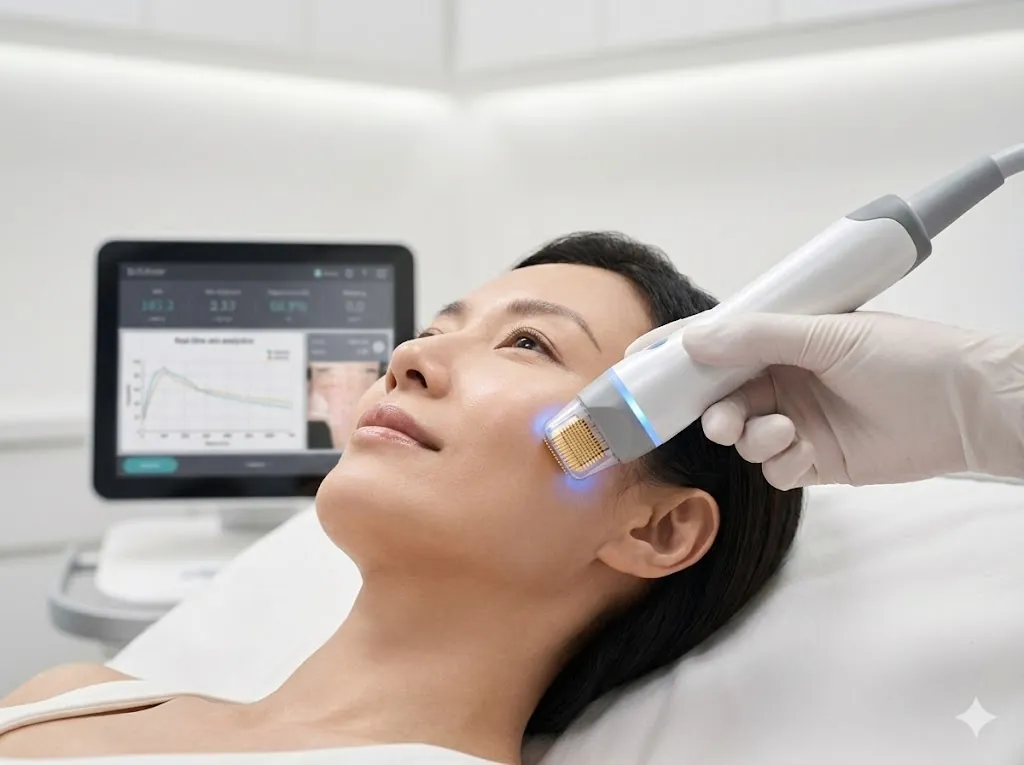
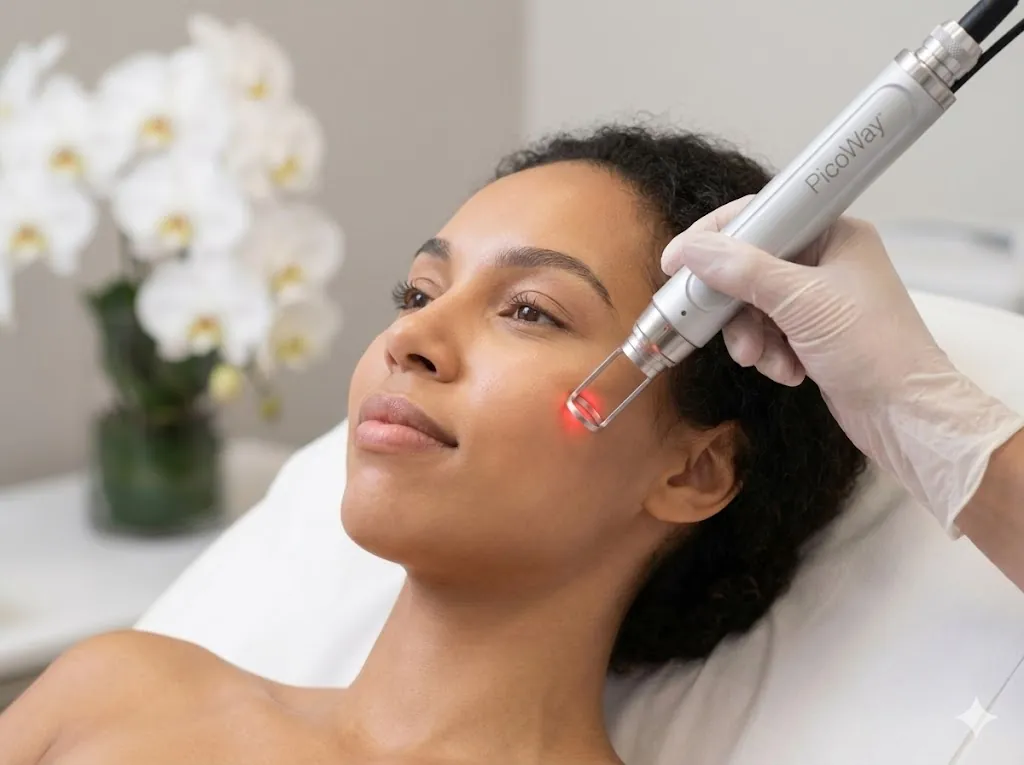
A visit starts with an assessment of your skin and concern, then the treatment itself, which uses very short pulses to break up pigment or ink, and most people return to daily activities the same day.
PicoWay® is a picosecond laser that breaks up pigment and tattoo ink with extremely short pulses acting mainly through pressure rather than heat. At Richmond Anti-Aging Clinic in Richmond, BC, a physician-led team uses it for melasma, sun spots, acne scars and tattoos on Fitzpatrick III-V skin. Dr. Charles Jiang, a licensed physician in British Columbia and RAAC's lead physician, oversees candidate assessment and settings, and the team chooses wavelengths and intervals for each skin type and concern.
During treatment, PicoWay® delivers energy in trillionths of a second. These ultra-short pulses are designed to break up pigment and stimulate collagen while limiting thermal impact on surrounding tissue. The 1064 nm and 532 nm wavelengths, plus 785 nm and 730 nm handpieces, are selected by pigment depth and ink colour, and the Resolve handpiece is used for skin rejuvenation and collagen stimulation.
Afterwards, most people resume normal activities the same day. Temporary redness or swelling is possible and usually settles within hours to a few days. Most concerns need several sessions, and results vary.
Who decides whether PicoWay is suitable for you?
Suitability is a clinical decision, which is why Dr. Charles Jiang, a licensed physician in British Columbia and RAAC's lead physician, oversees assessment and settings rather than leaving them to a fixed menu. At Richmond Anti-Aging Clinic in Richmond, BC, his team chooses settings and treatment intervals for each skin type and concern.
PicoWay can be used for various skin concerns, but whether it fits you is determined at your consultation, after your specific needs are assessed. Fitzpatrick types III–V, common among Richmond patients, need a careful balance of power and precision to reduce the risk of post-inflammatory hyperpigmentation, so protocols are adjusted per patient rather than applied uniformly.
Some situations call for waiting or reconsidering. These include pregnancy or breastfeeding, active infection or open wounds in the treatment area, a recent tan or sunburn, photosensitizing medications such as isotretinoin, and a history of keloid scarring. Very dark skin tones and certain medical conditions carry higher risk and are assessed individually, as are blood-thinning medications — mention these beforehand. Anyone expecting complete tattoo removal in one session should also reset expectations, since most concerns need several sessions.
The assessment is also where the plan behind your quote is built: which wavelengths and handpiece suit the concern, how many sessions are commonly planned, and the interval between them.
What are the limits and side effects to weigh?
PicoWay is not without risk and not right for everyone; temporary redness or swelling is possible, pigment change is a risk, and some people should wait or choose another option. Because PicoWay is designed to act mainly through a photoacoustic (pressure) effect rather than heat, it is used on the deeper skin tones common among Richmond patients — but every laser carries some risk, including pigment change, and post-inflammatory hyperpigmentation is a particular concern for Asian skin (Fitzpatrick types III–V). A conservative, "low and slow" approach is used to keep thermal build-up down, and settings are chosen for each patient by Dr. Jiang, a licensed physician in British Columbia, and his team.
Some reasons to wait or reconsider:
- Pregnancy or breastfeeding
- Active infection, open wounds, or a recent tan or sunburn in the treatment area
- Photosensitizing medications, such as isotretinoin
- A history of keloid scarring
- Very dark skin tones or certain medical conditions, which carry higher risk and are assessed individually
- Expecting complete tattoo removal in one session
Blood-thinning medication should be mentioned beforehand and is assessed individually. Most people resume normal activities the same day, and redness or swelling usually settles within hours to a few days. Suitability is decided at your assessment.
What should you ask before booking?
Ask what the quote covers, how many sessions are planned and at what interval, which wavelengths and handpieces will be used, who performs the treatment, and what aftercare is included.
A clear answer to each of these tells you more about value than the headline number does. For skin concerns, sessions are commonly planned in a range of 2–6 depending on what is being treated, with a typical gap of 4–6 weeks between visits. If a plan skips the interval, ask why — spacing affects how the skin recovers between treatments.
On technique, PicoWay at Richmond Anti-Aging Clinic (RAAC) in Richmond, BC, has 1064 nm and 532 nm wavelengths plus 785 nm and 730 nm handpieces, chosen by pigment depth and ink colour. The Resolve handpiece is used for skin rejuvenation and collagen stimulation. It is reasonable to ask which of these applies to your concern and why.
Ask who holds the handpiece and who sets the parameters. At RAAC, Dr. Charles Jiang, a licensed physician in British Columbia and the clinic's lead physician, oversees assessment and settings selection for each skin type.
Finally, ask what happens before and after: pre-treatment assessment, aftercare guidance, and what to do if redness or swelling occurs.
Frequently asked questions
How much does PicoWay laser cost at your clinic?
PicoWay pricing is personalized at consultation, after an assessment of your skin and the concern you want treated. We do not quote a figure before seeing you, because the plan depends on the area, the number of sessions and the settings chosen for your skin.
What decides the PicoWay cost per session?
The main factors are the size and number of areas treated, how many sessions your concern is likely to need, the wavelengths and handpieces used, and whether a physician-led assessment and aftercare are included. Because these vary from person to person, quotes differ between clinics.
How many PicoWay sessions will I need?
For skin concerns, 2 to 6 sessions are commonly planned, with a typical gap of 4 to 6 weeks between sessions. Tattoo removal usually needs more sessions than pigmentation. Your plan is set at your assessment and reviewed as your skin responds.
What happens during a PicoWay treatment?
PicoWay delivers energy in trillionths of a second, using pressure rather than heat to break up pigment and tattoo ink. The handpiece is chosen by pigment depth or ink colour, and settings are adjusted for your skin type. Most people resume daily activities the same day.
Is PicoWay suitable for Asian skin types?
PicoWay is used on Fitzpatrick III to V skin, including for melasma, sun spots and Hori's macules, with settings chosen conservatively. Every laser carries some risk, including pigment change, so a physician-led assessment is part of deciding whether it suits you.
What should I ask about when I get a PicoWay quote?
Ask what the quote covers: which areas, how many sessions, which wavelengths and handpieces, who performs the treatment, and what aftercare is included. Ask whether the price is per session or per course, and what happens if your plan changes.
Who is not a good candidate for PicoWay?
PicoWay may not be suitable during pregnancy or breastfeeding, with active infection or open wounds in the area, after a recent tan or sunburn, with photosensitizing medications such as isotretinoin, or with a history of keloid scarring. Tell us about blood thinners beforehand so this can be assessed.
Next steps
If you are weighing PicoWay, a physician-led assessment at Richmond Anti-Aging Clinic (RAAC) in Richmond can clarify whether it suits you. Book a consultation — available in English and Chinese. You can also read more on the PicoWay treatment page.
This article is for educational purposes only and does not constitute medical advice. Please consult with a qualified healthcare professional before undergoing any treatment.