
Women's Intimate PRP in Richmond, BC
A private consultation about PRP for intimate health concerns
Women's Intimate PRP is a procedure in which platelet-rich plasma (PRP), prepared from your own blood, is injected into vaginal and clitoral tissue. It is offered for concerns such as dryness, discomfort and mild urinary leakage, but research is limited and results vary. At RAAC in Richmond, BC, a physician assesses you first and discusses alternatives.
- Autologous
- PRP from your own blood
- 30min
- Typical procedure time
- Private
- Discreet consultations
- Autologous
- PRP from your own blood
- 30min
- Typical procedure time
- Private
- Discreet consultations
What Is Women's Intimate PRP?
Women's Intimate PRP injects concentrated PRP from your own blood into vaginal and clitoral tissue. It is used for intimate health concerns, and research is limited.
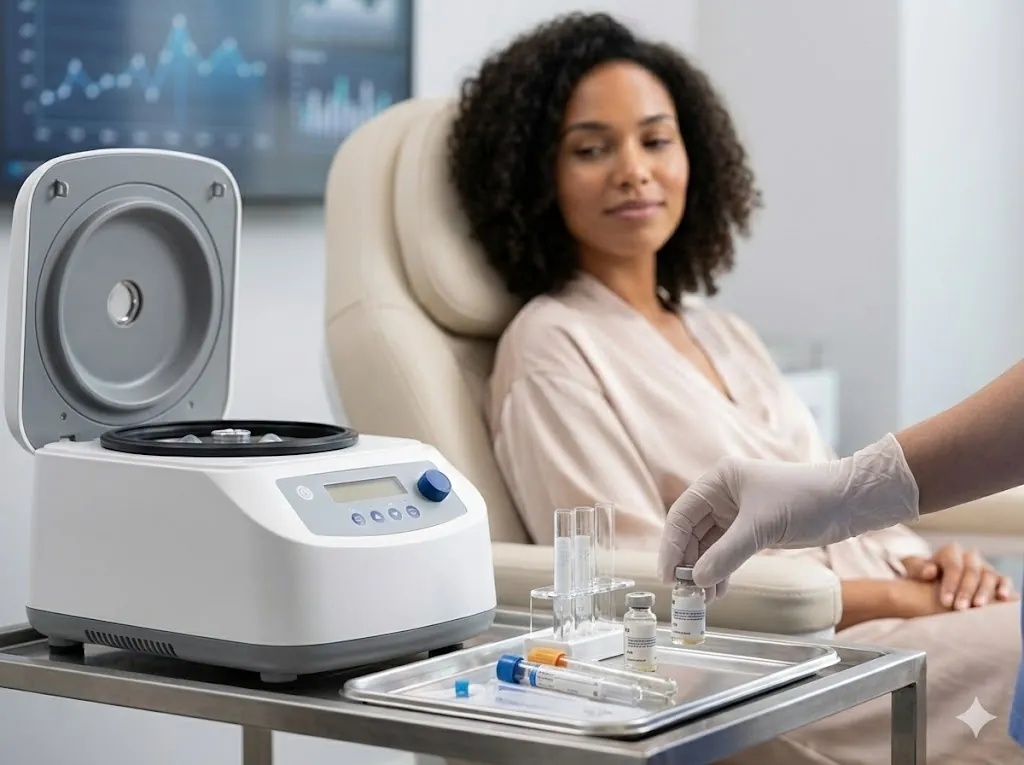
In the women's intimate PRP procedure, a small blood sample is spun in a centrifuge to concentrate platelets, and the resulting PRP is injected into the treatment area after numbing. PRP uses your own blood, but that does not guarantee it will work. Studies are small and results have been mixed. Intimate health concerns often have medical causes such as menopause, medications or skin conditions, so a physician assessment comes first.
Intimate Comfort
PRP is being studied for vaginal dryness and reduced sensitivity. Small studies have reported mixed results, and it is not an established standard treatment.
Urinary Leakage
PRP is sometimes considered for mild stress urinary incontinence (leaking with coughing or sneezing). Evidence is limited, and pelvic floor therapy, medical review and other treatments should be discussed first.
Painful Intercourse
Painful intercourse has many causes, including menopause-related changes and skin conditions such as lichen sclerosus. These need a medical diagnosis, and PRP is not a proven treatment for them.
How PRP Is Prepared
PRP is made from a sample of your own blood. Platelets release growth factors involved in tissue repair, and PRP concentrates them. Whether this improves intimate health concerns is still being studied.
Blood Collection
A small blood sample is taken from your arm, like a routine blood test.
PRP Preparation
A centrifuge separates and concentrates the platelets from the red blood cells.
Injection
After the area is numbed, the PRP is injected into the treatment areas by the physician.
Healing Over Time
Any effect is thought to develop gradually over weeks to months. Your physician reviews your response at follow-up.
Who May Consider It
Women's Intimate PRP may be discussed for women with intimate health concerns who want to understand all of their options. A physician decides whether it is appropriate for you.
May Be Discussed If You Have
- +Reduced sexual sensitivity, after other causes have been assessed
- +Mild stress urinary incontinence, after medical review
- +Vaginal dryness or discomfort, including after menopause
- +A wish to understand non-surgical options and their limits
- +Painful intercourse that has been medically assessed
- +Interest in a broader hormone and pelvic health assessment
Not Recommended If You
- –Are pregnant or breastfeeding
- –Have an active infection in the treatment area
- –Have a platelet or bleeding disorder, or take blood-thinning medication that cannot be paused
- –Expect results to be immediate or certain in advance
A Physician-Led Assessment
Intimate health concerns can involve hormones, the pelvic floor, medications and skin conditions. We assess the whole picture before recommending any procedure.
Physician Assessment First
Dr. Jiang reviews your history and discusses causes, options and the limits of the evidence before any injection is considered.
Hormone Review
Dryness is often linked to menopause. Your physician can review your hormone levels and discuss treatment options, including prescription hormone therapy where appropriate, with its own risks.
Sterile Procedure
The procedure is performed by a physician using sterile technique in a private treatment room.
Respectful, Private Care
Our team provides a private space to discuss intimate concerns, and your records are kept under the same privacy standards as all patient records.
Where PRP Is Injected
Your physician decides where to inject based on your concern and examination.
Vaginal Tissue
The treatment area for dryness or discomfort.
Clitoral Area
A nerve-rich area that may be included in the injection plan.
Tissue Near the Urethra
Considered for mild stress urinary incontinence. Evidence is limited.
Overall Assessment
Hormone levels, medications and pelvic floor health are reviewed alongside any procedure.
What Happens During Treatment
Performed in a private medical room by our physician team. Numbing is used, and experience varies between people.
Pre-Treatment
Your physician will advise whether blood-thinning medication or supplements should be paused beforehand
Drink plenty of water beforehand, which can make the blood draw easier
Tell us about all medications, health conditions and any clotting or blood disorder
During Treatment
Blood Draw
A small blood sample is taken from your arm, like a routine blood test.
PRP Isolation
A centrifuge separates and concentrates the platelets from the red blood cells.
Numbing and Injection
Numbing cream is applied to the area, then the physician injects the PRP into the treatment areas.
After Treatment
Most people resume normal daily activities the same day; temporary redness, swelling or mild tenderness is possible
Your physician will advise when it is appropriate to resume sexual activity
Minor spotting or tenderness for about a day can occur
Any change is thought to develop gradually over weeks to months
**Individual results vary and are not guaranteed. Research on PRP for intimate health concerns is limited. Possible effects include temporary pain, bruising, swelling and, rarely, infection.
Women's Intimate PRP Questions Answered
What is Women's Intimate PRP, and does it work?+
Women's Intimate PRP injects platelet-rich plasma (PRP), prepared from your own blood, into vaginal and clitoral tissue. It is used for concerns such as dryness and reduced sensitivity, but the research is limited. Small studies have shown mixed results, so it is not an established standard treatment. Results vary, and no outcome is guaranteed.
What are the risks and side effects?+
Possible effects include pain, bruising, swelling, minor spotting, temporary changes in sensation and, rarely, infection. Because PRP is made from your own blood, allergic reaction is unlikely, but other risks remain. Your physician reviews them with you before you decide.
Does Women's Intimate PRP hurt?+
Numbing cream is applied beforehand, and most women describe pressure or mild to moderate discomfort. Pain tolerance differs between people, and your physician explains the numbing options at your consultation.
Is it a treatment for urinary incontinence?+
Evidence for PRP in stress urinary incontinence is limited, and it is not an established treatment. Pelvic floor physiotherapy, other medical treatments and, where relevant, Emsella® are usually discussed too. See your family doctor if you have urinary leakage, as it can have several causes.
Is there downtime, and when might I notice a change?+
Most women resume normal daily activities the same day, though temporary redness, swelling or tenderness is possible. If there is any effect, it is expected to develop gradually over weeks to months, and your physician reviews your response at follow-up. Some women notice no change.
Is Women's Intimate PRP available at your Richmond, BC clinic?+
Yes, after a physician consultation. RAAC is at Unit 110, 5580 No. 3 Road, Richmond, BC, about a 3-minute walk from Lansdowne Station on the Canada Line (building parking via Ackroyd Road). Consultations are confidential and available in English, Mandarin and Cantonese. We are open daily from 9:00 to 18:00.
How long do any results last?+
There is no reliable data on how long any effect lasts. Your physician discusses whether repeat treatment is reasonable after reviewing your response.
Is Women's Intimate PRP covered by BC MSP or private insurance?+
No. Women's Intimate PRP is a private procedure not covered by BC MSP. Some extended health plans may cover part of related consultation or blood-test costs. We provide itemized receipts, and you should check your own plan. Costs are explained at your consultation.
Should I see my family doctor first?+
Yes, we recommend it. Dryness, pain with intercourse and urinary leakage can have medical causes that need a diagnosis, and your family doctor can check these and discuss the full range of treatments.
Book a Private Consultation
Schedule a confidential consultation with Dr. Charles Jiang to discuss your concerns, your options and the limits of the evidence. Physician-supervised care in Richmond, BC.
What our clinical team has written about this
How it works, who it suits, and what recovery looks like:
- The Science of Women's Intimate PRP and Ultra Femme 360
Explore the clinical science behind intimate wellness treatments like Ultra Femme 360 and Women's Intimate PRP. Learn how thermal energy and growth factors may support tissue function.
- Understanding the Science of Women's Intimate PRP
A deep dive into the cellular mechanisms and clinical evidence behind Women's Intimate PRP for sexual wellness and urinary health at Richmond Anti-Aging Clinic.
- The Science of Men's Intimate PRP: Mechanism and Evidence
Explore the cellular science of Men's Intimate PRP for male sexual wellness. A physician-led deep-dive into PRP, angiogenesis, and clinical evidence.