
Silhouette InstaLift® Thread Lift Richmond, BC & Vancouver
An immediate lift from absorbable cone sutures, with collagen stimulation over time. Results are not permanent.
Silhouette InstaLift® is a thread lift that places absorbable sutures with small cones under the skin to lift sagging cheeks and jawline without surgery. The cones anchor the tissue, and the material stimulates collagen as it dissolves. The procedure takes about 45-60 minutes, and most people return to social activities within 1-3 days.
- Immediate
- Lift Effect
- 1-3
- Days Social Downtime
- 45-60
- Mins Procedure
- Immediate
- Lift Effect
- 1-3
- Days Social Downtime
- 45-60
- Mins Procedure
What is Silhouette InstaLift®, and how does it lift?
Silhouette InstaLift® is a newer style of thread lift. Instead of barbs, it uses biocompatible PLGA cones to anchor deep tissue, providing a lift without surgery.
Silhouette InstaLift® uses dissolvable sutures with bi-directional PLLA/PGA cones. When inserted, these sutures physically lift sagging tissue and stimulate fibroblasts to produce collagen. The cones activate collagen regeneration, improving skin tone, elasticity, and firmness over time as the threads dissolve.
Immediate Mechanical Lift
Bidirectional cones provide instant anchoring and lifting of sagging tissue.
Collagen Regeneration
PLLA/PGA material stimulates collagen production as the threads dissolve.
Short Recovery
Most people return to normal activities within 1-3 days; swelling or bruising is possible.
How do InstaLift cone threads work?
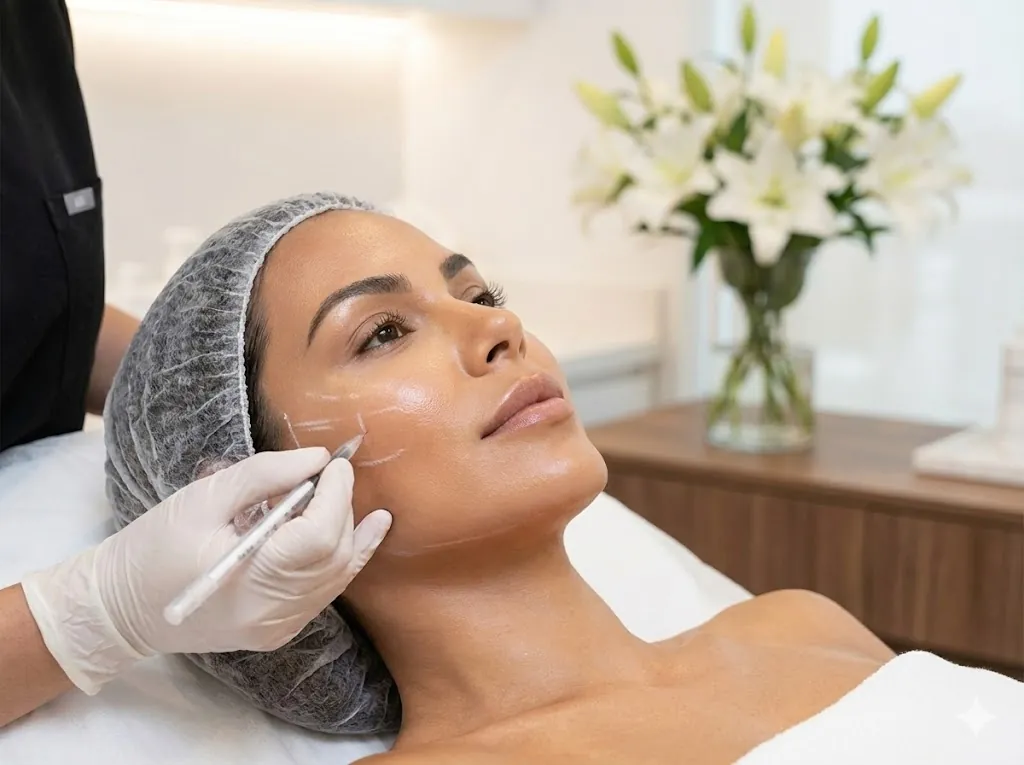
InstaLift uses bidirectional cones instead of barbs. The cones are designed to anchor tissue and hold the lift, and the absorbable material stimulates collagen.
Dual Action
Delivers both an immediate mechanical lift and gradual collagen regeneration.
Advanced Material
Made from Poly Lactic-Co-Glycolic Acid, fully absorbable and biocompatible.
Cone Anchoring
Bidirectional cones are designed to grip the tissue and hold it in its lifted position.
Collagen Stimulation
PLGA material activates fibroblasts to build collagen support around the threads.
Who is InstaLift suitable for?
Our team will assess your needs to determine if this treatment is right for you.
Ideal Candidates
- +Individuals with mild to moderate skin sagging on cheeks, jawline, or midface
- +Those who want to lift and tighten skin without surgery
- +People desiring a natural, refreshed look
- +Individuals seeking collagen-stimulating rejuvenation as part of a gradual plan
- +Patients who prefer a short recovery
Not Recommended For
- –Pregnant or breastfeeding individuals
- –People with active skin infections or inflammation
- –Clients with autoimmune or bleeding disorders
- –Those with very thin or severely lax skin
- –Individuals allergic to PLLA or PGA materials
- –People taking blood thinners that cannot be paused (discuss with your physician; do not stop prescribed medication on your own)
Why choose InstaLift® at RAAC in Richmond?
Natural-looking facial lifting with InstaLift® threads, planned by a physician to suit your face.
Immediate Results
A visible lift right after the procedure
Collagen Support
The threads stimulate collagen as they dissolve; duration varies by person
Short Recovery
Most people return to normal activities within 1-3 days
Physician-Planned Lift
Dr. Charles Jiang plans entry points and lift direction for your face
Which areas can InstaLift lift?
InstaLift is mainly used for the mid-face and jawline, to counter sagging and restore youthful contours.
Nasolabial Folds
Reduces the depth of smile lines by lifting the cheek fat pads
Jowls & Jawline
Lifts sagging skin along the jawline for a sharper, more defined profile
Mid-Face Cheeks
Restores volume and position to drooping cheeks
Marionette Lines
Softens the lines running from the mouth to the chin
Cheek Contours
Enhances cheekbone definition and facial structure
Lower Face
Improves overall lower facial harmony and youthfulness
What happens during an InstaLift, and how long is recovery?
After local anaesthesia, the physician places the sutures through small entry points and positions the cones to lift the tissue. The procedure typically takes 45-60 minutes, and you stay awake throughout.
Pre-Treatment
Avoid alcohol, blood thinners, and anti-inflammatory medications for 3 days before
Inform your doctor about any allergies or health conditions
Get adequate sleep the night before treatment
Arrive with a clean face and no makeup
Avoid caffeine before treatment to minimize discomfort
During Treatment
Local Anesthesia
Small entry points are numbed with local anesthesia for comfort
Thread Insertion
The physician creates small entry points and gently inserts the sutures into the subcutaneous tissue
Anchoring & Lifting
Bidirectional cones anchor the tissue, allowing the physician to physically lift and reposition the skin
Stimulation
As the PLGA material dissolves, it activates fibroblasts to encapsulate the sutures in new collagen
Post-Treatment
Swelling, bruising, tenderness and dimpling at entry points are common and usually settle within about a week. Contact us if swelling persists, redness spreads or you have a fever
Sleep on your back with your head elevated for 3–5 days
Avoid saunas, hot yoga, or strenuous exercise for 1 week
Resume light activities after 24 hours; for about 2 weeks avoid wide mouth opening, dental work and facial massage
Use gentle skincare only and avoid alcohol and smoking for several days. The lift is visible straight away and continues to improve over 3-6 months
Keep the treated area clean and hydrated
*Individual results may vary.
InstaLift Questions
Is the InstaLift procedure painful?+
Local anaesthetic is used to numb the entry points and the path of each suture, so most people describe pressure or tugging rather than sharp pain. You stay awake and can talk with the physician throughout. Tenderness for a few days afterwards is common.
How long does recovery take after an InstaLift?+
Most people return to social activities within 1-3 days. You may experience swelling, bruising or skin dimpling at the entry points, which typically resolves within about a week.
How is InstaLift different from PDO threads or barbed threads such as Aptos?+
InstaLift uses small PLGA cones rather than barbs to grip the tissue, on absorbable sutures that stimulate collagen as they dissolve. PDO threads are a different absorbable material that typically dissolves in about 6-9 months. Aptos threads are barbed PLACL threads that dissolve gradually over about 18-24 months. Which thread suits you depends on the area and your skin, and your physician will advise after assessment.
How long do InstaLift results last?+
A lift is visible immediately, although swelling or dimpling can blur it for the first week or two, and it keeps improving over 3-6 months as collagen builds around the sutures. Results are not permanent: they commonly last around 12-18 months, and the manufacturer reports up to about 2 years. The face keeps ageing in the meantime. Your physician can give you an estimate at consultation.
What are the risks and side effects of InstaLift®?+
Common effects are swelling, bruising, tenderness and skin dimpling for up to about a week. Less commonly, threads can be felt or seen under the skin, the face can look asymmetric, or an infection can develop; rarely a thread needs adjusting or removal. A physician assesses suitability first, and we ask you to contact us promptly about worsening swelling, spreading redness or fever.
Where can I get an InstaLift in Richmond or Vancouver?+
Richmond Anti-Aging Clinic is at Unit 110, 5580 No. 3 Rd, Richmond, BC, about a 3-minute walk from Lansdowne Station on the Canada Line, so it is reachable by SkyTrain from Vancouver and Burnaby. We see patients from Richmond and across Greater Vancouver by appointment, daily 9:00-18:00. Consultations are available in English, Mandarin and Cantonese, and a physician assesses suitability before any treatment.
How is InstaLift different from a surgical face lift?+
InstaLift is minimally invasive: small entry points, local anesthesia and a short recovery. A surgical face lift removes and repositions tissue and gives a stronger, longer correction for significant sagging. InstaLift suits mild to moderate sagging; your physician will tell you which is realistic for you.
Who is the ideal candidate for an InstaLift?+
Adults with mild to moderate sagging of the cheeks, midface or jawline, whose skin is neither very thin nor very heavy, are usually assessed. It suits men and women who want a lift without surgery and accept that the result is temporary. Significant sagging may be better addressed surgically.
How much does InstaLift cost?+
Prices are not listed online. The cost of an InstaLift depends on the areas treated, how many sutures each side needs, and whether it is planned with other treatments such as fillers. Thread lift costs vary for the same reasons, so an average figure says little about your own face. Dr. Charles Jiang assesses you first, and you receive a quote for your plan after that assessment.
Can InstaLift be combined with other treatments?+
Yes. InstaLift lifts tissue but adds little volume, so it is often planned alongside dermal fillers, and sometimes with skin-tightening treatments such as Ultherapy®. Your physician decides the order and timing so each treatment can settle before the next.
What is the downside of a thread lift?+
The result is modest and temporary, and there is some recovery. A thread lift like InstaLift repositions tissue less than surgery, commonly lasts around 12-18 months, and suits mild to moderate sagging rather than heavy or very loose skin. Swelling, bruising and dimpling at the entry points are common for about a week; less often the sutures can be felt or seen, the result can look uneven, or infection can occur.
Can an InstaLift be repeated?+
Yes. Because the sutures are absorbable and the result fades over time, the procedure can be repeated once the effect has worn off, often after a year or more. Your physician reviews your face at follow-up and advises whether and when another treatment makes sense.
Book Your Consultation
Considering a thread lift? At Richmond Anti-Aging Clinic in Richmond, BC, Dr. Charles Jiang assesses your face and plans your lift. Dr. Jiang has 29+ years of clinical experience.
Related treatments
What our clinical team has written about this
How it works, who it suits, and what recovery looks like:
- Aptos vs PDO Threads vs InstaLift: How Thread Lifts Differ and Which Suits You
From early barbed sutures to absorbable Aptos threads: how thread lifts work, how Aptos compares with PDO threads and other options, and what recovery involves.
- InstaLift Richmond: The Science of Non-Surgical Lifting
Explore the science behind InstaLift Richmond at RAAC. Learn how PLGA threads stimulate collagen and provide a non-surgical facelift with Dr. Charles Jiang.