If you're researching non-surgical options for sagging cheeks or a softening jawline, you've likely encountered InstaLift. This absorbable thread lift uses temporary sutures with small cones to reposition tissue, offering a middle ground between injectables and surgery. In this deep-dive, we'll examine the mechanism, clinical evidence, candidacy, and how InstaLift compares to other lifting approaches. For a treatment overview, learn more about InstaLift.
What Is InstaLift and How Does It Work?
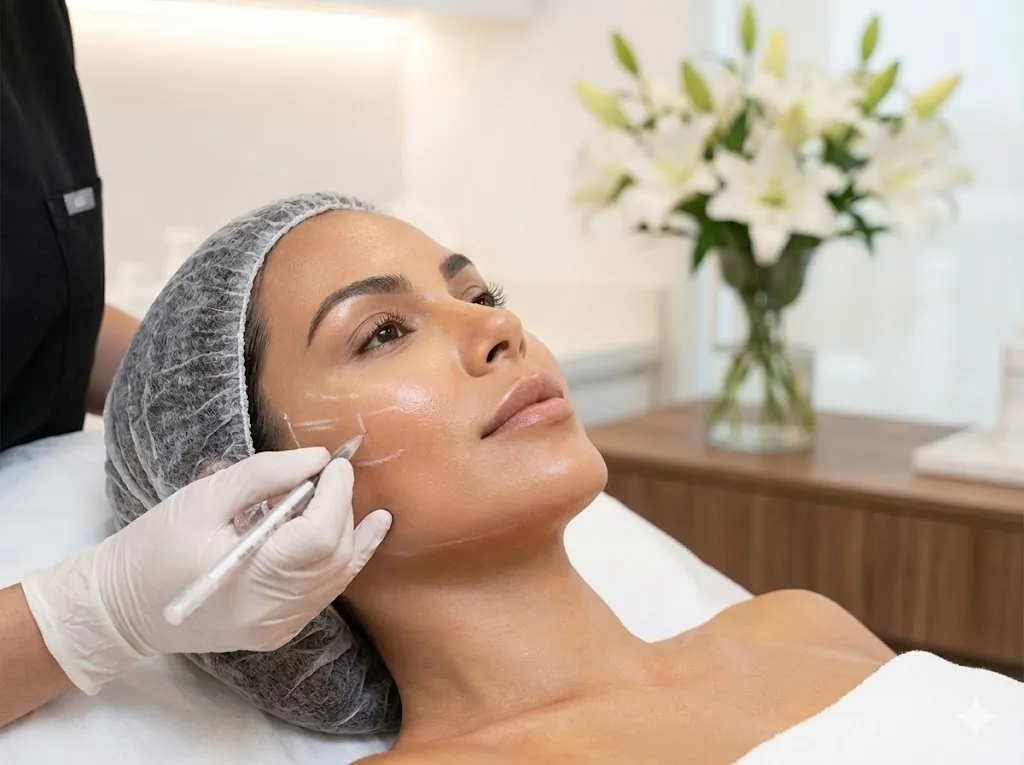
InstaLift is a brand of absorbable thread lift that uses bidirectional sutures made of poly-L-lactic acid (PLLA) with small cones along the thread. These threads are inserted under the skin using a fine needle or cannula. The cones anchor into the deeper tissue, allowing the physician to lift and reposition sagging areas of the face, particularly the cheeks and jawline. Over time, the threads are absorbed by the body, and the PLLA material may stimulate collagen production, which can contribute to gradual skin firming.
The procedure typically takes about 45–60 minutes, depending on the areas treated, and is performed in-office with local anesthesia. Results are visible immediately after the lift, though some swelling may obscure the final outcome. The effect is not permanent; the lifting is mechanical while the threads are intact, and collagen stimulation may provide ongoing improvement as the threads dissolve.
Mechanism of Action: From Mechanical Lift to Collagen Stimulation
InstaLift works through two primary mechanisms: immediate mechanical lifting and longer-term collagen remodeling.
Mechanical Lifting
The threads are placed in the subcutaneous layer, and the cones grip the tissue. When the physician adjusts the thread, it lifts the overlying skin and soft tissue. This provides an immediate, though temporary, repositioning of the treated area. The lift is most noticeable in the mid-face and jawline, where gravity and volume loss contribute to sagging.
Collagen Stimulation
Poly-L-lactic acid has been used for decades as a bio-stimulatory material. When introduced into the dermis or subcutaneous tissue, it triggers a foreign-body response that leads to fibroblast activation and new collagen deposition. This process is gradual and may continue for months after the threads are placed. The new collagen can improve skin thickness and elasticity, potentially extending the benefits beyond the mechanical lift. However, individual responses vary, and not everyone will experience the same degree of collagen stimulation.
Clinical Evidence Summary
The evidence for absorbable thread lifts, including InstaLift, comes from several peer-reviewed studies. It's important to note that research on thread lifts is generally smaller and shorter-term than studies on surgical facelifts or energy-based devices. Here's a summary of key findings:
- A study in Dermatologic Surgery evaluated the use of absorbable barbed sutures for facial lifting and reported improvements in skin laxity, with results varying between patients. The authors noted that results are technique-dependent and patient selection is critical.
- Research in the Journal of Cosmetic Dermatology described the use of cone-based threads for midface lifting, finding that the procedure may provide noticeable lifting for some patients that lasts several months, with collagen stimulation contributing to skin quality.
- A review in the Journal of Cutaneous and Aesthetic Surgery discussed the evolution of thread lifts and noted that absorbable threads like PLLA may be associated with fewer long-term complications than permanent threads for some patients, though transient swelling and bruising can occur.
These studies suggest that InstaLift can be an effective option for mild to moderate facial laxity, but they also emphasize that outcomes depend on physician technique, patient anatomy, and appropriate candidate selection. No treatment is universally effective, and results are not guaranteed.
InstaLift vs. Other Lifting Approaches
When considering InstaLift, it's helpful to understand how it compares to other non-surgical and minimally invasive options. The table below outlines key differences.
| Feature | InstaLift (PLLA threads with cones) | PDO Threads | Ultherapy (micro-focused ultrasound) |
|---|---|---|---|
| Mechanism | Mechanical lift + collagen stimulation | Mechanical lift + mild collagen stimulation | Thermal collagen contraction and neocollagenesis |
| Depth of action | Subcutaneous | Subcutaneous or deeper | Deep dermis and SMAS (varies by transducer) |
| Immediate effect | Yes, visible lift | Yes, visible lift | Minimal immediate effect; gradual over weeks to months |
| Duration | Several months to over a year (varies) | Several months (varies) | Often a year or more (varies) |
| Downtime | A few days of swelling/bruising | A few days of swelling/bruising | Minimal to no downtime |
| Best for | Mild to moderate sagging, especially cheeks/jawline | Mild sagging, skin quality | Mild to moderate laxity, skin tightening |
| Anesthesia | Local | Local | Topical or local |
InstaLift vs. PDO Threads
PDO (polydioxanone) threads are another type of absorbable thread. They are often thinner and may be used for skin quality as well as lifting. InstaLift threads are larger and have cones for anchoring, and how much lift they provide varies from person to person. However, PDO threads may be less expensive and have a shorter recovery. The choice depends on the degree of lifting desired and the physician's assessment.
InstaLift vs. Ultherapy
Ultherapy uses focused ultrasound to heat deeper tissue, stimulating collagen contraction and new collagen formation. It does not provide a mechanical lift, so it's better suited for skin tightening rather than repositioning sagging tissue. InstaLift, on the other hand, offers immediate lift but may not tighten skin as much as Ultherapy. Some physicians combine both for comprehensive rejuvenation.
Who Is a Good Candidate for InstaLift?
InstaLift is best suited for individuals with mild to moderate facial laxity who want a noticeable lift without surgery. Ideal candidates are generally in their 30s to 50s, have good skin elasticity, and have realistic expectations. It is not a replacement for a facelift, and those with significant sagging or excess skin may be better served by surgical consultation.
During a consultation at Richmond Anti-Aging Clinic (RAAC), Dr. Charles Jiang, a licensed physician in British Columbia, evaluates facial anatomy, skin quality, and medical history to determine if InstaLift is appropriate. He may also discuss alternative or combination approaches.
Limitations and Contraindications
InstaLift is not suitable for everyone. Contraindications include active skin infections, autoimmune conditions affecting the skin, bleeding disorders, and allergy to PLLA or lidocaine. Patients with a history of keloids or poor wound healing should be cautious. Additionally, thread lifts are not recommended for pregnant or breastfeeding women.
Potential side effects include swelling, bruising, tenderness, and temporary dimpling or puckering. More serious risks, though uncommon, include infection, thread extrusion, and nerve injury. These risks are reduced with experienced technique and proper aftercare.
Recovery and Aftercare
After InstaLift, patients can expect mild swelling and bruising for a few days. Most return to normal activities within a week, though strenuous exercise and dental work should be avoided for about two weeks. Sleeping on the back and avoiding excessive facial movement can help optimize results. Follow your physician's instructions carefully.
Why Choose Richmond Anti-Aging Clinic (RAAC)?
At RAAC in Richmond, BC, care is physician-led. Dr. Charles Jiang oversees all treatments, ensuring that candidate evaluation and safety are prioritized. The clinic offers personalized treatment plans tailored to your anatomy and goals. Bilingual staff (English and Chinese) are available to assist you throughout your journey. To discuss whether InstaLift is right for you, book a consultation.
Frequently Asked Questions
A physician can assess whether it or another approach is appropriate.
Which areas can InstaLift lift?
InstaLift is commonly used for the mid-face (cheeks) and jawline. Other areas may be treated off-label.
What exactly is Silhouette InstaLift and how does it create a lift?
It is a thread lift that places absorbable sutures with small bidirectional cones under the skin to lift sagging cheeks and jawline without surgery. The cones anchor the tissue for an immediate mechanical lift, and the PLGA material stimulates collagen as it dissolves. Results are not permanent.
How do the cone threads differ from a barbed thread lift?
InstaLift uses bidirectional cones rather than barbs. The cones are designed to grip and hold tissue in its lifted position, while the absorbable Poly Lactic-Co-Glycolic Acid material activates fibroblasts to build collagen support around the threads.
Who may be a suitable candidate, and who should not have InstaLift?
It may suit adults with mild to moderate sagging on the cheeks, jawline or midface who want a lift without surgery and a short recovery. It is not recommended during pregnancy or breastfeeding, with active skin infection or inflammation, autoimmune or bleeding disorders, very thin or severely lax skin, allergy to PLLA or PGA, or for people on blood thinners that cannot be paused. A licensed physician in British Columbia, Dr. Charles Jiang, evaluates candidacy and plans the lift at RAAC in Richmond, BC.
What happens during the appointment, and is it uncomfortable?
Small entry points are numbed with local anesthesia, and the physician inserts the sutures into the subcutaneous tissue and positions the cones to lift and reposition the skin. The procedure typically takes 45-60 minutes and you stay awake throughout. Swelling, bruising, tenderness and dimpling at entry points are common and usually settle within about a week.
Next Steps
If you're considering InstaLift, the next step is a personalized consultation. Our team at Richmond Anti-Aging Clinic (RAAC) in Richmond can evaluate your needs and discuss whether InstaLift or another option is right for you. Book a consultation today.
Ready to See What InstaLift Can Do for You?
Our medical team at Richmond Anti-Aging Clinic (RAAC) in Richmond is ready to create your personalized treatment plan. Book a consultation — available in English and Chinese.
This article is for educational purposes only and does not constitute medical advice. Please consult with a qualified healthcare professional before undergoing any treatment.