Changes from a DPL Photo Facial usually build gradually rather than appearing at once. Spots may darken and flake within about a week to ten days, while redness and tone tend to shift over a course of sessions. How long changes last depends on your skin, sun exposure and maintenance, so individual results vary.
What is a DPL Photo Facial and how does it work?
A DPL Photo Facial is a refined form of IPL that uses filtered light to target redness, sun spots and uneven tone. DPL (Dynamic Pulsed Light) narrows the output to a 500 to 600 nm band, sometimes called the Gold Spectrum, which is absorbed by both oxyhemoglobin in visible blood vessels and melanin in pigmented spots. Because the light is confined to this range, the energy is directed at those targets while limiting the effect on the surrounding skin, and settings are adjusted to your skin tone.
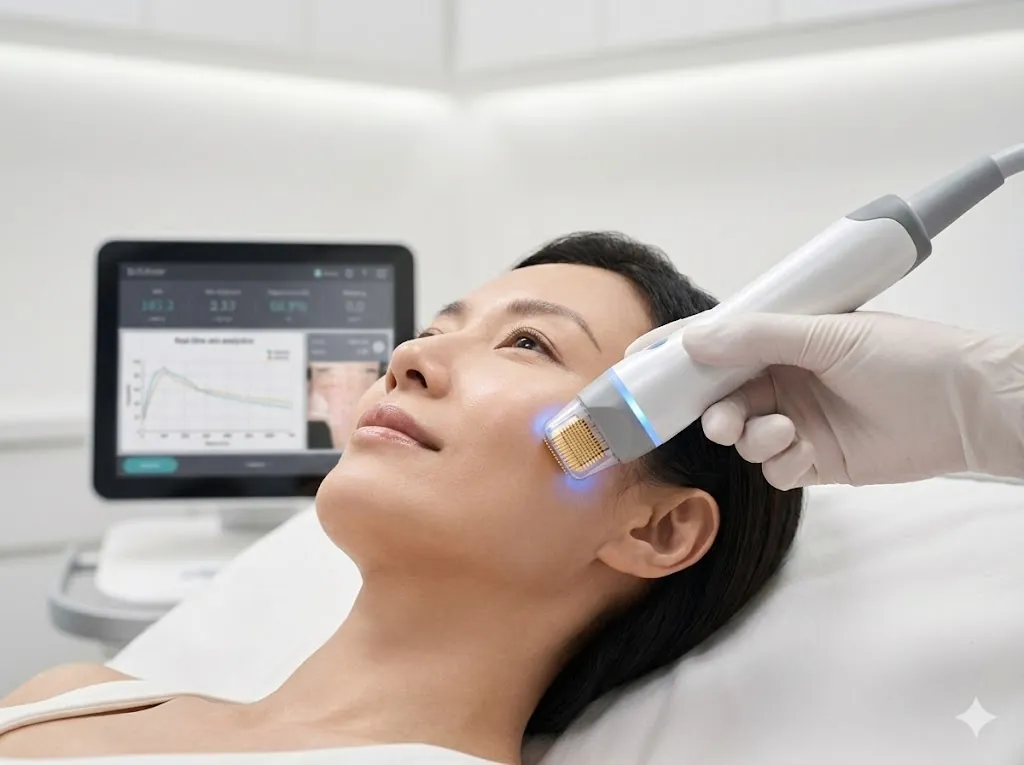
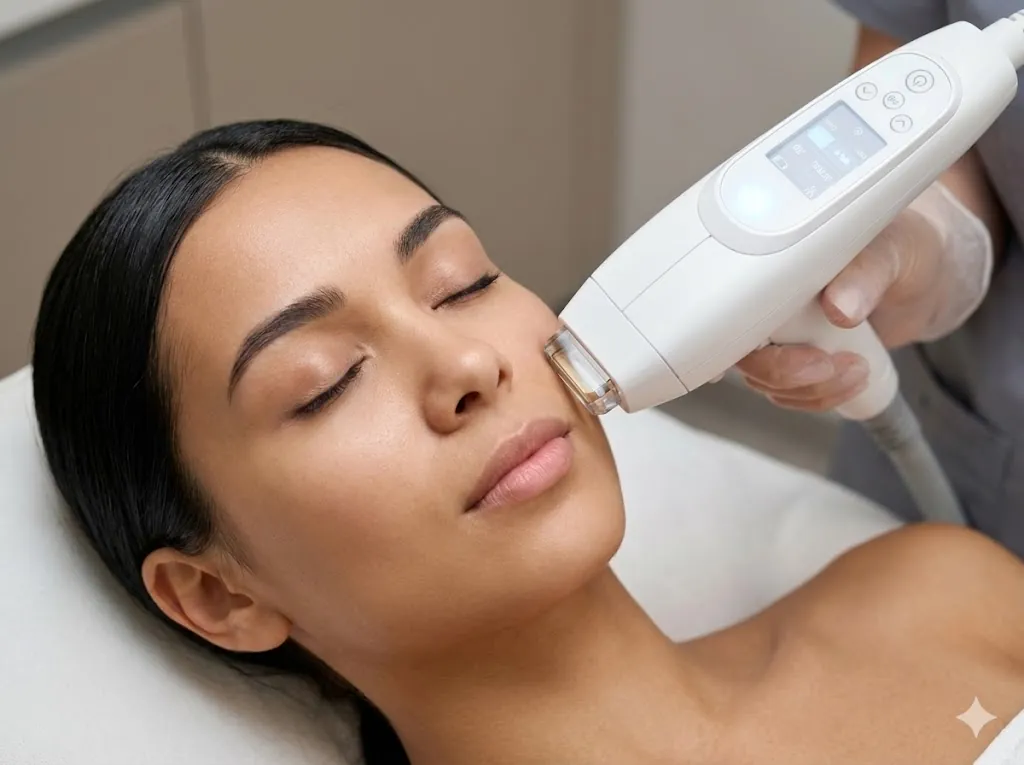
Delivery matters as much as wavelength. The light is pulsed in a sliding motion so energy spreads evenly across the treated area, which helps avoid the striped marks that uneven passes can cause. In-motion technology and cooling sapphire tips keep the skin surface cool during the pass. The thermal effect also stimulates fibroblasts to produce new collagen, which may gradually improve skin texture and firmness alongside tone.
At RAAC in Richmond, BC, a DPL Photo Facial is physician-assessed, with Dr. Charles Jiang, a licensed physician in British Columbia and the clinic's lead physician, overseeing candidate evaluation and clinical safety. A typical course is 3 to 6 sessions spaced 3 to 4 weeks apart, with energy calibrated conservatively when the risk of post-inflammatory hyperpigmentation is higher.
What happens during a DPL session, step by step?
A session involves cleansing, eye protection, cool gel and a sliding handpiece that delivers pulses of light across the treatment area. At RAAC in Richmond, BC, the visit is physician-supervised, and a typical session commonly takes 20–45 minutes depending on the area being treated.
Preparation starts before the appointment. Sun exposure is avoided for 2–4 weeks beforehand, retinoids and exfoliants are discontinued 1 week before, and skin should arrive clean and makeup-free. Any medications or medical conditions are reviewed with the doctor at this stage.
During treatment:
- Skin is cleansed and protective eyewear is provided.
- Cool gel is applied to help transmit the light.
- The handpiece is moved across the skin in a sliding motion, delivering pulses of light. The sensation is often described as warmth with a light snap, and comfort options can be discussed.
- Cooling sapphire tips protect the skin surface and keep the treatment comfortable throughout.
Afterwards, sunscreen (SPF 30+) is applied and continued daily, and gentle skincare is used for the first 24–48 hours. Spot darkening and flaking over roughly 7–10 days can occur, and picking or scrubbing should be avoided. Dr. Jiang, a licensed physician in British Columbia, oversees candidate assessment and settings, and clear before and after instructions are given for each session.
When do DPL Photo Facial results start to show?
Changes tend to appear in stages, with pigment often responding first and tone and redness shifting more gradually.
In the first few days after a session, sun spots and freckles may darken before they flake away, typically within about 7–10 days. This darkening is part of the process, not a sign that something has gone wrong, and the spots should not be picked or scrubbed. Any pinkness from the treatment itself usually settles within an hour or two.
After that initial pigment response, uneven tone and redness tend to change more slowly. Because a typical course is 3 to 6 sessions spaced 3 to 4 weeks apart, the more even, glowing look builds across the course rather than after a single visit. Results vary from person to person, and how much change appears depends on your skin, your concerns and the settings used.
At RAAC in Richmond, BC, Dr. Jiang's team sets energy according to your skin tone and pigment risk, and a test area may be done first. If you are unsure what to expect for your skin, a consultation with a licensed physician in British Columbia is the appropriate starting point.
How long do DPL Photo Facial results tend to last?
Duration varies with your skin, sun exposure and how often you maintain treatment, so no single timeline fits everyone.
A typical course is 3-6 sessions, usually spaced 3-4 weeks apart. Because each session builds on the last, the changes tend to hold better once the full course is complete than after a single treatment. Beyond that, how long the improvement lasts depends largely on how well the skin is protected afterwards.
Two things shape durability:
- Sun protection. Applying sunscreen (SPF 30+) daily and avoiding direct sun is the main factor in how long results hold. New sun exposure can bring fresh pigment and redness forward, so unprotected skin may lose ground sooner.
- Collagen response. The thermal effect of DPL stimulates fibroblasts to produce new collagen, which supports skin texture and firmness over time. This is a gradual process, and its extent varies from person to person.
Maintenance sessions can help sustain the result for some people, though the right interval is individual. At RAAC in Richmond, BC, Dr. Jiang, a licensed physician in British Columbia, can assess your skin and advise on a schedule. Results vary, and a plan set at consultation is the most reliable guide.
What affects how noticeable or long-lasting the changes are?
Skin tone, pigment risk, sun habits and session spacing all influence how a course of DPL unfolds. DPL filters the light into a narrower band, and energy is set to your skin tone and your risk of pigment rebound (PIH); a test area may be done first. Settings matter with any light-based treatment, so our team calibrates energy conservatively when PIH risk is higher.
Delivery technique counts too. A sliding technique spreads the energy evenly, which helps avoid the striped marks that uneven passes can cause. For sensitive, flushed skin, Dr. Jiang's team uses conservative settings, aiming to calm redness rather than irritate the skin. Dr. Jiang is a licensed physician in British Columbia and the lead physician at RAAC in Richmond, BC, and physician oversight shapes how each plan is adjusted.
Aftercare and spacing also matter:
- Daily sunscreen (SPF 30+) and avoiding direct sun help protect results.
- Spots may darken over the first few days and flake off within about 7–10 days; picking or scrubbing them can work against the treatment.
- A typical course is 3 to 6 sessions, 3 to 4 weeks apart, and keeping to that spacing supports gradual change.
Where it suits your skin, DPL is often combined with PicoWay for a "pigment and redness" plan. Results vary from person to person.
Who is a good candidate for DPL, and who should wait?
Suitability depends on your skin type and concerns, and a physician assessment is the right way to decide. DPL is designed for people who want to improve skin tone, reduce pigmentation and address early signs of ageing. At Richmond Anti-Aging Clinic (RAAC) in Richmond, BC, Dr. Charles Jiang, a licensed physician in British Columbia and the lead physician at RAAC, reviews your skin before treatment is planned.
DPL may suit you if you have:
- Uneven skin tone
- Facial redness, visible broken capillaries or rosacea-type flushing
- Sunspots, age spots or freckles
- Mild pigmentation issues
- Early signs of ageing, or a goal of brighter, clearer-looking skin
Some situations call for waiting or a closer look first. DPL is not recommended during pregnancy or breastfeeding, or over an active skin infection, cold sore or open wound. Melasma or a history of keloid scarring needs physician assessment before any decision. Recent sun exposure, tanning or self-tanner means treatment should wait, and photosensitivity — including photosensitizing medications or supplements — should be disclosed before booking.
Settings are matched to your skin tone and pigment rebound risk, and a test area may be done first. If you are unsure where you fit, a consultation is the calm way to find out.
What is recovery like after a DPL Photo Facial?
Most people return to normal activities the same day, with mild pinkness that usually settles quickly. At Richmond Anti-Aging Clinic (RAAC) in Richmond, British Columbia, the after-treatment instructions are reviewed before you leave, so the first day or two is straightforward to manage.
Skin may appear pink for 1–2 hours, similar to a mild sunburn, and most people return to normal activities straight afterwards. Any pigment the light has targeted may darken over the first few days and then flake off within about 7–10 days; picking or scrubbing those areas should be avoided, since letting them shed on their own is part of how the treatment works.
For the first 24–48 hours, gentle skincare is the priority, and retinoids or exfoliants are restarted only when your physician advises. Sunscreen (SPF 30+) should be applied immediately after treatment and daily, along with avoiding direct sun and wearing protective clothing. Hot showers, saunas and strenuous exercise are best avoided for 24 hours.
If you have questions about how your skin is responding, RAAC's team — led by Dr. Charles Jiang, a licensed physician in British Columbia — can advise on what is expected and what warrants a check-in.
What are the limits and possible side effects of DPL?
DPL is not suitable for every concern, and light-based treatment carries considerations that should be discussed before booking. It is a physician-assessed treatment for sun spots, redness, broken capillaries and uneven tone, so it is not a solution for every skin issue, and results vary from person to person.
Some situations call for caution or a delay. Melasma or a history of keloid scarring needs physician assessment first, and treatment should wait after recent sun exposure, tanning or self-tanner use. Photosensitivity — including from photosensitizing medications or supplements — should be raised before booking. Pregnant or breastfeeding women, and anyone with an active skin infection, cold sore or open wound in the treatment area, should not proceed.
Settings matter with any light-based treatment. When the risk of post-inflammatory hyperpigmentation (PIH) is higher, the team at RAAC in Richmond, BC calibrates energy conservatively, and a test area may be done first. Sensitive, flushed skin is treated with conservative settings, aiming to calm redness rather than irritate it. Expect mild pinkness for an hour or two; spots may darken over the first few days and flake off within about 7–10 days, so do not pick or scrub them. Dr. Jiang, a licensed physician in British Columbia, oversees candidate evaluation and clinical safety, and it is worth asking your plan about suitability.
Frequently asked questions
What is a DPL Photo Facial and how is it different from IPL?
A DPL Photo Facial is a refined form of IPL that filters light into a narrow 500 to 600 nm band absorbed by redness and pigment. Settings are adjusted to your skin tone, and most people need 3 to 6 sessions spaced 3 to 4 weeks apart.
Who is a good candidate for a DPL Photo Facial?
It may suit people with uneven tone, facial redness or visible broken capillaries, sun spots and freckles, dullness, or early signs of ageing. Candidacy is decided after assessment; pregnancy, active infection in the area, melasma or a history of keloid scarring, recent sun exposure or tanning, and photosensitivity need to be discussed first.
What happens during a DPL session and does it hurt?
Your skin is cleansed, protective eyewear is provided, and cool gel is applied before the handpiece glides across the skin delivering pulses of light. Most people feel warmth and a light snap, and cooling sapphire tips help keep it comfortable; a session commonly takes 20 to 45 minutes depending on the area.
How should I prepare for and care for my skin after a DPL Photo Facial?
Avoid sun exposure for 2 to 4 weeks before, stop retinoids and exfoliants about a week before, and arrive with clean, makeup-free skin. Afterwards apply SPF 30+ daily, use gentle skincare for 24 to 48 hours, skip hot showers, saunas and strenuous exercise for 24 hours, and do not pick or scrub spots that darken and flake off within about 7 to 10 days.
When might I see results from a DPL Photo Facial, and how long do they last?
Changes tend to appear gradually as the course progresses, with redness and uneven tone often settling over the weeks after each session. How long improvements last varies with your skin, sun exposure and home care, so maintenance sessions and daily sun protection are usually discussed at follow-up.
How much does a DPL Photo Facial cost in Richmond?
Pricing is personalized at consultation, because the plan depends on the area treated, the number of sessions recommended and your skin assessment. Contact Richmond Anti-Aging Clinic (RAAC) in Richmond, BC to arrange an assessment.
Is a DPL Photo Facial safe, and who oversees treatment at RAAC?
DPL is a light-based treatment with a short recovery for most people, though mild pinkness can last an hour or two and pigment risk means settings matter. At Richmond Anti-Aging Clinic (RAAC) in Richmond, BC, Dr. Charles Jiang, a licensed physician in British Columbia and the clinic's lead physician, oversees candidate evaluation and clinical safety.
Next steps
If you are weighing DPL Photo Facial, a physician-led assessment at Richmond Anti-Aging Clinic (RAAC) in Richmond can clarify whether it suits you. Book a consultation — available in English and Chinese. You can also read more on the DPL Photo Facial treatment page.
This article is for educational purposes only and does not constitute medical advice. Please consult with a qualified healthcare professional before undergoing any treatment.