This is a comparison guide for choosing between thread types and other lifting options. Aptos threads (lactic acid and caprolactone, with barbs), PDO threads (absorbed faster) and InstaLift (absorbable sutures with small cones) hold tissue in different ways, and for some faces fillers, focused ultrasound or surgery suit better. A physician assessment decides; see our Aptos thread lift page. If you have already chosen Aptos and want the procedure day, recovery and cost factors, see Aptos thread lift: procedure and recovery.
What is an Aptos thread lift?
Thread lifts differ mainly in material and in how the thread holds tissue. Aptos threads are barbed and made of lactic acid and caprolactone; PDO threads are polydioxanone and are absorbed sooner; InstaLift uses absorbable sutures with small cones that anchor the tissue. What a single Aptos treatment involves, from the day itself to recovery, is in Aptos thread lift: procedure and recovery.
How does an Aptos thread lift work?
It works in two ways: barbs on the threads anchor in the tissue and give an immediate mechanical lift, and as the PLA/PCL material is gradually absorbed it triggers new collagen and improved circulation.
The efficacy of an Aptos
thread lift is dictated by its material composition and its interaction with the body’s healing response. Most traditional threads use Polydioxanone (PDO). While effective, PDO threads typically dissolve within six months. Aptos threads, however, use a blend of Polylactic Acid (PLA) and Polycaprolactone (PCL).
1. Mechanical Suspension
The immediate result of a thread lift comes from the physical lifting of the malar fat pads and sagging submental tissues. Aptos threads feature patented multidirectional barbs (cogs) that anchor into the subcutaneous fat. When tension is applied, these barbs act as a scaffolding, repositioning the skin to a more youthful vector.
2. Neocollagenesis and Fibroblast Activation
Longer-term changes happen beneath the surface. As the threads are gradually absorbed, they trigger a controlled inflammatory response. This process, known as neocollagenesis, recruits fibroblasts to the area. According to the science of biostimulation, the presence of PLA/PCL encourages the production of Type I and Type III collagen. Type I collagen provides structural strength, while Type III provides the elasticity often lost with age.
3. Angiogenesis and Tissue Rejuvenation
Beyond collagen, the degradation of Aptos threads stimulates angiogenesis—the formation of new blood vessels. This improves localized microcirculation, which may support oxygenation of the dermis and skin texture and tone. If you are noticing a loss of definition along the jawline or mid-face, Book a Consultation with our medical team in Richmond to see if this biological approach is right for your skin type.
What does the research say about Aptos thread lifts?
Published studies suggest barbed P(LA/CL) threads hold more securely than smooth threads, that their collagen effect may continue after the threads dissolve, and that absorbable threads have a favourable safety profile for mild to moderate laxity.
Thread lifts have been studied in peer-reviewed research.
- Dermatologic Surgery: Research on the pioneers of the Aptos technique described how the barb design may allow for more secure fixation compared to smooth threads, which may help reduce the risk of migration and support more symmetrical results.
- Aesthetic Surgery Journal: This research highlighted the longevity of P(LA/CL) materials, noting that the biostimulatory effects may persist long after the physical thread has been metabolized by the body. This study supports the 18-to-24-month duration often observed with Aptos.
- Clinics in Plastic Surgery: A comprehensive review found that absorbable threads may provide a safe profile for patients with mild to moderate laxity, with a lower complication rate than permanent suspension sutures used in previous decades. At Richmond Anti-Aging Clinic (RAAC), Dr. Charles Jiang utilizes these clinical insights to customize the depth and vector of every thread insertion. As a licensed physician, he explains the possible risks and how results vary at your consultation.
How does an Aptos thread lift compare with PDO threads, fillers and surgery?
Aptos threads may last longer than PDO threads for some patients, lift sagging tissue through a mechanism fillers do not use, and most people resume normal activities the same day, while a surgical facelift remains a more involved procedure.
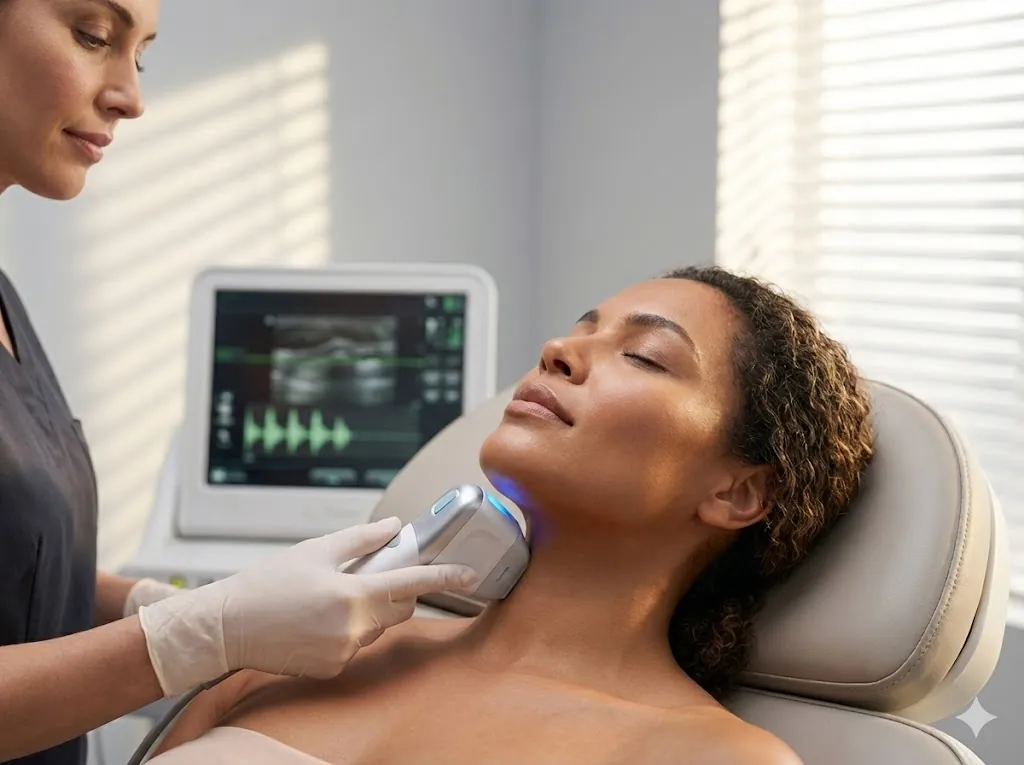
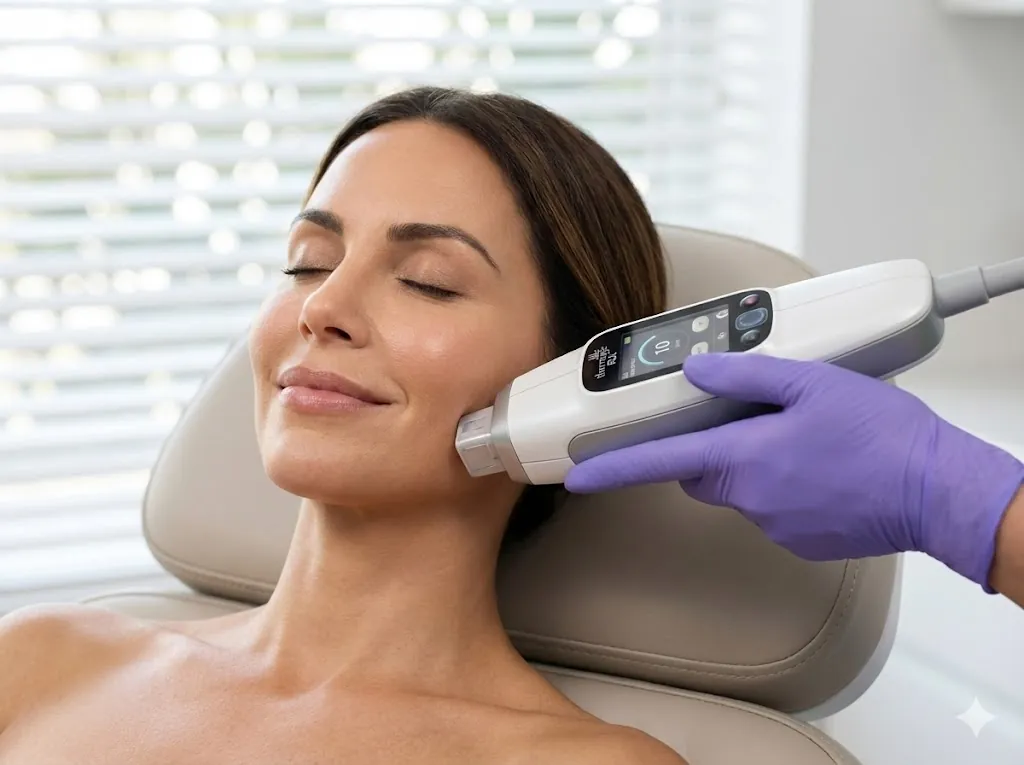
When evaluating a non-surgical facelift, it is essential to compare the thread lift to other modalities like dermal fillers or High-Intensity Focused Ultrasound (HIFU).
| Feature | Aptos Thread Lift | Traditional PDO Threads | Dermal Fillers | Surgical Facelift |
|---|---|---|---|---|
| Primary Goal | Lifting & Biostimulation | Mild Lifting | Volume Replacement | Tissue Excision |
| Material | P(LA/CL) (Long-lasting) | PDO (Short-term) | Hyaluronic Acid | N/A |
| Longevity | 18–24 Months | 6–12 Months | 6–18 Months | 10+ Years |
| Downtime | 2–5 Days | 1–3 Days | Minimal | 2–4 Weeks |
| Mechanism | Structural Scaffolding | Collagen Stimulation | Volumization | Surgical Repositioning |
Candidate Evaluation: Is the Thread Lift Right for You?
Not everyone is a candidate for a thread lift. Identifying the right patient is a critical component of medical ethics at RAAC. Dr. Charles Jiang emphasizes that suitable candidates typically fall into these categories:
- Mild to Moderate Laxity: Individuals with early signs of jowling, nasolabial folds, or sagging in the neck.
- Good Skin Quality: The skin must have enough thickness to conceal the threads and enough elasticity to respond to the biostimulation.
- Realistic Expectations: A thread lift provides a "refreshed" and "lifted" look, but it is not a replacement for a surgical rhytidectomy in cases of severe skin redundancy. Contraindications include:
- Active skin infections or autoimmune diseases.
- Excessively thin or "crepy" skin (where threads may be visible).
- Pregnancy or breastfeeding.
- Unrealistic expectations regarding the degree of lift achievable without surgery. To receive a professional assessment of your skin's structural integrity, Book a Consultation at our Richmond clinic.
What happens during a thread lift, and how long is recovery?
The procedure is done under local anaesthetic through small entry points, and swelling, bruising or tightness is common for the first few days. The step-by-step treatment day and recovery for Aptos are covered in Aptos thread lift: procedure and recovery.
Why Choose Richmond Anti-Aging Clinic (RAAC)?
Choosing where to have your thread lift in the Greater Vancouver area is a decision that should be based on safety and expertise. RAAC offers several features:
- Physician-Led Care: Every Aptos procedure is overseen or performed by Dr. Charles Jiang. He has nearly three decades of clinical experience.
- Bilingual Care: We understand the diverse community of Richmond. Our staff is fully fluent in both English and Chinese (Mandarin and Cantonese), ensuring clear communication regarding your goals and aftercare.
- Advanced Technology: We only use medical-grade materials, so your body interacts with quality biostimulants.
- Personalized Strategy: We don't believe in a one-size-fits-all approach. Your thread lift may be combined with other modalities for a comprehensive "liquid lift" or skin tightening protocol.
Frequently Asked Questions
How long does a thread lift last?
While individual results vary, the P(LA/CL) material in Aptos threads typically provides a visible lift for 18 to 24 months. The biological collagen stimulation can continue to benefit the skin even after the threads have fully dissolved.
Is the procedure painful?
We use local anesthesia to numb the treatment area. The sensation is often described as pressure rather than sharp pain. Our team is dedicated to making the experience as comfortable as possible.
What is the difference between Aptos and PDO threads?
PDO (Polydioxanone) threads are absorbed quickly, usually within 6 months. Aptos threads use a combination of PLA and PCL, which is absorbed more slowly and may support collagen stimulation for longer; results vary.
Are there any side effects?
Common side effects include temporary swelling, bruising, and mild puckering of the skin at the entry points. These typically resolve within a few days to a week. Serious complications are uncommon and are discussed at your consultation.
How much does an Aptos thread lift cost?
Contact us for current pricing, as the cost depends on the number of threads required and the complexity of the treatment area.
Next Steps
If you would like to address signs of aging without invasive surgery, the next step is a professional evaluation. Our medical team at Richmond Anti-Aging Clinic (RAAC) in Richmond is ready to create your personalized treatment plan. Book a consultation — available in English and Chinese.
Disclaimer: This article is for educational purposes only and does not constitute medical advice. Please consult with a qualified healthcare professional before undergoing any treatment.
Learn more about InstaLift in Richmond.