The Longevity Peel is a physician-supervised chemical peel that combines AHAs, BHAs and TCA and works deeper than a standard glycolic peel, to resurface the skin and stimulate collagen. It is used for fine lines, pigmentation and uneven texture; expect several days of redness and peeling, a series of 3-4 sessions is often suggested, and suitability depends on your skin type and history.
In the evolving landscape of medical aesthetics, the quest for youthful skin has transitioned from superficial treatments to interventions that address the biological hallmarks of aging. At the forefront of this shift is the Longevity Peel, a sophisticated chemical peel protocol designed not merely to exfoliate, but to reprogram skin function. At Richmond Anti-Aging Clinic (RAAC), we approach skin health through a clinical lens, ensuring that every treatment is grounded in biochemical efficacy and physician-led safety. As we navigate the dermatological advancements of 2026, it is essential to understand that not all resurfacing treatments are created equal. Learn more about Longevity Peel and how it differs from traditional over-the-counter exfoliants.
How does the Longevity Peel work?
The Longevity Peel uses a blend of AHAs, BHAs and TCA to loosen and shed damaged surface cells evenly, while the controlled chemical stress signals the skin to speed up renewal and produce new collagen.
The Longevity Peel operates through a synergistic blend of alpha-hydroxy acids (AHAs), beta-hydroxy acids (BHAs), and specialized trichloroacetic acid (TCA) concentrations. Unlike standard peels that may cause indiscriminate damage to the epidermis, the Longevity Peel is engineered to target specific cellular pathways.
1. Protein Denaturation and Keratolysis
At its core, the Longevity Peel induces controlled keratolysis. By applying specific acidic compounds, we facilitate the denaturation of proteins within the stratum corneum. This process breaks the desmosomes—the cellular "glue" that holds dead skin cells together—allowing for a uniform shedding of damaged superficial layers. This immediate action signals the deeper layers of the epidermis to accelerate turnover, bringing fresh, hydrated cells to the surface.
2. Stimulation of the Dermal-Epidermal Junction (DEJ)
Beyond the surface, the Longevity Peel influences the dermal-epidermal junction. Research indicates that controlled chemical stress triggers a wound-healing response without the trauma of a traditional wound. This stimulates fibroblasts—the primary cells responsible for collagen production. By upregulating the expression of Type I and Type III collagen, the peel helps restore the structural integrity that naturally diminishes with age.
3. Mitochondrial Support and Antioxidant Pathways
Modern longevity-focused peels often incorporate bio-stimulants that support mitochondrial health. By reducing oxidative stress during the peeling process, these formulations prevent the "pro-inflammatory" cascade that can lead to post-inflammatory hyperpigmentation (PIH), particularly in the diverse skin types we treat in Richmond, BC. Book a Consultation to see how this mechanism can benefit your specific skin profile.
What does the research say about peels like this?
Published studies suggest TCA peels can improve photoaged skin by thickening the dermis, that peeling agents may help the skin cope with environmental stress, and that darker skin types benefit from physician oversight.
The efficacy of the ingredients found in the Longevity Peel is well-documented in dermatological literature. Our clinical approach at RAAC is informed by several key studies:
- Kessler et al., Dermatologic Surgery: This study demonstrated that trichloroacetic acid (TCA) in varying concentrations significantly improves photoaged skin by increasing dermal thickness and reorganizing elastic fibers.
- Dreno et al., Journal of the European Academy of Dermatology and Venereology (JEADV): Researchers found that chemical peeling agents not only improve texture but also modulate the local immune response of the skin, making it more resilient against environmental stressors.
- Sarkar et al., Journal of Clinical and Aesthetic Dermatology (JCAD): This research highlights the importance of physician oversight when using advanced peels on darker skin tones (Fitzpatrick IV-VI) to mitigate risks while maximizing the regenerative benefits of glycolic and salicylic acid blends.
How does the Longevity Peel compare with a glycolic peel or laser resurfacing?
It sits in between: it works deeper than a standard glycolic peel, with moderate downtime of a few days, but is less intensive than fractional laser resurfacing, which usually needs one to two weeks of recovery.
To understand where the Longevity Peel sits in the spectrum of skin rejuvenation, consider the following comparison table:
| Feature | Standard Glycolic Peel | Longevity Peel (RAAC) | Fractional Laser Resurfacing |
|---|---|---|---|
| Primary Goal | Superficial exfoliation | Cellular regeneration & deep resurfacing | Thermal tissue remodeling |
| Depth of Action | Epidermis only | Epidermis to Upper Dermis | Deep Dermal |
| Downtime | Minimal (0-2 days) | Moderate (3-5 days) | Significant (7-14 days) |
| Mechanism | Desmosome dissolution | Protein denaturation & Fibroblast activation | Photothermolysis |
| Physician Oversight | Optional | Required (Dr. Charles Jiang) | Required |
Who is a good candidate for the Longevity Peel?
Suitability depends on a physician assessment of your skin type, barrier health and medical history, including past retinoid or isotretinoin use and cold sores, since some people need a modified approach or preventive treatment first.
At Richmond Anti-Aging Clinic (RAAC), safety is our paramount concern. Because the Longevity Peel involves medical-grade acids, a thorough evaluation is required. Dr. Charles Jiang, a licensed physician with over 29 years of clinical experience, oversees the diagnostic phase of our treatments. During your assessment, Dr. Jiang evaluates:
- Fitzpatrick Skin Type: Ensuring the acid concentration is safe for your specific melanin levels.
- Barrier Integrity: Assessing if the skin is too compromised for a high-potency peel.
- Medical History: Reviewing past use of retinoids, oral isotretinoin, or history of viral infections (e.g., Herpes Simplex) that may require prophylactic treatment. Book a Consultation with our team to begin your evaluation.
What happens during a Longevity Peel?
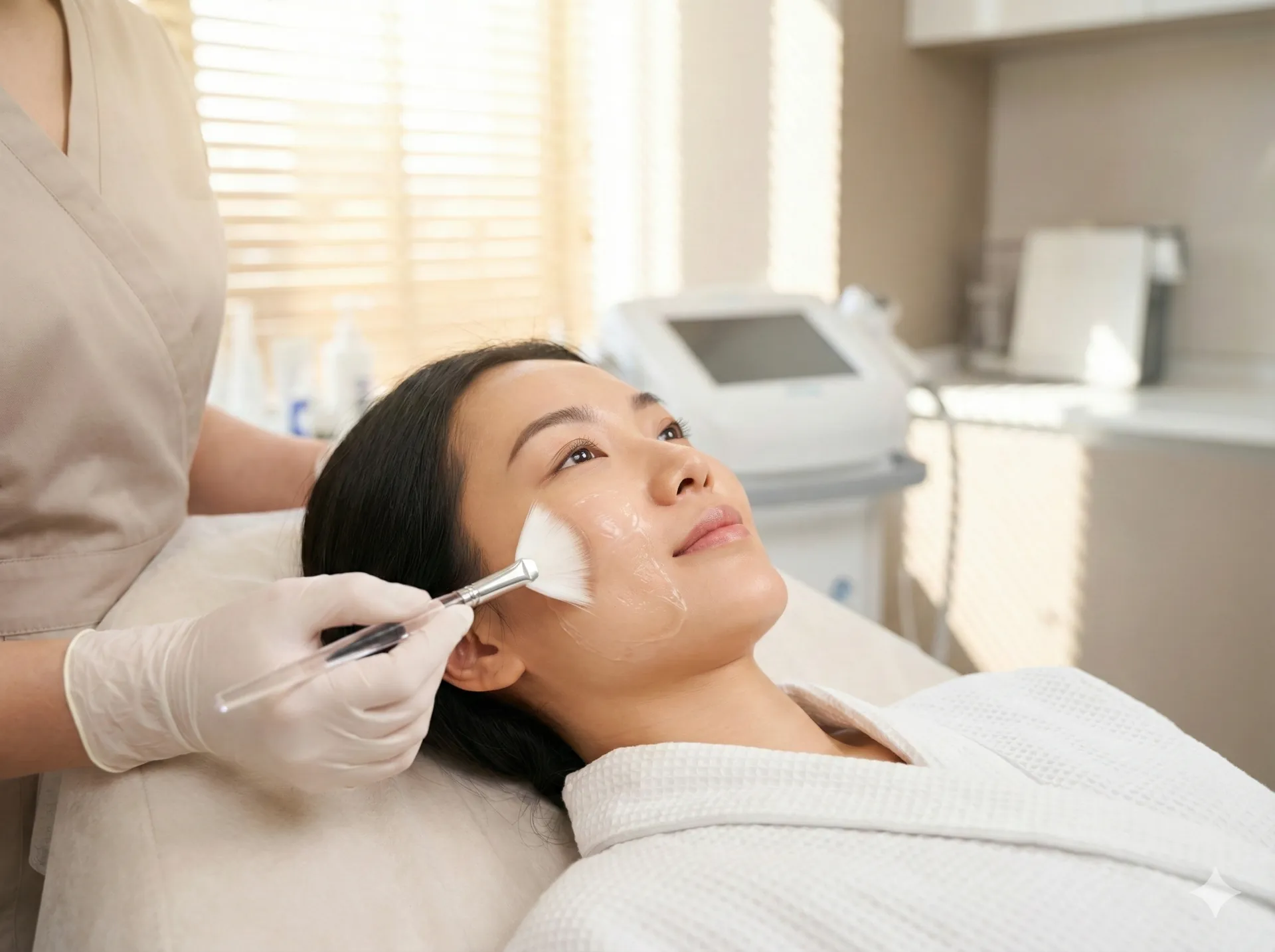
The skin is cleansed and degreased, the peel is applied in layers while the clinician watches for frosting, then it is neutralised or stabilised, and you go home with a strict sun-protection and hydration routine.
- Preparation: The skin is thoroughly cleansed and degreased to ensure uniform penetration of the peeling agent.
- Application: The Longevity Peel solution is applied in precise layers. The number of layers is determined by the skin's reaction and the patient's specific goals.
- Monitoring: We monitor for "frosting"—a clinical sign of protein denaturation—which indicates the depth the peel has reached.
- Neutralization/Stabilization: Once the desired depth is achieved, the peel is neutralized or a stabilizing finishing cream is applied to soothe the skin.
- Post-Treatment Care: Patients are provided with a strict protocol involving high-SPF protection and specific hydrators to support the new skin layer.
Who should not have the Longevity Peel?
It is generally not suitable during pregnancy or breastfeeding, with an active infection or open wound in the area, after oral isotretinoin in the past 6-12 months, or with a history of keloid scarring.
While the Longevity Peel is a powerful tool for skin resurfacing, it is not suitable for everyone. Contraindications include:
- Active skin infections or open wounds in the treatment area.
- Pregnancy or breastfeeding.
- Recent use of oral isotretinoin (within the last 6-12 months).
- History of keloid scarring. Results vary and individual results depend on various factors including age, lifestyle, and adherence to post-care instructions. Medical-grade ingredients are used in our formulations to ensure careful standards of safety.
Why Choose Richmond Anti-Aging Clinic (RAAC)?
Choosing where to undergo a medical-grade chemical peel is a significant decision. At RAAC, care is organised around:
- Physician-Led Care: Dr. Charles Jiang (licensed) provides oversight for all clinical protocols, ensuring that your treatment is medically sound.
- Personalized Treatment Plans: We do not believe in a one-size-fits-all approach. Your Longevity Peel is customized to your skin’s unique biochemistry.
- Bilingual Staff: To serve our diverse community in Richmond, BC, our team is fluent in both English and Chinese.
- Advanced Technology: We integrate the latest in skin diagnostic tools to track your progress and adjust treatments as your skin evolves.
Frequently Asked Questions
How many sessions of Longevity Peel are typically needed? While some patients see a noticeable improvement after a single session, a series of 3 to 4 treatments spaced several weeks apart is often recommended for optimal cellular rejuvenation. Is the Longevity Peel painful? Patients typically experience a warm, tingling, or stinging sensation during the application. Our team uses various comfort measures to ensure the experience is manageable. How long is the recovery period? You may experience redness and peeling for 3 to 7 days. It is crucial to avoid direct sun exposure and follow the post-care kit instructions provided by our staff in Richmond. Can I combine this with other treatments? Yes, the Longevity Peel can often be integrated into a broader plan involving neuromodulators or dermal fillers, though they are usually not performed on the same day. Book a Consultation to discuss a comprehensive plan. What is the cost of the treatment? Contact us for current pricing as the cost depends on the specific formulation and the number of sessions required for your goals.
Next Steps
If you are ready to address fine lines, hyperpigmentation, or uneven texture, the Longevity Peel offers a scientifically backed solution. Your journey begins with a professional skin analysis to determine if this treatment aligns with your biological needs. Ready to See What Longevity Peel Can Do for You? Our medical team at Richmond Anti-Aging Clinic (RAAC) in Richmond is ready to create your personalized treatment plan. Book a consultation — available in English and Chinese.
Disclaimer: This article is for educational purposes only and does not constitute medical advice. Please consult with a qualified healthcare professional before undergoing any treatment.