
What Is Ultherapy — and Why Does the Mechanism Matter?
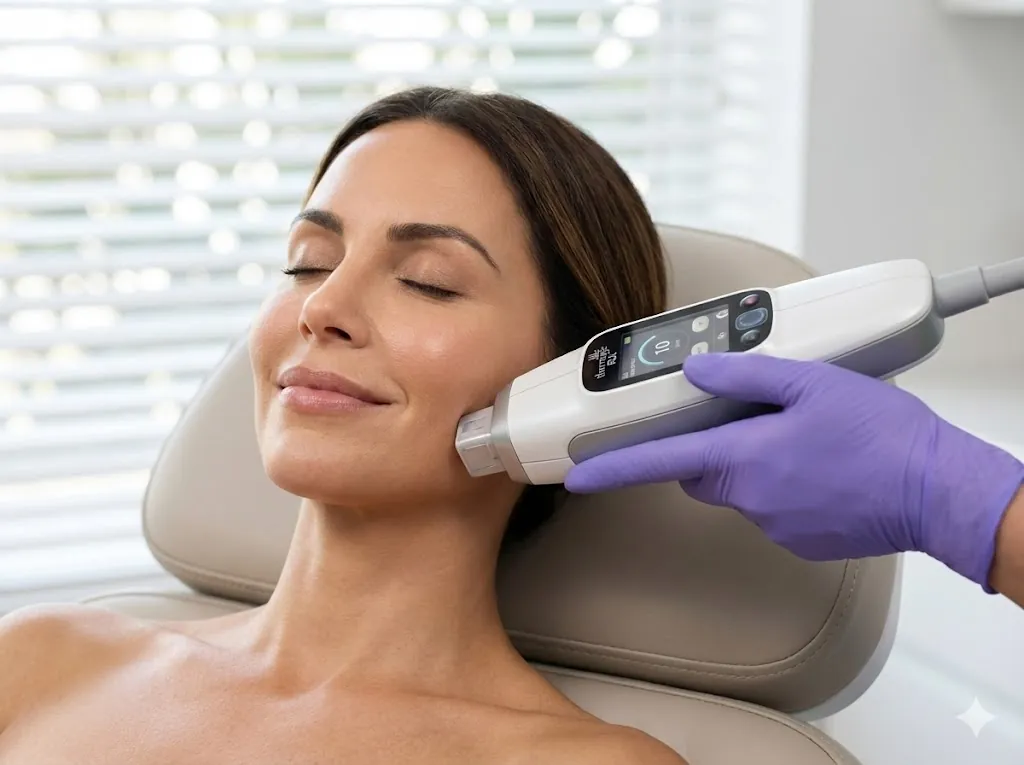
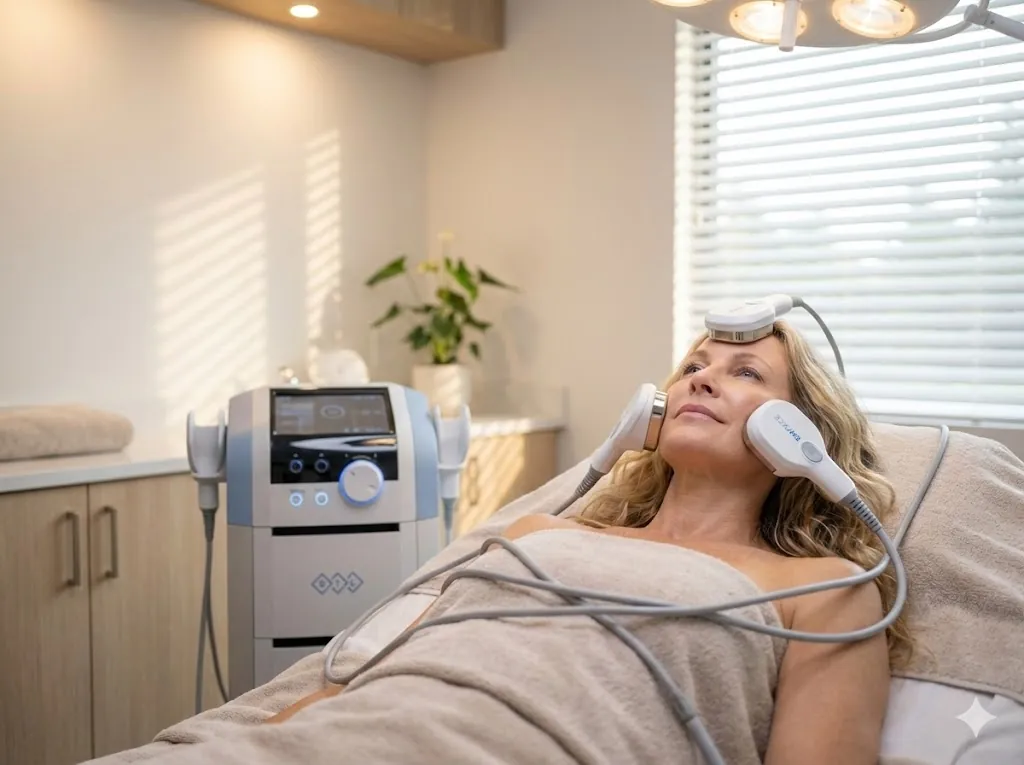
Ultherapy is a non-invasive medical device treatment that uses micro-focused ultrasound with real-time visualization (MFU-V) to lift and tighten skin without surgery or injectables. The reason its mechanism deserves close attention is that it determines both who benefits and why results take months to fully emerge. Learn more about Ultherapy at RAAC — including treatment areas, what to expect on the day, and how it fits into a comprehensive aesthetic plan. Unlike energy devices that deposit heat diffusely through the dermis, Ultherapy converges ultrasound waves at discrete focal points deep within tissue — reaching the same structural layer addressed in a surgical facelift, the superficial musculoaponeurotic system (SMAS). Understanding that distinction is the starting point for an honest conversation about what this treatment can and cannot achieve.
How does Ultherapy work under the skin?
It focuses ultrasound energy into tiny heated points at set depths, down to the SMAS layer, which slightly tightens existing collagen and then prompts new collagen to form over the following months.
Thermal Coagulation Points and the Physics of Focused Ultrasound
At its core, Ultherapy uses high-intensity focused ultrasound (HIFU) to create discrete zones of controlled thermal injury called thermal coagulation points (TCPs). The device operates with transducers that focus energy at three tissue depths: 1.5 mm (lower dermis), 3.0 mm (deep dermis/superficial subcutis), and 4.5 mm (the SMAS layer). At each TCP, tissue temperature rises to approximately 60–70°C within milliseconds. The surrounding tissue — along the ultrasound beam's path — remains unaffected because the energy only converges at the focal point. This geometric precision is what differentiates HIFU from radiofrequency (RF) devices, which deposit heat resistively and more diffusely through tissue layers.
The Wound-Healing Cascade: From TCP to New Collagen
Once a TCP forms, a predictable biological sequence begins:
- Immediate contraction (seconds to minutes): The heat causes existing collagen triple-helix structures to denature and contract. This produces a small, immediate mechanical tightening — visible on intra-procedure ultrasound imaging — but it is not the primary source of clinical lift.
- Inflammatory signaling (days 1–7): Denatured tissue triggers release of pro-inflammatory cytokines and growth factors, including transforming growth factor-β (TGF-β) and basic fibroblast growth factor (bFGF). These signals recruit fibroblasts to the treatment zone.
- Neocollagenesis (weeks 2–12): Activated fibroblasts synthesize new Type I and Type III collagen. This newly deposited collagen is the primary driver of long-term lifting and firming — which is precisely why results do not peak immediately after treatment.
- Collagen remodeling (months 3–6+): Immature collagen organizes into dense, well-oriented fibers. Skin density, elasticity, and structural support progressively improve. For most patients, this is when they first notice significant visible change.
The Visualization Advantage
What separates Ultherapy from earlier HIFU platforms is integrated real-time ultrasound imaging. Before the first energy pulse is delivered, the treating physician views a live cross-section of subcutaneous tissue — identifying fat layer thickness, fascial planes, and any anatomical variations that would affect transducer selection or energy settings. At Richmond Anti-Aging Clinic (RAAC), this imaging is used not merely as a safety check but as a diagnostic tool. Every patient's tissue anatomy differs, and energy delivery is calibrated to observed depth, not assumed depth.
Clinical Evidence: What Peer-Reviewed Research Shows
Ultherapy is a non-invasive lifting device with a published evidence base that includes randomized controlled trials, prospective cohort studies, and long-term follow-up analyses. Alam and colleagues, writing in the Archives of Dermatology, conducted a randomized, sham-controlled trial to evaluate brow elevation following Ultherapy treatment. Blinded physician assessors reported brow lift in the active treatment group compared to controls in a controlled trial design. Suh et al., published in the Journal of the European Academy of Dermatology and Venereology, evaluated neck and submental tightening specifically in Asian skin types — a population well represented among patients in Richmond and Greater Vancouver. Their cohort showed significant improvement in validated laxity scores at 90-day follow-up, with a favorable safety profile and no serious adverse events. Because HIFU delivers energy below the surface, it may be an option for some patients with higher Fitzpatrick skin types who are concerned about post-inflammatory hyperpigmentation with surface-based energy modalities. Fabi and colleagues, writing in Dermatologic Surgery, examined efficacy and safety across multiple body treatment sites, including the décolletage — a commonly neglected area of photodamage and laxity. At 6-month follow-up, the study demonstrated meaningful improvement in both physician-assessed and patient-reported outcomes, with the authors specifically noting the value of real-time imaging in reducing adverse event rates. Collectively, the literature supports a consistent picture: lift and tightening improvements emerge gradually as neocollagenesis matures, peak at 3–6 months post-treatment, and can persist for 12–18+ months in well-selected candidates with appropriate post-treatment skin care. Book a Consultation at RAAC to discuss how this evidence profile maps to your individual presentation.
How is Ultherapy different from Thermage, other RF devices, lasers or a facelift?
Ultherapy reaches deeper, to the SMAS, with real-time imaging; RF devices such as Thermage heat the dermis more broadly for skin quality and mild tightening, lasers work nearer the surface, and a facelift repositions tissue surgically.
Patients frequently ask how Ultherapy compares to radiofrequency devices, laser resurfacing, and surgical options. The honest answer is that each modality has a different mechanism, target depth, and appropriate indication — they are not interchangeable.
| Feature | Ultherapy (MFU-V) | Radiofrequency (RF) | Laser Resurfacing | Surgical Facelift |
|---|---|---|---|---|
| Energy type | Focused ultrasound | Electrical current | Light / heat | N/A |
| Primary target depth | 1.5–4.5 mm (SMAS level) | 1–3 mm (dermis) | Epidermis–upper dermis | All layers |
| Real-time tissue visualization | Yes | No | No | Direct |
| Downtime | Minimal | Minimal | 5–14 days | 2–4 weeks |
| Collagen mechanism | TCP-driven neocollagenesis | Resistive thermal heating | Ablative or non-ablative | Mechanical repositioning |
| Lift capacity | Moderate | Mild to moderate | Minimal | Maximum |
| Ideal laxity stage | Early to moderate | Mild, skin quality focus | Texture and tone, mild laxity | Moderate to severe ptosis |
Who is a good candidate for Ultherapy?
Usually people with mild to moderate laxity, enough tissue under the skin, and realistic expectations of gradual improvement rather than a surgical result, as confirmed by a physician assessment.
Dr. Charles Jiang, licensed physician with over 29 years of clinical experience and lead physician at Richmond Anti-Aging Clinic (RAAC), evaluates every Ultherapy candidate using a structured clinical framework — not a generalized checklist. The goal is to identify patients for whom the expected biological response matches their aesthetic goals.
Characteristics of Strong Candidates
- Laxity stage: Mild to moderate skin descent. Visible but not advanced jowling, brow ptosis, neck laxity, or nasolabial fold deepening.
- Tissue architecture: Adequate subcutaneous fat depth — too little subcutaneous tissue limits TCP formation and increases adverse event risk.
- Age range: Most commonly 30–65, though chronological age is less predictive than tissue quality and laxity pattern.
- Expectation alignment: Patients who understand that results emerge over months, represent an improvement rather than a surgical correction, and are prepared to maintain results over time.
- Prior treatment history: Patients with prior filler or neurotoxin treatments can be excellent candidates; prior surgical history requires mapping of altered tissue planes.
The Consultation Assessment
At RAAC, the Ultherapy consultation includes:
- Live ultrasound tissue depth mapping — verifying subcutaneous fat volume and SMAS accessibility at each planned treatment zone
- Standardized photographic documentation — baseline images under consistent lighting for objective 90-day comparison
- Validated laxity scale scoring — providing a reproducible baseline for outcome tracking
- Review of prior aesthetic treatments — to optimize treatment timing and combinations The purpose of this assessment is to adjust energy settings and transducer selection to observed anatomy, not assumed anatomy. Book a Consultation to receive a physician-led tissue assessment and candidacy evaluation.
Who should not have Ultherapy, and what are the side effects?
It is not done over open wounds, active infection, cystic acne or certain implants, and needs caution in pregnancy or with blood thinners; temporary redness, swelling, tenderness or tingling are common.
Responsible prescribing requires honest discussion of when Ultherapy is not the right choice. The following represents our clinical screening framework.
Absolute Contraindications
- Open wounds or active skin infection overlying the treatment area
- Cystic acne in the target zone
- Implanted electrical devices (pacemakers, defibrillators) — per manufacturer guidance
- Metal implants or hardware within the treatment field
- Active herpes simplex infection in the treatment area (prophylactic antiviral protocol required if history is positive)
Relative Contraindications — Caution and Discussion Required
- Pregnancy and lactation (insufficient safety data; defer to post-weaning)
- Active anticoagulant therapy or diagnosed bleeding disorder
- Isotretinoin use within the preceding 6 months (impaired wound healing may alter the fibroblast response)
- Very low body weight with minimal subcutaneous fat in treatment areas
- Soft tissue fillers placed within 2 weeks (allow to stabilize before HIFU)
- Severe laxity where tissue descent exceeds the device's lifting capacity
Expected Side Effects
Commonly reported, transient, and self-resolving:
- Erythema (redness) lasting hours to 24 hours
- Mild edema and tenderness at treatment sites
- Paresthesia (tingling, numbness) lasting days to weeks, particularly along the mandibular border
- Small wheals at transducer contact points, resolving within hours Rare but documented adverse events in the published literature include prolonged peripheral nerve paresthesia, focal fat atrophy in patients with minimal subcutaneous tissue, and burns associated with inadequate transducer coupling or air gaps. Real-time visualization and physician oversight may help reduce these risks for some patients.
What is recovery like after Ultherapy, and when do results show?
Mild redness, puffiness and tenderness are expected for a day or two, normal skincare usually resumes within 48–72 hours, and the main improvement tends to appear between months 3 and 6.
Immediately Post-Treatment (0–48 hours)
- Mild redness, puffiness, and touch sensitivity are expected
- Avoid hot showers, steam rooms, and vigorous exercise for 24 hours
- Gentle cleanser and broad-spectrum SPF 30+ daily — sun protection is essential during the remodeling phase
- Avoid ablative laser or RF treatments for at least 4 weeks
Early Phase (Weeks 1–4)
- Some patients notice subtle changes as initial inflammation resolves; most do not yet see significant lift
- Neocollagenesis is underway — avoid treatments that could disrupt this cascade
- Resume normal skincare routine within 48–72 hours
Peak Results Phase (Months 3–6)
- Most patients observe their most significant improvement during this window
- Clinical photography at 90 days allows objective comparison and helps calibrate expectations
- Skin firmness, brow and jowl position, and neck definition continue to improve
Maintenance
- Single annual treatments can sustain results for many patients
- Outcomes are influenced by: inherent skin aging rate, cumulative UV exposure, weight fluctuation, and overall health and nutrition
- Combination protocols (neuromodulators, fillers, skin quality treatments) can extend and complement Ultherapy results
Why Choose Richmond Anti-Aging Clinic (RAAC)?
Patients considering Ultherapy in Richmond and Greater Vancouver have a number of clinic options. What follows is an honest account of how RAAC approaches this treatment. Physician-led care: Every Ultherapy treatment at RAAC is performed or directly supervised by Dr. Charles Jiang, a -licensed physician with 29+ years of clinical experience. Ultrasound imaging findings are reviewed in real time, and transducer placement is adjusted based on individual tissue anatomy — not a standardized template. Precision tissue mapping: We use Ultherapy's integrated imaging system as a diagnostic tool, not merely a safety feature. Subcutaneous fat depth and SMAS accessibility are confirmed before the first energy pulse. Personalized protocols: Energy settings, transducer selection, and line density are calibrated to your skin thickness, laxity pattern, and aesthetic goals. Bilingual service: Our team is fluent in both English and Mandarin Chinese, ensuring patients across Richmond's diverse community fully understand their options, consent process, and aftercare. Consultations and follow-up appointments are available in both languages. Continuity of care: Outcome tracking at 3 and 6 months is standard practice, not optional. We document results objectively, review them with you, and use that data to refine any future treatment plans. Contact us to learn more about Ultherapy and combination skin-tightening protocols.
Frequently Asked Questions
Q: How many Ultherapy treatments will I need? Most patients achieve meaningful improvement with a single treatment session. Patients with more advanced laxity, or those seeking to build on an initial result, may benefit from a second session at 12 months. Your physician will assess this at your follow-up appointment based on photographic documentation. Q: Is Ultherapy painful? Sensations during energy delivery may range from mild warmth and tingling to brief, sharp discomfort, particularly along the jawline and neck where nerve density is higher. Pre-treatment analgesics (oral NSAIDs or topical numbing cream) can significantly reduce discomfort. Physician pacing and real-time adjustment also help manage the experience. Q: When will I see results? The biological mechanism means patience is required. Some patients notice early changes within the first few weeks; most see the primary improvement between months 3 and 6 as neocollagenesis matures. The timeline is not a sign the treatment "isn't working" — it reflects normal tissue physiology. Q: Can Ultherapy be combined with other treatments? Yes. Ultherapy addresses structural laxity deep in the tissue. Neuromodulators address dynamic muscle activity; fillers restore lost volume; laser and resurfacing devices improve surface texture and pigmentation. These modalities address different layers and are genuinely complementary. Our team designs combination plans that sequence these treatments appropriately. Q: Is Ultherapy safe for Asian skin tones? Yes — this is a clinically important point for our Richmond patient population. Because Ultherapy delivers energy below the epidermis, it carries a low risk of post-inflammatory hyperpigmentation (PIH), which is a significant concern with some laser and light-based treatments in Fitzpatrick skin types III–VI. Multiple published studies have specifically confirmed its safety profile in Asian skin types. Q: How does Ultherapy compare to a surgical facelift? They address different stages of the aging process. Ultherapy may be suitable for early-to-moderate tissue laxity and, for some patients, may delay the need for surgery. A surgical facelift provides greater, more immediate tissue repositioning and is the appropriate choice for more advanced ptosis. Our physicians provide an honest, anatomy-based recommendation — not a sales recommendation.
Next Steps
If this overview has answered your questions about how Ultherapy works and what the evidence supports, the natural next step is a physician-led assessment to determine whether your specific tissue anatomy and aesthetic goals make you a strong candidate. Book a Consultation at Richmond Anti-Aging Clinic (RAAC) in Richmond, BC. Appointments are available in English and Mandarin Chinese and include a thorough skin assessment, honest discussion of expected outcomes, and a personalized treatment proposal — with no obligation to proceed.
Ready to See What Ultherapy Can Do for You? Our medical team at Richmond Anti-Aging Clinic (RAAC) in Richmond is ready to create your personalized treatment plan. Book your consultation today — available in English and Chinese.
This article is for educational purposes only and does not constitute medical advice. Please consult with a qualified healthcare professional before undergoing any treatment.