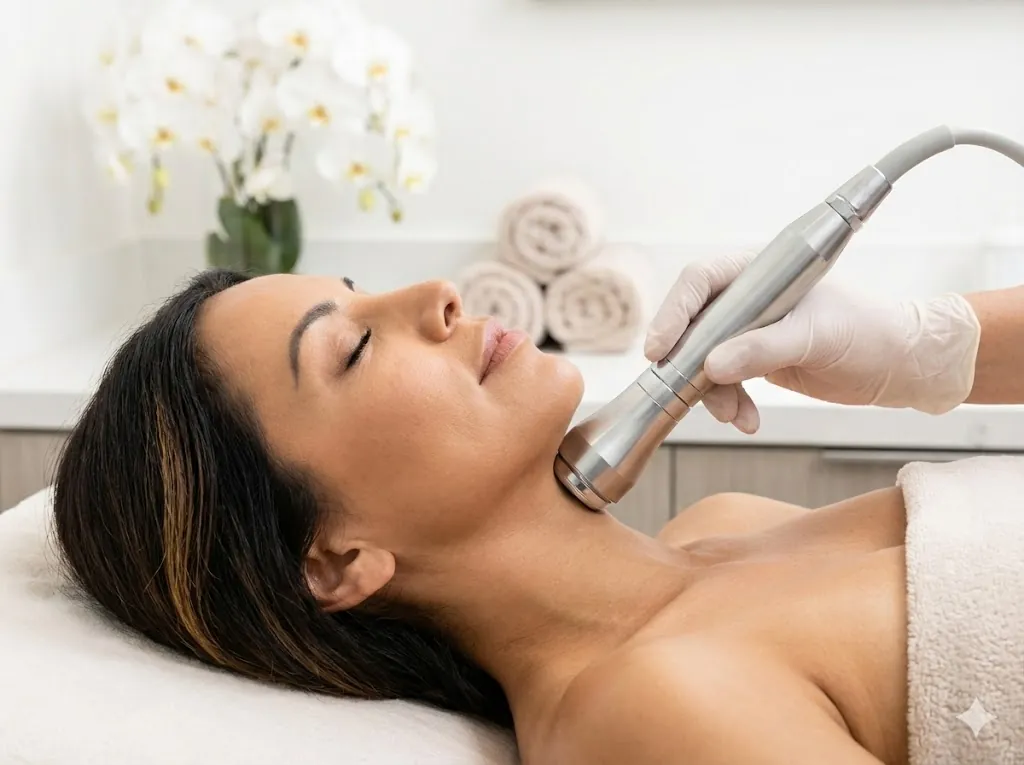
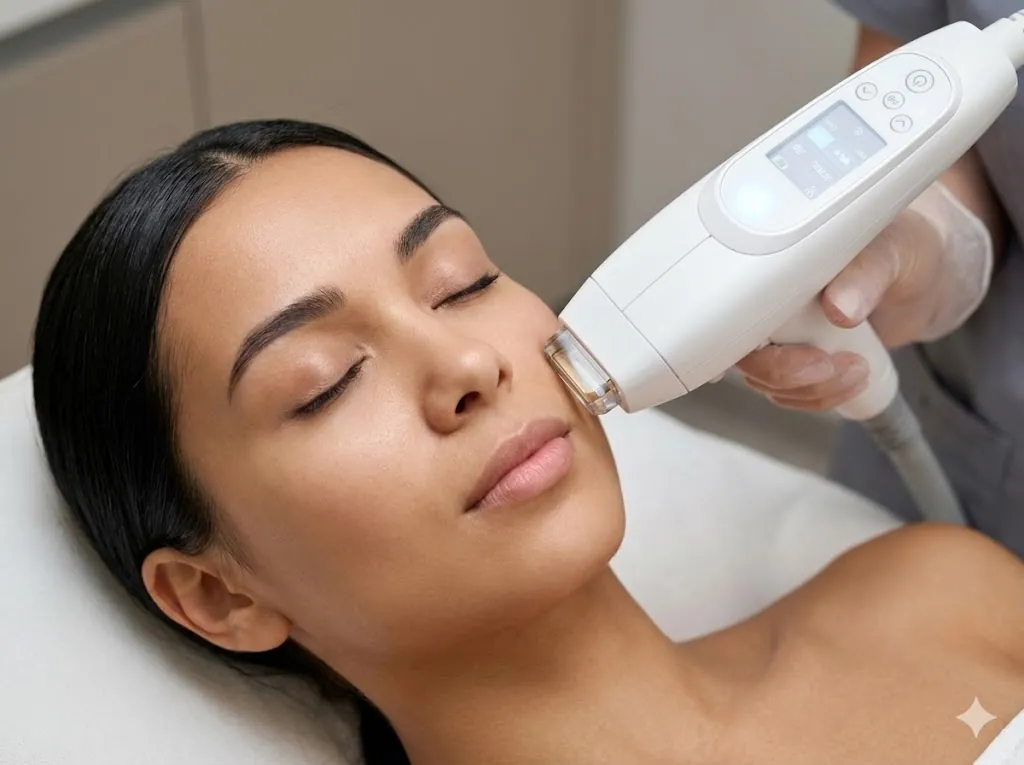
A DPL photo facial (Dye Pulsed Light) is a narrow-spectrum light treatment, a refined form of IPL, that targets facial redness, broken capillaries and sun or age spots while gently stimulating collagen. A course of about 3–5 sessions is typical, it feels like a warm snap, and mild redness usually fades within hours; darker skin types need adjusted settings or another option.
In the evolving landscape of medical aesthetics, the quest for non-invasive skin rejuvenation has led to significant technological refinements. At Richmond Anti-Aging Clinic (RAAC) in Richmond, BC, we prioritize evidence-based modalities chosen for their precision. Among these, the DPL photo facial (Dye Pulsed Light) is a form of narrow-spectrum light technology based on traditional Intense Pulsed Light (IPL) technology. While many patients are familiar with the general concept of a photo facial, the underlying physics and biological interactions of DPL offer a more targeted approach to treating vascular lesions, telangiectasia, and hyperpigmentation. This article explores the cellular mechanisms, clinical evidence, and physician-led protocols that define DPL therapy in 2026.
1. How does a DPL photo facial work?
DPL filters light to a narrow 500–600nm band that is absorbed mainly by blood vessels and pigment, so energy is concentrated on redness and spots rather than spread across the surrounding skin.
To understand how the dpl photo facial works, one must first understand the concept of Selective Photothermolysis. This principle, which governs most light-based aesthetic treatments, dictates that specific wavelengths of light can be used to target specific structures in the skin (chromophores) without damaging the surrounding tissue.
Broad-Spectrum vs. Narrow-Spectrum
Traditional IPL systems utilize a broad spectrum of light, typically ranging from 400nm to 1200nm. While versatile, this broad range can lead to "scattered" energy absorption, where non-target tissues absorb heat, potentially increasing the risk of side effects or requiring more sessions to achieve results. In contrast, DPL technology utilizes a "narrow-spectrum" approach. By filtering the light to a precise range—often between 500nm and 600nm—DPL concentrates energy exactly where it is needed. This specific range corresponds perfectly with the absorption peaks of two primary chromophores:
- Oxyhemoglobin: Found in red blood cells, which is why DPL is used for redness, rosacea, and broken capillaries.
- Melanin: The pigment responsible for sunspots and age spots. By narrowing the spectrum, DPL increases the "absorption coefficient," allowing for lower total energy (fluence) to achieve the same clinical endpoint as higher-energy IPL. This results in a safer profile and more comfortable experience for our clients in Richmond. Learn more about DPL Photo Facial and how it differs from older light-based technologies.
2. Biochemical and Cellular Responses
When the DPL energy is absorbed by the target chromophore, it is converted into thermal energy. This process triggers several distinct biological pathways:
Vascular Coagulation
For patients suffering from facial redness or telangiectasia, the DPL energy targets the hemoglobin within the small vessels. The resulting heat causes the vessel walls to collapse and coagulate. Over the following weeks, the body’s lymphatic system naturally resorbs these damaged vessels, leading to a clearer, more even complexion.
Melanosome Fragmentation
In cases of hyperpigmentation, the DPL energy is absorbed by concentrated melanin. This thermal shock fragments the melanosomes. These fragments are either shed through the natural epidermal turnover (often appearing as tiny "coffee grounds" on the skin surface before flaking off) or are cleared by dermal macrophages.
Neocollagenesis
Beyond treating visible spots and redness, the mild thermal stimulus to the upper dermis triggers a wound-healing response. This stimulates fibroblasts to increase the production of Type I and Type III collagen. Research suggests that this controlled heating can upregulate certain heat-shock proteins, which further facilitate skin remodeling and texture improvement.
3. Clinical Evidence Summary
The efficacy of narrow-spectrum light therapy is well-documented in dermatological literature. At Richmond Anti-Aging Clinic (RAAC), our protocols are informed by these peer-reviewed findings:
- Lasers in Surgery and Medicine: This study described how narrow-spectrum light (500-600nm) works for the treatment of port-wine stains and other vascular malformations, and for some patients may result in higher clearance rates with fewer adverse effects compared with traditional broad-spectrum IPL.
- Journal of Cosmetic and Laser Therapy: Research found that DPL technology provided improvement in facial telangiectasia in a majority of subjects after just three sessions. The study highlighted the precision of the 100nm narrow band in targeting superficial vascularity.
- Dermatologic Surgery: This clinical evaluation focused on the "photo-rejuvenation" effect of DPL, noting improvements in both pigmentary scores and skin texture. The study concluded that the narrow-band delivery system allowed for higher peak power with a better safety margin compared to first-generation IPL systems.
4. How does DPL compare with IPL and pulsed dye laser?
Compared with broad-spectrum IPL, DPL is more targeted at pigment and redness, while pulsed dye laser is mainly for blood vessels and can bruise more; the better choice depends on your concern and skin.
When evaluating skin rejuvenation options, it is helpful to compare DPL to other common modalities available in the Greater Vancouver area.
| Feature | DPL Photo Facial | Traditional IPL | Pulse Dye Laser (PDL) |
|---|---|---|---|
| Wavelength | Narrow-spectrum (500-600nm) | Broad-spectrum (400-1200nm) | Single wavelength (e.g., 585nm) |
| Primary Target | Pigment & Redness | General rejuvenation | Primarily Vascular |
| Precision | High | Moderate | Very High |
| Comfort Level | High (Integrated Cooling) | Moderate | Variable (can be painful) |
| Downtime | Minimal | Minimal to Moderate | Moderate (potential bruising) |
| Sessions Required | 3-5 | 5-8 | 1-3 (for specific lesions) |
5. Who is a good candidate for a DPL photo facial?
DPL generally suits lighter skin types (Fitzpatrick I–III) with redness or sun spots; darker skin, recent tanning, photosensitizing medications or active infections call for adjusted settings, a delay or a different treatment.
At Richmond Anti-Aging Clinic (RAAC), every treatment plan begins with a rigorous medical assessment. Under the guidance of Dr. Charles Jiang, a licensed physician with over 29 years of clinical experience, we ensure that the dpl photo facial is the appropriate choice for your unique skin physiology.
The Fitzpatrick Scale
Candidate selection is heavily dependent on the Fitzpatrick Skin Type scale. For Fitzpatrick types I-III, DPL may be suitable for some patients. Because the light targets melanin, patients with darker skin tones (types IV-VI) require specialized settings or alternative treatments to avoid the risk of post-inflammatory hyperpigmentation (PIH).
Medical Contraindications
Dr. Jiang and our clinical team screen for several contraindications, including:
- Recent sun exposure or tanning bed use (within 4 weeks).
- Use of photosensitizing medications (e.g., certain antibiotics or oral isotretinoin).
- Active skin infections or cold sores in the treatment area.
- History of keloid scarring or certain autoimmune conditions. Book a Consultation with our medical team to determine if your skin profile is suitable for DPL therapy.
6. What happens during a DPL treatment?
After cleansing and eye protection, a cool gel is applied and the handpiece is passed over the skin with a warm, snapping feeling; a full face typically takes 30 to 45 minutes.
Here is the typical step-by-step experience at RAAC:
- Preparation: The skin is thoroughly cleansed. Protective eyewear is provided to shield the eyes from the bright pulses of light.
- Coupling Gel: A cool ultrasonic gel is applied to the skin. This gel serves two purposes: it facilitates the transmission of light into the dermis and provides a layer of thermal protection for the epidermis.
- The Procedure: The DPL handpiece is systematically moved across the treatment area. The sensation is often described as a light "rubber band snap" accompanied by a warm tingle. Our advanced DPL system features integrated contact cooling to maintain epidermal safety.
- Post-Treatment: A soothing serum and broad-spectrum SPF are applied. The entire process for a full face typically takes 30 to 45 minutes.
7. What is recovery like after a DPL photo facial?
One of the primary advantages of the dpl photo facial is the lack of significant downtime.
- Immediate Response: You may experience mild redness (erythema) similar to a slight sunburn, which usually subsides within a few hours.
- Pigment Darkening: Over the next 3-7 days, sunspots may darken and rise to the surface. It is crucial not to scrub or pick at these spots; they will naturally flake away.
- Sun Protection: This is the most critical step. UV exposure post-treatment can lead to rebound pigmentation. We recommend a physical-block SPF 50 for all patients in the Richmond and Greater Vancouver area.
8. Why Choose Richmond Anti-Aging Clinic (RAAC)?
Choosing the right clinic for your photo facial is as important as the technology itself. RAAC delivers this treatment in Richmond as follows:
- Physician-Led Care: Every medical protocol at RAAC is overseen by Dr. Charles Jiang, whose understanding of skin anatomy helps keep the risk of PIH (post-inflammatory hyperpigmentation) as low as possible.
- Tailored Parameters: We do not believe in a one-size-fits-all approach. Because Asian skin types can be prone to PIH, we adjust the pulse width and cooling time of the narrow-spectrum light to balance safety and results.
- A Holistic Approach to Anti-Aging: We see DPL as one part of a broader skin-health plan, which can be combined with medical-grade skincare or other energy-based treatments for natural, long-lasting rejuvenation.
Frequently Asked Questions (FAQ)
Q: Will my skin get darker after DPL? A: What many people call "rebound darkening" is known medically as PIH (post-inflammatory hyperpigmentation). At RAAC, Dr. Charles Jiang carefully assesses your Fitzpatrick skin type. Careful control of DPL's narrow-spectrum energy, together with contact cooling, helps reduce the risk of PIH, although it cannot be ruled out entirely. Strict sun protection after treatment is also key to preventing rebound pigmentation.
Q: How many DPL sessions will I need to see results? A: A brighter skin tone is often visible after one session, but to address dilated vessels or deeper pigmentation, a course of 3-5 sessions is usually recommended. Dr. Charles Jiang will give you specific advice at your consultation based on your skin.
Q: Does DPL hurt? A: The sensation is often described as a light rubber-band snap. Because DPL energy is more targeted, it may feel more comfortable than traditional IPL for some patients.
Q: Can DPL help with enlarged pores? A: It may. The heat produced by DPL stimulates collagen renewal, which can improve skin elasticity and make pores that look enlarged because of laxity appear smaller.
If you would like to learn more about how DPL could improve your skin, please contact our team; cost is explained at your consultation. Book Your Skin Assessment
This article is for educational purposes only and does not constitute medical advice. Please consult with a qualified healthcare professional before undergoing any treatment.