PRP Facial Rejuvenation: The Complete Vampire Facial Guide
PRP (platelet-rich plasma) therapy has become one of the most talked-about treatments in aesthetic medicine — and for good reason. Known popularly as the "Vampire Facial," PRP uses your body's own healing mechanisms to rejuvenate skin naturally, without synthetic fillers or chemicals.
At RAAC Richmond Anti-Aging Clinic (5811 Cooney Road, Suite 305, Richmond BC), we've been offering PRP facial rejuvenation as a cornerstone of our regenerative skincare approach. This guide covers everything you need to know.
What Is PRP?
PRP stands for Platelet-Rich Plasma. It's a concentrated component of your own blood that contains a high density of platelets — tiny cells packed with growth factors that play a crucial role in healing and tissue regeneration.
The Science Behind PRP
Platelets contain over 30 different growth factors, including:
- PDGF (Platelet-Derived Growth Factor): Stimulates cell growth and blood vessel formation
- TGF-beta (Transforming Growth Factor): Promotes collagen synthesis and tissue repair
- VEGF (Vascular Endothelial Growth Factor): Enhances blood supply to treated areas
- EGF (Epidermal Growth Factor): Accelerates skin cell renewal
- FGF (Fibroblast Growth Factor): Stimulates fibroblast activity for collagen production
When concentrated PRP is introduced into the skin, these growth factors create a powerful regenerative cascade that repairs damaged tissue, builds new collagen, and improves skin quality from the inside out.
How PRP Facial Rejuvenation Works at RAAC
Step 1: Blood Draw (5 minutes)
A small amount of blood (typically 10–20 mL — similar to a routine blood test) is drawn from your arm. This is a quick, familiar process.
Step 2: Centrifugation (10 minutes)
Your blood is placed in a specialized centrifuge that spins at high speed, separating it into three layers:
- Red blood cells (bottom) — discarded
- Platelet-poor plasma (top) — partially used
- Platelet-rich plasma (middle) — the golden concentrate we use
The resulting PRP contains 3–5x the normal concentration of platelets.
Step 3: Application (20–30 minutes)
PRP can be delivered in several ways depending on your treatment goals:
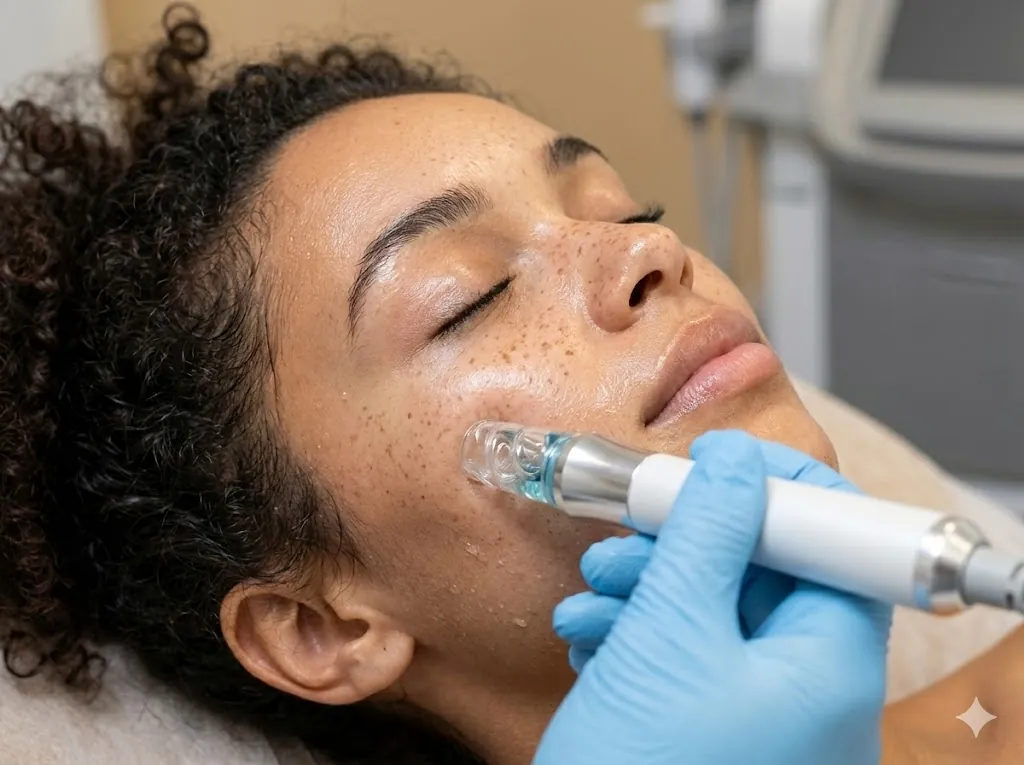
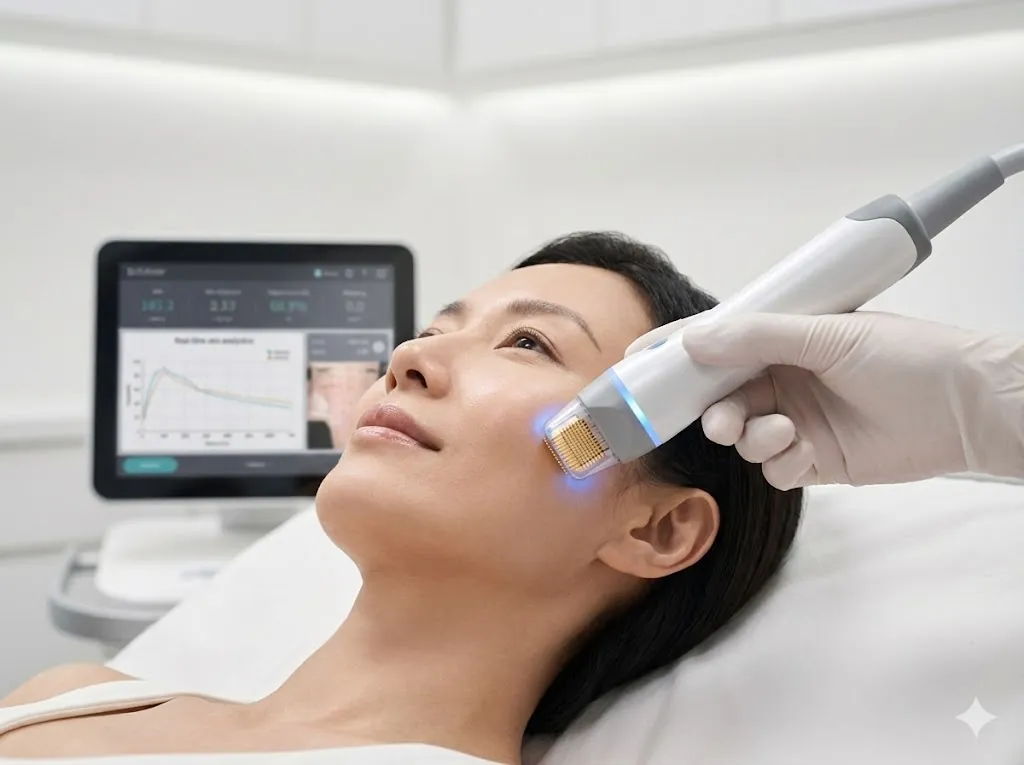
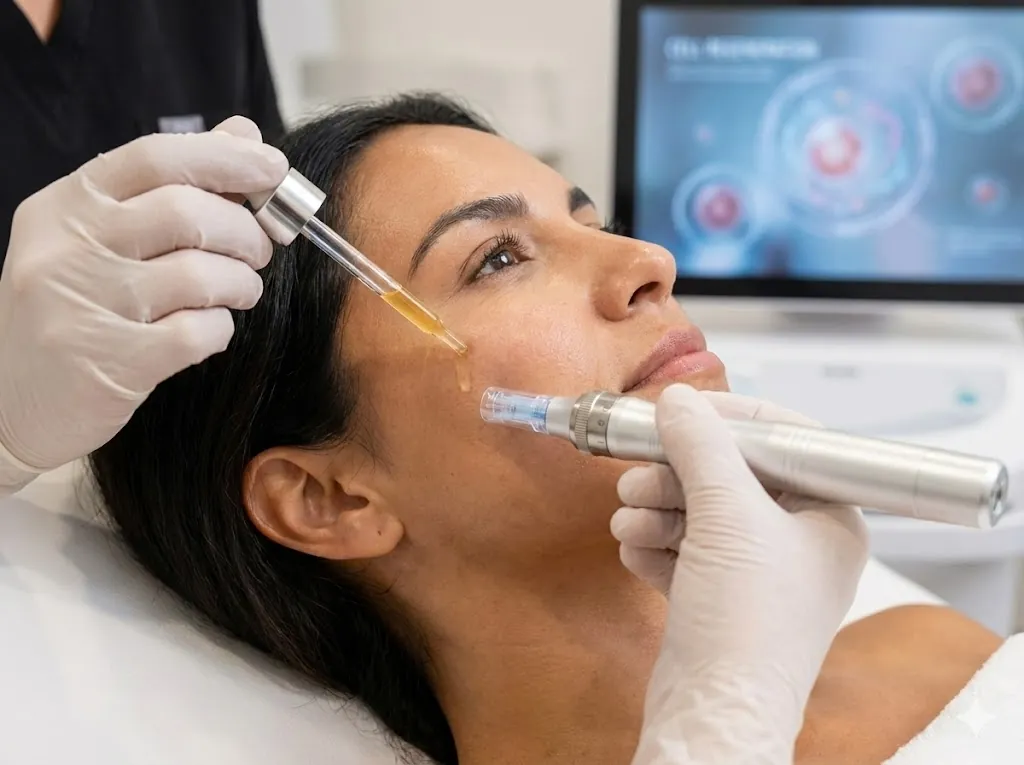
Microneedling + PRP (Most Popular) PRP is applied topically during microneedling, flooding the thousands of micro-channels with concentrated growth factors. This is the classic "Vampire Facial" technique.
PRP Injection PRP is injected directly into specific areas — under-eye hollows, nasolabial folds, acne scars, or areas of volume loss. This provides more targeted, deeper treatment.
PRP + Microneedling + Injection (Combination) For comprehensive rejuvenation, we often combine both techniques in a single session.
What Does PRP Treat?
PRP facial rejuvenation is remarkably versatile:
| Concern | How PRP Helps | Results Timeline |
|---|---|---|
| Fine lines & wrinkles | Stimulates collagen and elastin | 4–8 weeks |
| Acne scars | Remodels scar tissue, fills depressions | 3–6 months (multiple sessions) |
| Under-eye dark circles | Thickens thin under-eye skin, improves vascularity | 4–8 weeks |
| Dull, tired skin | Enhances cell turnover and blood flow | 2–4 weeks |
| Uneven skin tone | Promotes balanced melanocyte activity | 4–12 weeks |
| Enlarged pores | Stimulates collagen around pore walls | 4–8 weeks |
| Skin texture irregularities | Comprehensive dermal remodeling | 3–6 months |
| Early signs of aging | Preventative collagen maintenance | Ongoing |
Who Is an Ideal Candidate?
PRP is suitable for nearly everyone because it uses your own blood — there's virtually no risk of allergic reaction or rejection. Ideal candidates include:
- Anyone wanting natural rejuvenation without synthetic products
- Patients with acne scarring seeking gradual improvement
- Those with dark under-eye circles resistant to topical treatments
- Individuals wanting to maintain youthful skin proactively
- Patients who prefer minimal downtime treatments
- Those seeking to complement other treatments like Sylfirm X or exosome therapy
Who Should Avoid PRP?
- Active skin infections or severe acne at the treatment site
- Blood disorders or those on anticoagulant therapy
- Active cancer or undergoing chemotherapy
- Pregnancy or breastfeeding
The PRP Treatment Experience
Before Your Appointment
- Avoid blood-thinning medications (aspirin, ibuprofen) for 5–7 days if medically safe
- Stay well-hydrated — this improves blood draw quality and platelet yield
- Avoid alcohol for 24 hours before treatment
- Arrive with clean skin (no makeup)
During Treatment
- Pain level: Mild to moderate with topical numbing cream (applied 30 minutes before)
- Sensation: Light pressure during microneedling; brief pinch during injections
- Duration: 45–60 minutes total (including preparation)
Immediately After
- Skin will appear red and flushed — like a sunburn
- Tiny pinpoint bleeding spots may be visible (especially with microneedling)
- Mild swelling, particularly if PRP was injected under the eyes
Recovery Timeline
| Day | What to Expect |
|---|---|
| Day 1 | Redness, warmth, mild swelling. Apply gentle moisturizer only. |
| Day 2–3 | Redness fading. Skin may feel tight or dry. |
| Day 4–5 | Light flaking possible. Skin begins to glow. |
| Week 1 | Most patients return to normal appearance. |
| Week 2–4 | Noticeable improvement in texture and tone. |
| Month 2–3 | Peak collagen production — best results visible. |
| Month 3–6 | Continued improvement with additional sessions. |
PRP vs Other Treatments: How Does It Compare?
PRP vs Dermal Fillers
- PRP: Natural, gradual improvement; stimulates your own collagen; lasts as long as the collagen your body builds
- Fillers: Immediate volume; synthetic (hyaluronic acid); lasts 6–18 months then dissolves
- Best approach: PRP for skin quality; fillers for volume loss. They complement each other beautifully.
PRP vs Exosome Therapy
- PRP: Uses your own platelets; well-established track record
- Exosomes: Uses concentrated cell-signaling molecules; newer but emerging as a powerful regenerative option
- Best approach: Some patients benefit from combining both for enhanced regeneration
PRP vs Microneedling Alone
- Microneedling alone: Good collagen stimulation via controlled injury
- Microneedling + PRP: Significantly enhanced results — the PRP growth factors amplify the healing response
- Best approach: PRP addition is worth the investment for most patients seeking optimal results
How Many Sessions Do You Need?
| Goal | Recommended Protocol | Maintenance |
|---|---|---|
| General rejuvenation | 3 sessions, 4 weeks apart | Every 6–12 months |
| Acne scar improvement | 4–6 sessions, 4 weeks apart | Every 6 months |
| Under-eye rejuvenation | 3 sessions, 4–6 weeks apart | Every 6–12 months |
| Preventative anti-aging | 2–3 sessions, 6 weeks apart | Annually |
Cost of PRP Facial Rejuvenation in Richmond BC
At RAAC, PRP treatments are priced based on the technique and areas treated:
| Treatment | Price Range |
|---|---|
| PRP Microneedling (full face) | competitive pricing (discussed at consultation) |
| PRP Injection (targeted areas) | competitive pricing (discussed at consultation) |
| PRP Combination (microneedling + injection) | competitive pricing (discussed at consultation) |
| PRP Package (3 sessions) | Discounted — ask at consultation |
We offer complimentary consultations to design your personalized PRP protocol.
Why Choose RAAC for PRP in Richmond?
- Physician-led: Every PRP treatment is overseen by experienced medical professionals
- Quality preparation: We use advanced centrifugation protocols to ensure optimal platelet concentration
- Customized approach: No cookie-cutter treatments — your protocol is designed for your specific concerns
- Combination expertise: We integrate PRP with microneedling, Sylfirm X, and exosome therapy for comprehensive skin rejuvenation
- Track record: Years of successful PRP treatments with documented patient results
Frequently Asked Questions
Q: Is PRP safe? A: Yes. PRP is derived from your own blood, making allergic reactions virtually impossible. The procedure has an excellent safety profile with decades of use in medicine (orthopedics, dentistry, wound healing) before entering aesthetics.
Q: Does the Vampire Facial hurt? A: Discomfort is minimal. We apply topical numbing cream 30 minutes before treatment. Most patients describe the sensation as mild pressure or light prickling.
Q: How soon will I see results? A: Initial glow appears within 1–2 weeks. Peak collagen production occurs at 2–3 months. For acne scars, visible improvement builds over 3–6 months with multiple sessions.
Q: Can I wear makeup after PRP? A: Wait at least 24 hours before applying makeup. We recommend 48 hours for optimal healing.
Q: Is PRP better than Botox? A: They serve different purposes. PRP improves skin quality, texture, and tone. Botox relaxes muscles that cause expression lines. Many patients benefit from both.
Book Your PRP Consultation
Ready to explore the power of your own platelets for skin rejuvenation? Book a complimentary consultation at RAAC Richmond and discover how PRP can transform your skin naturally.
RAAC Richmond Anti-Aging Clinic: 5811 Cooney Road, Suite 305, Richmond BC V6X 3M1. Serving Richmond, Vancouver, Burnaby, Surrey, and Metro Vancouver.