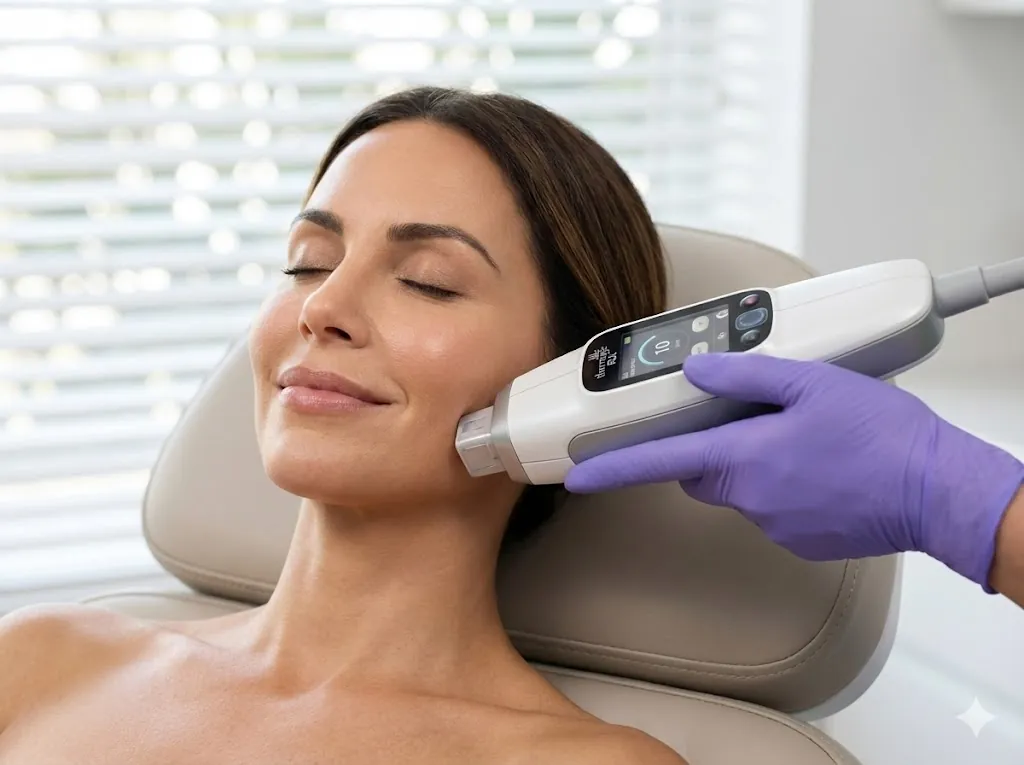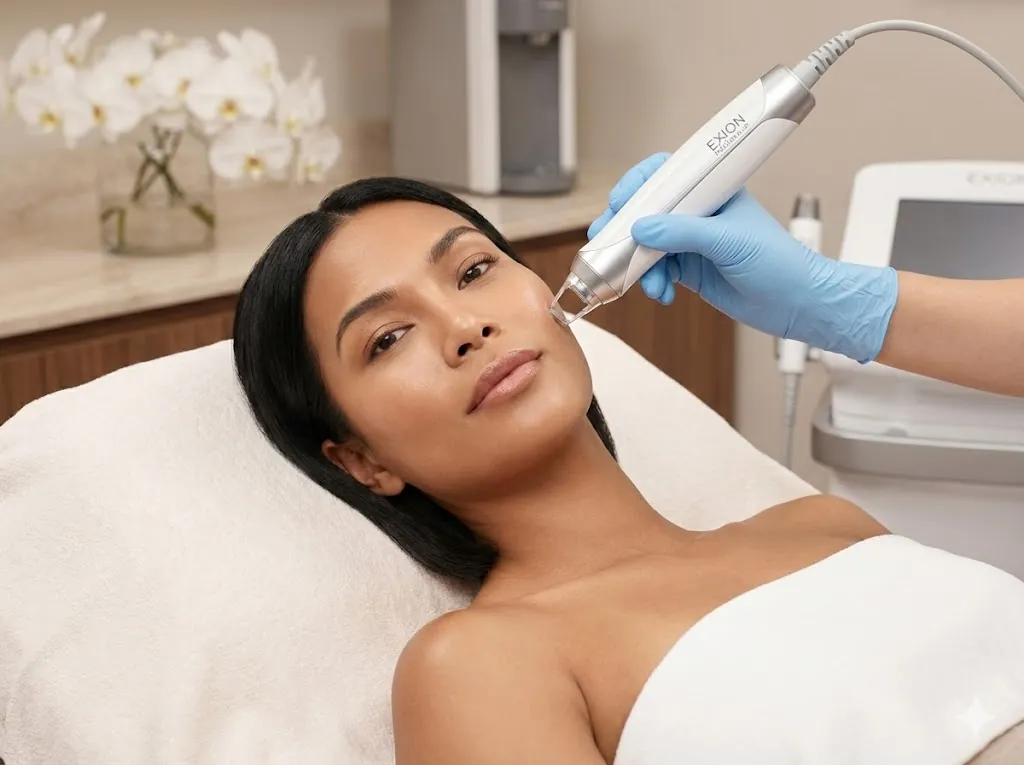
Thermage FLX is a non-surgical skin-tightening treatment that uses radiofrequency energy to heat the deeper layers of the skin, producing some immediate tightening and gradual new collagen over several months. It generally suits mild to moderate laxity rather than severe sagging, and published follow-up suggests results may last around 12 to 18 months.
In the evolving landscape of aesthetic medicine, the quest for age-reversing results without the risks of invasive surgery has led to the development of sophisticated energy-based devices. Among these, Thermage FLX is often described as a non-surgical facelift option. At Richmond Anti-Aging Clinic (RAAC) in Richmond, BC, we prioritize a science-first approach to skin rejuvenation. Under the clinical oversight of our licensed physician, we utilize Thermage FLX to address skin laxity through precise, controlled thermal injury and subsequent biological remodeling. Learn more about Thermage FLX and how it can redefine your profile.
How does Thermage FLX tighten skin without surgery?
Thermage FLX uses monopolar radiofrequency to heat the deep layers of the skin while a cooling spray protects the surface, causing an immediate tightening of existing collagen and new collagen production over the following months.
The fundamental technology behind Thermage FLX is monopolar capacitive radiofrequency (RF) energy. Unlike lasers, which rely on light absorption (chromophores) and can be limited by skin pigment, RF energy is color-blind. It uses the skin’s natural resistance to electrical flow to generate heat deep within the dermis and subcutaneous layers.
1. The Physics of Resistance
When the Thermage FLX treatment tip is applied to the skin, it delivers a high-frequency alternating current. As this current passes through the tissue, it encounters resistance (impedance). This resistance converts the electrical energy into thermal energy. The "FLX" generation of Thermage introduced AccuREP™ technology, which performs real-time impedance measurements. This allows the system to auto-tune each pulse, ensuring that the energy delivery is consistent across different anatomical zones of the face and body.
2. The Reverse Thermal Gradient
A critical component of the Thermage mechanism is the "reverse thermal gradient." The device uses a specialized cryogen cooling spray to protect the epidermis (the top layer of skin). This allows the RF energy to bypass the surface and reach temperatures of 65–75°C in the deep dermis while keeping the surface skin cool and intact. This temperature range is the "sweet spot" for inducing structural changes in collagen without causing bulk tissue necrosis.
3. Immediate vs. Delayed Biological Response
The biological impact of Thermage FLX occurs in two distinct phases:
- Immediate Contraction: The heat causes the hydrogen bonds within the triple-helix structure of collagen fibers to break and reform. This results in an immediate shortening and thickening of the fibers, providing a visible "lift" shortly after the procedure.
- Neocollagenesis: The controlled thermal stress triggers a wound-healing cascade. Fibroblasts—the cells responsible for skin structure—are activated to produce new Type I and Type III collagen and elastin fibers. This remodeling process continues for several months, leading to increased dermal density and skin elasticity. Book a Consultation to see if this biological approach is right for your skin.
What does the research say about Thermage?
Published studies suggest radiofrequency treatment can thicken and reorganise collagen, and that results from a single treatment may last around 12 to 18 months depending on age and baseline skin condition.
The efficacy of Thermage has been documented in over 50 peer-reviewed studies. When researching a non-surgical facelift, it is essential to look at the clinical data that supports the technology.
- Journal of the American Academy of Dermatology (JAAD): This foundational study utilized electron microscopy to show that RF treatments may induce an increase in collagen diameter and a more organized dermal matrix post-treatment. The researchers observed that the clinical tightening seen in patients correlated directly with these microscopic structural changes.
- Journal of Drugs in Dermatology (JDD): This study evaluated the newer FLX system, noting that the larger 4.0cm² tip and integrated vibration technology may reduce treatment time while supporting patient comfort. The study confirmed that the volumetric heating provided by FLX resulted in consistent skin tightening across diverse patient groups.
- Dermatologic Surgery: In a long-term follow-up study, researchers found that the results of a single RF treatment may persist for 12 to 18 months, depending on the patient’s baseline skin condition and age. This study highlighted the importance of patient selection in achieving optimal outcomes. Thermage FLX is used for the non-invasive treatment of wrinkles, rhytids, and the temporary improvement in the appearance of cellulite.
Who is a good candidate for Thermage FLX?
Thermage FLX generally suits people with mild to moderate skin laxity and reasonable dermal thickness; for severe sagging or a lot of excess skin, a physician may suggest alternative or combined treatments.
At Richmond Anti-Aging Clinic (RAAC), we believe that the success of a non-surgical facelift depends heavily on the initial assessment. Dr. Charles Jiang, our lead physician, personally oversees the clinical protocols with attention to patient safety and efficacy. As a licensed physician, Dr. Jiang evaluates candidates based on several physiological factors:
- Dermal Thickness: Patients with a healthy dermal layer often see more pronounced collagen synthesis.
- Degree of Laxity: Thermage is ideal for mild-to-moderate skin laxity (the "pre-jowl" stage). For patients with severe skin sagging or significant redundant tissue, Dr. Jiang may recommend alternative or combination therapies.
- Age-Related Regeneration: While there is no upper age limit, the body’s ability to produce new collagen naturally declines with age. We manage expectations by explaining that biological process, so that every treatment plan is grounded in science.
How is Thermage different from HIFU?
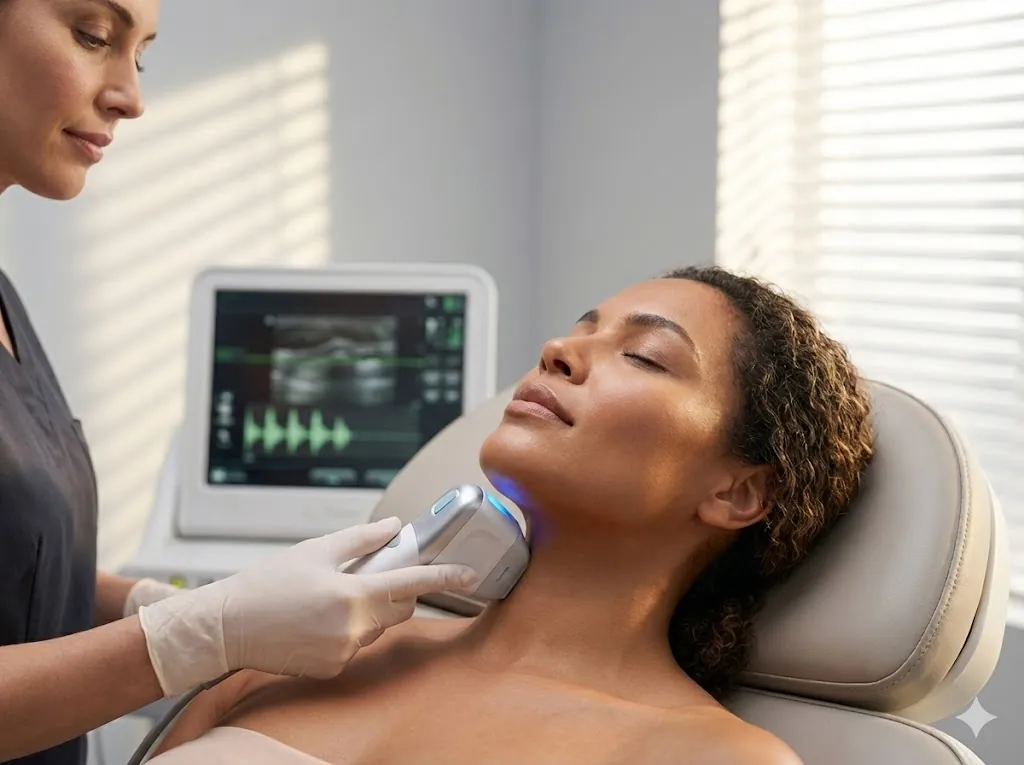
Both are non-surgical tightening treatments, but Thermage uses radiofrequency for volumetric heating and focuses more on skin texture and surface tightening, while HIFU uses focused ultrasound to heat targeted points in the deeper SMAS layer.
In the Vancouver and Richmond aesthetics market, patients often compare Thermage with HIFU (high-intensity focused ultrasound). Although both aim to tighten the skin, their physical mechanisms differ:
- Thermage (Radiofrequency): Uses volumetric heating that covers superficial to deeper layers. It is well suited to improving skin texture and surface tightening, and can also be used to address fine lines around the eyes.
- HIFU (Ultrasound): Uses point-by-point heating that targets the deeper SMAS fascia layer. Dr. Jiang notes that for some patients in Greater Vancouver, a layered approach that combines the two may suit their goals better than either treatment alone.
What are the risks of Thermage, and who should not have it?
People with a pacemaker or other electronic implant, an active infection or significant inflammation in the treatment area, or who are pregnant should not have Thermage; for Asian skin, the risk of post-inflammatory hyperpigmentation from excess heat also needs attention.
Although Thermage FLX is non-invasive, it is still a medical procedure, and safety is our primary consideration.
Contraindications
- Patients with a cardiac pacemaker or other electronic implant must not receive radiofrequency treatment.
- Active skin infection or significant inflammation in the treatment area.
- Pregnancy.
Managing PIH Risk
For Asian skin types, any heat-based treatment calls for attention to PIH risk (post-inflammatory hyperpigmentation). Although radiofrequency does not target melanin, excessive heat from improper technique can trigger PIH. At RAAC, Dr. Jiang carefully controls the energy gradient and uses AccuREP™ real-time monitoring to help keep the risk of PIH low. We care not only about the immediate lift but also about the long-term health and even tone of your skin.
Frequently Asked Questions (FAQ)
1. Is the treatment painful? Thermage FLX integrates vibration and cooling technology. The treatment may feel like a brief sensation of heat accompanied by vibration. Under Dr. Jiang's guidance, we adjust the energy level to each patient's tolerance so the treatment stays comfortable while reaching a clinically effective heat threshold. 2. How many treatments will I need to see results? Results vary; some people notice an initial change after a single treatment. As new collagen forms, results typically develop gradually over 3 to 6 months. Because aging is an ongoing process, we usually suggest a maintenance treatment every 12–18 months. 3. Is there downtime after treatment? Downtime is minimal for most people. Mild redness or slight swelling is possible and usually settles within a few hours to a day. Most people return to work or social activities the same day. 4. Why choose Richmond Anti-Aging Clinic (RAAC) for treatment? Aesthetic medicine is about more than operating a device; it is a medical art. Drawing on his clinical experience, Dr. Jiang assesses the anatomy of your skin, avoids facial nerves, and adjusts energy for each area, controlling heat carefully where the skin is thinner.
Conclusion: A Science-Led Approach to Skin Tightening
Thermage FLX is one option among non-surgical skin-tightening treatments. By understanding the capacitive radiofrequency principle behind it, the protective thermal gradient and the longer-term collagen remodelling process, you can plan your approach to aging more thoughtfully. At Richmond Anti-Aging Clinic (RAAC), our aim is to put this science to work for a natural-looking result. Ready to start your science-led anti-aging journey? Book your in-depth assessment; cost is explained at your consultation.
This article is for educational purposes only and does not constitute medical advice. Please consult with a qualified healthcare professional before undergoing any treatment. Individual results vary.