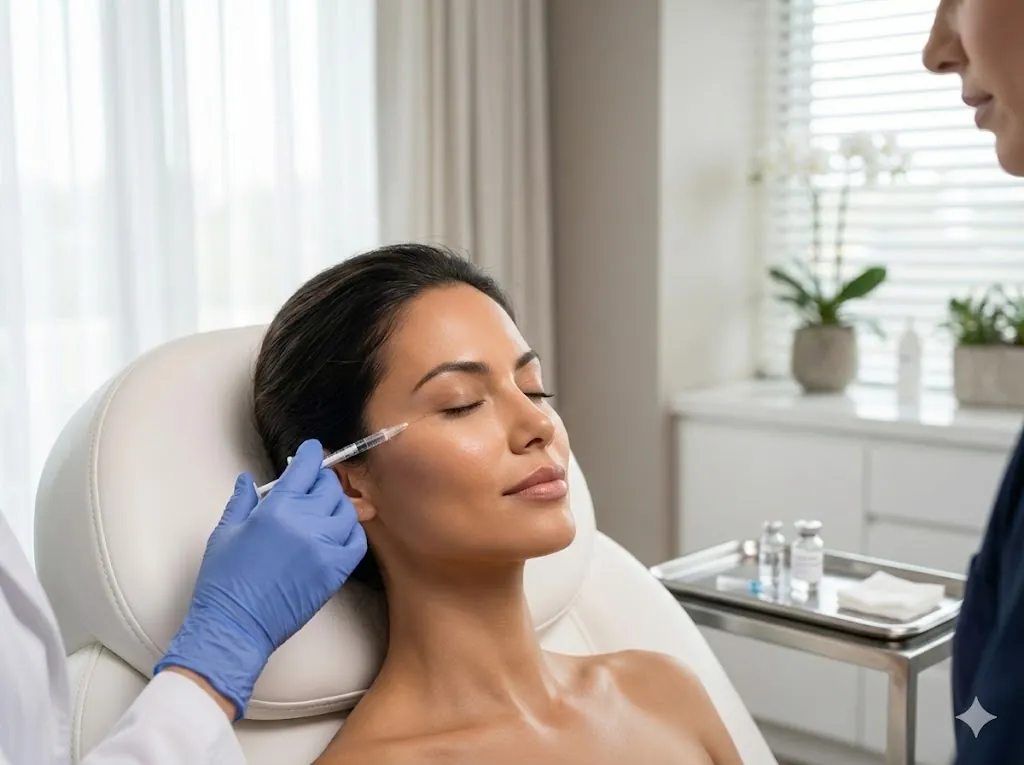
The P-Shot is a platelet-rich plasma (PRP) injection prepared from your own blood and placed into penile tissue, with the aim of supporting blood flow and tissue repair in men with mild to moderate erectile concerns or Peyronie's disease. Evidence is still emerging and results vary; the in-office procedure takes about an hour, and suitability is decided after a physician assessment.
Male sexual health is a complex interplay of vascular integrity, neurological function, and hormonal balance. When these systems are compromised—whether due to age, metabolic factors, or injury—patients often seek regenerative solutions that go beyond temporary fixes. The P-Shot (Priapus Shot) has emerged as a cornerstone of regenerative medicine in the field of urology and aesthetics. At Richmond Anti-Aging Clinic (RAAC) in Richmond, BC, our approach is rooted in clinical evidence and physician oversight. Under the direction of Dr. Charles Jiang, a licensed physician with over 29 years of clinical experience, we prioritize a scientific understanding of how Platelet-Rich Plasma (PRP) interacts with penile tissues. This article serves as a deep-dive into the biochemical mechanisms, clinical data, and patient selection criteria for the P-Shot. Learn more about P-Shot (Priapus Shot)
How does the P-Shot work?
The P-Shot concentrates platelets from your own blood; once injected, they release growth factors that may encourage new blood vessel formation, nerve repair and tissue remodeling in the erectile tissue.
The P-Shot is fundamentally a Platelet-Rich Plasma (PRP) treatment. PRP is autologous, meaning it is derived from the patient's own blood, which significantly reduces the risk of allergic reactions or rejection. The core mechanism of the P-Shot lies in the concentration of platelets and the subsequent release of growth factors.
Alpha Granule Degranulation
Platelets are not merely clotting agents; they are reservoirs of bioactive proteins. When PRP is injected into the corpus cavernosum and surrounding tissues of the penis, the platelets undergo activation and degranulation. This process releases a cocktail of growth factors from the alpha granules, including:
- Vascular Endothelial Growth Factor (VEGF): A primary driver of angiogenesis (the formation of new blood vessels).
- Platelet-Derived Growth Factor (PDGF): Stimulates cell replication and collagen synthesis.
- Transforming Growth Factor-Beta (TGF-β): Modulates the healing environment and extracellular matrix remodeling.
- Epidermal Growth Factor (EGF): Promotes cell growth and differentiation.
Angiogenesis and Neovascularization
For many patients in Richmond experiencing erectile dysfunction (ED), the root cause is vasculogenic—meaning blood flow is insufficient to maintain an erection. The P-Shot addresses this by promoting angiogenesis. VEGF and other cytokines stimulate the migration and proliferation of endothelial cells, creating a more robust vascular network within the erectile tissue. This "re-vascularization" may help improve the quality and duration of erections by increasing the blood-holding capacity of the corpus cavernosum.
Neurogenesis and Tissue Remodeling
Beyond blood flow, the P-Shot may influence neurogenesis (the repair of nerve tissue). This is particularly relevant for patients who have experienced nerve damage due to surgery or chronic conditions like diabetes. The growth factors promote a regenerative environment that supports the health of the cavernous nerves, which are essential for the signaling required to initiate an erection. Book a Consultation
What does the research say about PRP for erectile dysfunction?
Early studies, including a systematic review and a randomized trial, suggest PRP may improve erectile function scores with few serious side effects, but the evidence is still limited and individual results vary.
While the P-Shot is a relatively modern application of PRP, the body of literature supporting its use in male sexual health is growing. It is important to distinguish between commercial claims and clinical data.
- Epifanova et al., Sexual Medicine Reviews: This systematic review explored the use of PRP for erectile dysfunction. The researchers noted that PRP has the potential to recover erectile function by promoting the regeneration of cavernous nerve fibers and improving the smooth muscle content within the penis. The study highlighted the safety profile of autologous PRP, noting no significant adverse events.
- Masterson et al., Journal of Sexual Medicine: In a randomized controlled trial, researchers evaluated the efficacy of PRP injections for ED. The findings suggested that patients receiving PRP showed significant improvements in their International Index of Erectile Function (IIEF-5) scores compared to the placebo group. The study concluded that PRP is a viable, minimally invasive option for men looking to enhance sexual performance.
- Al-Hathal et al., Urology Case Reports: This research focused on the application of PRP for Peyronie’s Disease (the curvature of the penis caused by scar tissue). The study observed that the remodeling properties of growth factors in PRP could help break down fibrin deposits and reduce plaque size, potentially improving curvature and reducing pain during intercourse. At Richmond Anti-Aging Clinic (RAAC), our team reviews these and other emerging studies to inform our protocols in Richmond.
How does the P-Shot compare with ED medication and shockwave therapy?
Oral ED medication works within an hour but only temporarily, shockwave therapy is a non-invasive option that works over weeks, and the P-Shot is an injection that aims for gradual tissue repair; they are sometimes combined.
To understand the value of the P-Shot, it must be compared to other common interventions for male sexual health.
| Feature | P-Shot (PRP) | PDE5 Inhibitors (oral prescription medication) | Shockwave Therapy (Li-ESWT) |
|---|---|---|---|
| Mechanism | Regenerative (Growth Factors) | Biochemical (Enzyme Inhibition) | Mechanical (Micro-trauma) |
| Onset of Action | Gradual (Weeks to Months) | Immediate (30-60 mins) | Gradual (Weeks) |
| Duration | Long-term (12+ months) | Short-term (4-36 hours) | Long-term (6-12 months) |
| Invasiveness | Minimally Invasive Injection | Oral Medication | Non-Invasive |
| Primary Goal | Tissue Repair/Angiogenesis | Temporary Blood Flow Increase | Neovascularization |
Who is a good candidate for the P-Shot?
The P-Shot may suit men with mild to moderate erectile concerns, Peyronie's disease or reduced sensitivity; genital infection, certain blood cancers or severe clotting disorders can rule it out, so a full medical review comes first.
Not every patient is an ideal candidate for the P-Shot. A rigorous evaluation by a qualified physician is mandatory. Dr. Charles Jiang, with his credentials, oversees the assessment process at our Richmond clinic to ensure patient safety and efficacy.
Ideal Candidates
- Mild to Moderate ED: Patients who have noticed a decline in firmness or stamina but still have some erectile function.
- Peyronie’s Disease: Individuals seeking to reduce penile curvature or discomfort caused by plaque buildup.
- Sensitivity Loss: Men who have experienced a decrease in sensation due to age or health conditions.
- Performance Optimization: Men without clinical ED who wish to enhance their sexual wellness and preventative health.
Contraindications
Patients with active infections in the genital area, certain blood cancers (such as leukemia or multiple myeloma), or severe clotting disorders may not be suitable for the P-Shot. During your consultation at Richmond Anti-Aging Clinic (RAAC), we will review your full medical history to determine if this treatment aligns with your health profile. Book a Consultation
What happens during a P-Shot procedure?
The visit takes about an hour: blood is drawn and spun to make PRP, the area is numbed, and the PRP is injected with a fine needle; most men return to work the same day with a short pause from sexual activity.
The P-Shot procedure is performed in-office at our Richmond location and typically takes about 60 minutes.
- Blood Draw: A small amount of blood is drawn from the arm, similar to a standard lab test.
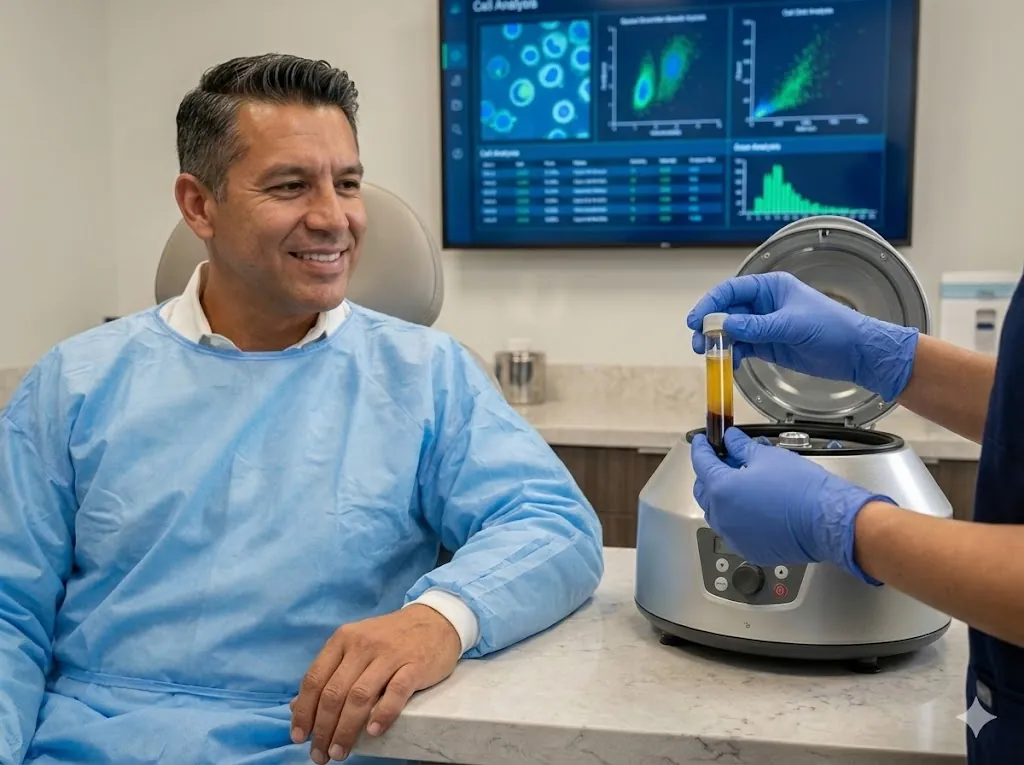
- Centrifugation: The blood is placed in a specialized centrifuge to separate the platelets from the red and white blood cells, creating a highly concentrated PRP.
- Numbing: A potent topical numbing cream and/or a local anesthetic block is applied to the treatment area to ensure maximum comfort.
- Injection: Using a very fine needle, the PRP is precisely injected into the corpus cavernosum and the glans of the penis. This step is performed under the oversight of a licensed physician.
- Recovery: Downtime is minimal. Patients can typically return to work and normal activities immediately, though we recommend a short period of abstinence from sexual activity as directed by the physician.
Why Choose Richmond Anti-Aging Clinic (RAAC)?
Choosing a clinic for a procedure as sensitive as the P-Shot requires trust in the provider's expertise and the facility's standards. RAAC provides the following in the Greater Vancouver area:
- Physician-Led Care: Every regenerative procedure is overseen by a licensed physician. Your practitioner uses physician-administered centrifuge systems to prepare the platelet concentrate.
- Personalized Treatment Plans: We don't believe in a one-size-fits-all approach. Your treatment is tailored to your specific physiological needs and goals.
- Bilingual Staff: To serve our diverse community in Richmond, our team is fluent in both English and Chinese (Mandarin and Cantonese).
Frequently Asked Questions
Is the P-Shot painful?
With the application of high-grade topical numbing and local anesthetic, most people may feel only minimal pressure or a slight pinching sensation. Our priority is keeping you as comfortable as possible.
How long do the results last?
Individual results vary; where benefits occur, they may last around 12 to 18 months. Periodic maintenance treatments can help sustain the regenerative effects.
Are there any side effects?
Because PRP is derived from your own blood, the risk of systemic side effects is extremely low. Minor localized swelling, redness, or bruising at the injection site is normal and usually resolves within a few days.
How many treatments are needed?
Some patients see significant improvement after a single session. However, depending on the severity of the concern, a series of 2-3 treatments spaced several weeks apart may be recommended for optimal tissue remodeling.
What is the cost of the P-Shot?
Contact us for current pricing, as costs can vary based on the specific protocol and whether it is combined with other therapies.
Next Steps
If you are researching ways to improve your sexual health and want to explore the science of regenerative medicine, the next step is a professional assessment. Understanding the underlying causes of your concerns is essential for a successful outcome. Ready to See What P-Shot (Priapus Shot) Can Do for You? Our medical team at Richmond Anti-Aging Clinic (RAAC) in Richmond is ready to create your personalized treatment plan. Book your consultation today — available in English and Chinese. Experience the confidence that comes with physician-led care and scientifically-backed treatments.
Disclaimer: This article is for educational purposes only and does not constitute medical advice. Please consult with a qualified healthcare professional before undergoing any treatment. Individual results may vary. PRP treatments for sexual wellness are used in a manner consistent with clinical research and professional medical judgment.