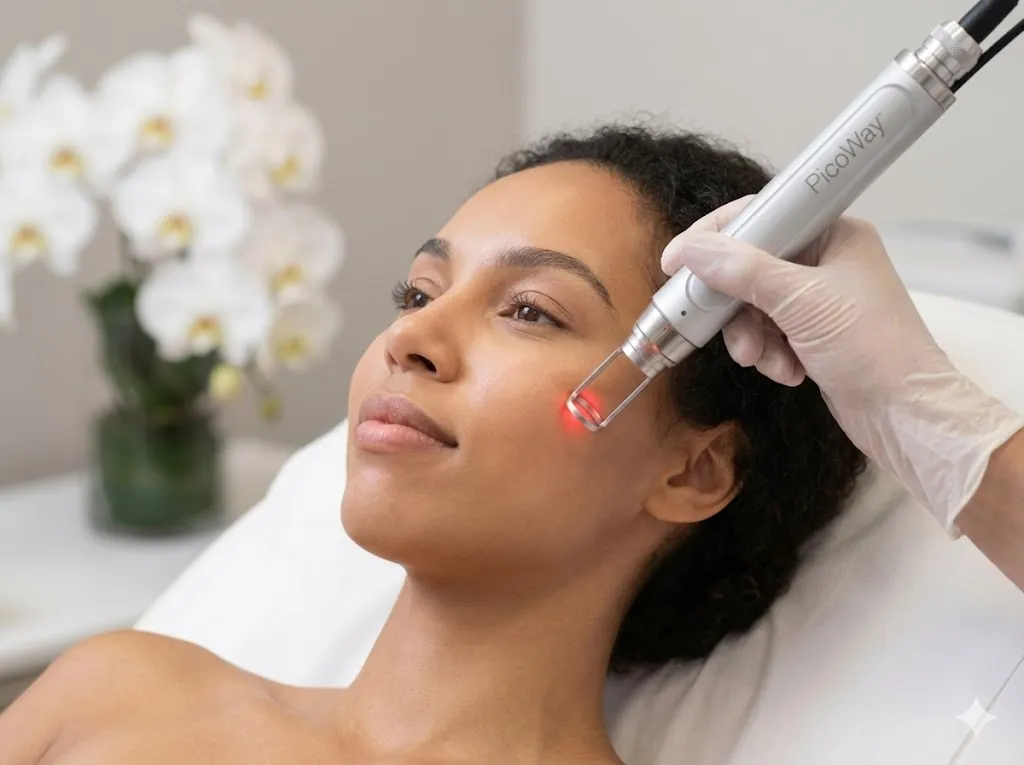
PicoWay is a picosecond laser whose ultra-short pulses shatter pigment into fine particles mainly through pressure rather than heat. It is used for pigmentation, tattoo removal, acne scars and skin texture, and may carry a lower risk of pigment changes in darker skin than older Q-switched lasers. Most concerns need several sessions, and redness usually settles within a day or two.
In the evolving landscape of medical aesthetics, PicoWay is one technology used for skin rejuvenation. As a physician-led facility, Richmond Anti-Aging Clinic (RAAC) focuses on evidence-based treatments with short recovery times. For our patients in Richmond and the Greater Vancouver area, understanding the biochemical and physical mechanisms behind this technology is the first step toward achieving their aesthetic goals. Learn more about PicoWay and how it integrates into our comprehensive skin health protocols.
The Evolution of Laser Technology: From Nano to Pico
To understand the picosecond laser, one must first understand its predecessor: the nanosecond (Q-switched) laser. For decades, nanosecond lasers were the standard for tattoo removal and pigment correction. These devices operate on a photothermal principle, meaning they use heat to break down pigment. While effective, the relatively long pulse duration (one-billionth of a second) allows heat to dissipate into surrounding tissues, increasing the risk of thermal damage, post-inflammatory hyperpigmentation (PIH), and discomfort. PicoWay differs by using picosecond pulse durations—one-trillionth of a second. This speed is central to how it works. By delivering energy in such a short window, the laser creates a photoacoustic effect rather than a photothermal one. Essentially, the energy reaches the target so quickly that the pigment shatters before it has a chance to heat up the surrounding skin.
How does PicoWay break up pigment?
Its pulses are so short that pigment particles are shattered by pressure into tiny, dust-like fragments the body can clear, while the Resolve handpiece also prompts collagen renewal.
The primary mechanism that distinguishes the pico laser is its ability to induce "Laser-Induced Optical Breakdown" (LIOB) in the dermis and "Laser-Induced Plasma-Pockets" (LIPP) without damaging the epidermis. When the PicoWay beam hits a pigment particle—whether it is melanin or tattoo ink—the rapid delivery of energy causes the particle to vibrate and expand very rapidly. This mechanical stress shatters the pigment into microscopic "dust" particles. In contrast, older lasers only broke pigment into "pebbles." These finer particles are much more easily processed and eliminated by the body’s lymphatic system.
Cellular and Biochemical Response
Beyond pigment fragmentation, the PicoWay Resolve handpiece creates tiny open spaces under the skin. This process triggers a natural wound-healing response without the trauma of a traditional ablative laser. This biochemical signaling stimulates the production of new collagen and elastin, which help keep skin firm.
What does the research say about picosecond lasers?
Published studies report that picosecond pulses can clear stubborn benign pigment and multi-coloured tattoos more efficiently than nanosecond pulses, and that fractional picosecond handpieces can improve acne scars and fine lines.
Published clinical studies on picosecond lasers have looked at three main uses. Findings vary between studies, and individual results vary.
- Pigment: Picosecond pulses may be more effective at clearing recalcitrant benign pigmented lesions compared to nanosecond pulses, with a lower incidence of side effects for some patients.
- Tattoo Clearance: The ultra-short pulse duration of the PicoWay system may allow for faster clearance of multi-colored tattoos, including difficult-to-treat blues and greens, in fewer sessions than traditional methods for some patients.
- Acne Scarring and Texture: Picosecond holographic fractional technology (like that found in PicoWay Resolve) may improve the appearance of acne scars and fine lines by inducing collagen remodeling, and may be suitable for various skin types. Book a Consultation to discuss how this clinical evidence applies to your specific skin concerns.
How is PicoWay different from a traditional Q-switched laser?
PicoWay works with picosecond pulses and pressure rather than heat, which generally means less downtime, a lower risk of PIH and often fewer tattoo sessions than a nanosecond Q-switched laser.
For patients evaluating their options in Richmond, it is helpful to see how PicoWay compares to adjacent technologies.
| Feature | Traditional Q-Switched Laser | PicoWay (Picosecond Laser) |
|---|---|---|
| Pulse Duration | Nanoseconds (10^-9) | Picoseconds (10^-12) |
| Primary Mechanism | Photothermal (Heat) | Photoacoustic (Pressure) |
| Pigment Particle Size | Shivers into "pebbles" | Shatters into "dust" |
| Downtime | Moderate to high | Usually short |
| Risk of PIH | Higher (especially for darker skin) | Generally lower in published reports |
| Sessions Required | Often 10+ for tattoos | Often 4-8 for tattoos; varies |
Candidate Evaluation: Is PicoWay Right for You?
PicoWay can be used across a range of Fitzpatrick skin types. Because it relies on mechanical pressure rather than heat, it may carry a lower risk of hyperpigmentation for patients with deeper skin tones than heat-based lasers, although that risk is not zero.
The Importance of Physician Oversight
At Richmond Anti-Aging Clinic (RAAC), candidate evaluation is done carefully. Dr. Charles Jiang, a licensed physician in British Columbia, oversees our treatment protocols. Under his guidance, we evaluate each patient's medical history, skin type, and specific concerns—such as melasma, which requires a very delicate touch to avoid rebound pigmentation. The PicoWay’s multiple wavelengths (532nm, 730nm, 785nm, and 1064nm) are selected to match the depth and color of the concern while limiting effects on surrounding tissue.
Who should not have PicoWay treatment?
Treatment is postponed with active cold sores or skin infections, recent photosensitizing medication such as isotretinoin, or during pregnancy and breastfeeding, and most concerns need several sessions.
While PicoWay is a newer tool, it is not a universal solution. Limitations include:
- Active Infections: Treatments cannot be performed over active cold sores or skin infections.
- Photosensitizing Medications: Patients on certain medications (like Isotretinoin) must wait a specific period before treatment.
- Pregnancy: As a standard safety precaution, we do not treat patients who are pregnant or breastfeeding.
- Expectation Management: Multiple sessions are usually needed, and results vary from person to person.
What happens during a PicoWay session?
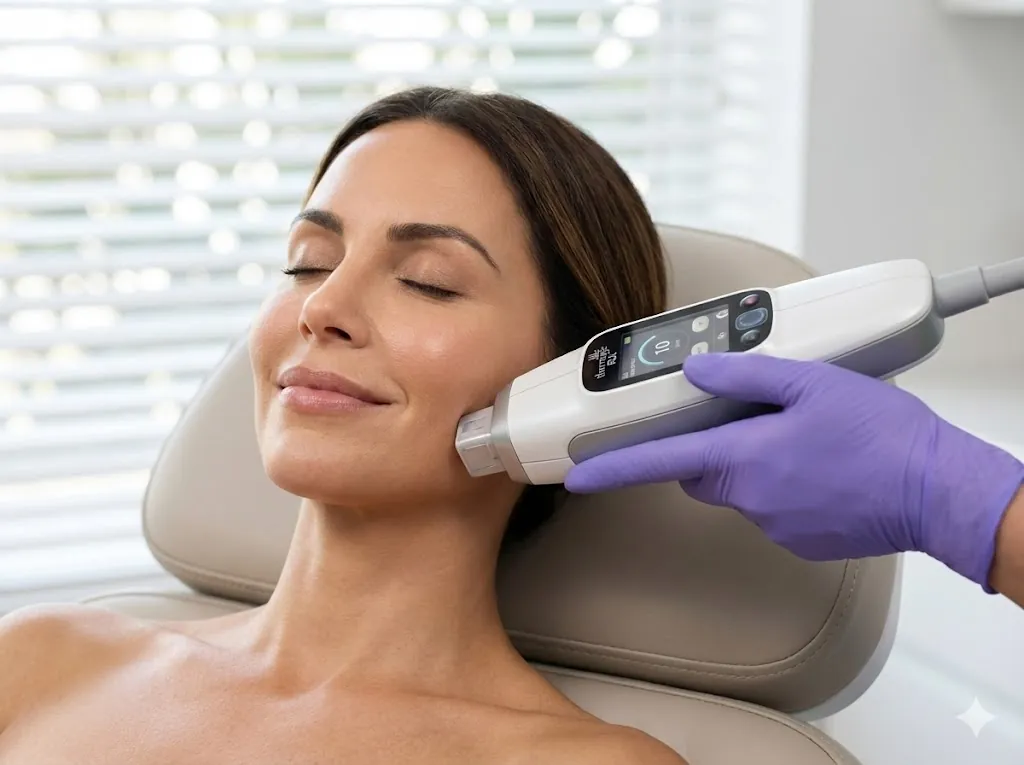
After a skin analysis and optional numbing cream, the handpiece is passed over the skin with a snapping feeling for about 20–30 minutes on a full face, and mild redness may follow for a few hours.
- Consultation: We begin with a comprehensive skin analysis using skin imaging to map pigmentation and vascularity.
- Preparation: The skin is cleansed. While the treatment is well-tolerated (often described as a small rubber band snap), a topical numbing cream can be applied for comfort.
- The Procedure: The handpiece is moved across the treatment area. A typical session for the full face takes about 20–30 minutes.
- Post-Care: You may experience mild redness or a "sunburned" feeling for a few hours. We provide specific aftercare instructions to protect the newly treated skin.
Why Choose Richmond Anti-Aging Clinic (RAAC)?
Choosing where to receive your PicoWay treatment in Richmond is as important as the technology itself. RAAC offers several features:
- Physician-Led Care: Your care is overseen by a physician, with attention to safety at every step.
- Genuine PicoWay System: Treatments use a genuine PicoWay system under physician oversight.
- Personalized Treatment Plans: No two skins are alike. We customize every pulse and wavelength to your unique biology.
- Bilingual Staff: Our team speaks English, Mandarin and Cantonese. Book a Consultation to discuss your concerns.
Frequently Asked Questions
How many sessions will I need?
Individual results depend on the concern being treated. For pigmentation or skin rejuvenation, 3–5 sessions are common. For tattoo removal, it may range from 4–8 sessions. During your assessment, we will provide a customized timeline.
Is the treatment painful?
The sensation is often described as a quick, snapping feeling. Because the PicoWay uses photoacoustic energy, there is less heat than with traditional lasers, which may make it more comfortable for some patients. We offer numbing options for those with sensitive skin.
What is the downtime?
For most PicoWay treatments, downtime is minimal. You may experience redness for 24–48 hours. For tattoo removal, there may be some crusting or localized swelling, but this typically resolves quickly with proper aftercare.
Can PicoWay treat melasma?
PicoWay is sometimes used as part of a melasma treatment plan. However, melasma is a complex condition that requires careful settings to avoid worsening the pigment, and results vary. Dr. Charles Jiang oversees these protocols.
How much does PicoWay cost?
Cost varies based on the size of the treatment area and the number of sessions required. Pricing is explained at consultation.
Next Steps
If you are struggling with stubborn pigmentation, acne scars, or a tattoo you no longer want, PicoWay is one option to discuss with a physician. Book your consultation today at Richmond Anti-Aging Clinic (RAAC) in Richmond, BC. Services are available in English and Chinese.
Disclaimer: This article is for educational purposes only and does not constitute medical advice. Please consult with a qualified healthcare professional before undergoing any treatment.