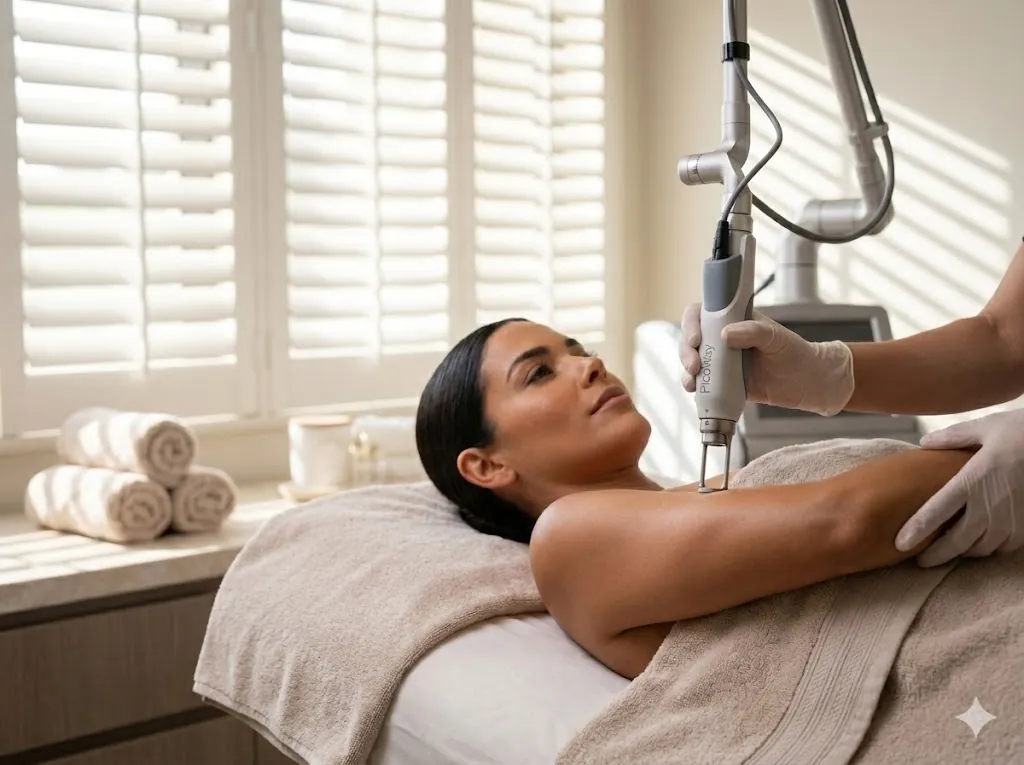
PicoWay is a picosecond laser that breaks tattoo ink and skin pigment into very fine particles with ultra-short pulses, relying on pressure rather than heat, which the body then clears. It is used for tattoos, sunspots, freckles and texture concerns such as acne scarring. Tattoo removal typically takes 4 to 8 sessions and pigment 1 to 3; most people return to work the same or next day.
In the evolving landscape of medical aesthetics, the transition from thermal-based treatments to acoustic-based technology marks a significant paradigm shift. At Richmond Anti-Aging Clinic (RAAC) in Richmond, BC, we prioritize evidence-based modalities that offer high efficacy with minimized biological stress. The PicoWay system is part of this evolution. Learn more about PicoWay and how it works for pigment removal and skin revitalization. Under the clinical oversight of our licensed physician, our clinic utilizes this technology to provide precise, physician-led interventions for our diverse patient population in Greater Vancouver.
How does the PicoWay laser remove pigment and tattoo ink?
PicoWay fires pulses lasting trillionths of a second, so ink or pigment is shattered by a pressure wave into dust-like particles before much heat can spread, and the body's lymphatic system gradually clears them.
To understand how the picoway works as a clinical tool, one must first understand the physics of laser-tissue interaction. Traditional lasers, such as Q-switched systems, operate in the nanosecond range (one-billionth of a second). These lasers rely primarily on a photothermal effect, where the target chromophore (pigment or ink) absorbs light energy and converts it into heat. This heat eventually causes the pigment to shatter, but it also risks significant thermal diffusion to the surrounding healthy tissue, potentially leading to scarring or post-inflammatory hyperpigmentation (PIH). In contrast, the picosecond laser technology utilized by PicoWay operates in trillionths of a second. This ultra-short pulse duration creates a "photoacoustic" effect. Instead of heating the pigment, the energy is delivered so rapidly that the target undergoes a sudden expansion and mechanical collapse. This creates a pressure wave that shatters the pigment into microscopic, dust-like particles. From a biochemical perspective, these smaller particles are more easily phagocytized (engulfed and removed) by the body’s lymphatic system. Because the pulse duration is shorter than the Thermal Relaxation Time (TRT) of the target, the heat does not have time to transfer to the surrounding skin, making it a safer profile for patients with deeper skin tones common in Richmond. Book a Consultation to see if this mechanism is appropriate for your specific skin concerns.
What does the research say about PicoWay?
Published studies report faster clearance of multicoloured tattoos than nanosecond lasers, effective treatment of benign pigmented spots, and collagen stimulation for texture and acne scarring with the Resolve handpiece; individual results vary.
The clinical utility of the PicoWay system is supported by extensive peer-reviewed research. When evaluating new technology, Dr. Charles Jiang and our medical team analyze the histological and clinical outcomes documented in major dermatological journals.
- Lasers in Surgery and Medicine: This study evaluated the efficacy of the 532 nm and 1064 nm picosecond laser for tattoo removal. The researchers found that the photoacoustic mechanism may allow for faster clearance of multi-colored tattoos compared to traditional nanosecond lasers, with fewer treatment sessions required and a higher safety profile for the epidermis.
- Dermatologic Surgery: This research focused on the treatment of benign pigmented lesions. The study concluded that the high peak power and ultra-short pulses of the PicoWay system effectively targeted melanin while sparing the surrounding tissue, leading to high patient satisfaction and minimal downtime.
- Journal of Cosmetic Dermatology: This clinical trial examined the use of the holographic beam splitter (the PicoWay Resolve handpiece) for skin rejuvenation and acne scarring. The study highlighted the creation of Laser-Induced Optical Breakdown (LIOB) in the dermis. These microscopic cavities trigger a natural wound-healing response, stimulating collagen and elastin production without damaging the skin surface. These studies confirm that the PicoWay is not merely a cosmetic tool but a sophisticated medical device capable of inducing meaningful biological changes. At Richmond Anti-Aging Clinic (RAAC), we translate this clinical data into personalized treatment protocols.
How is a picosecond laser different from a Q-switched laser?
Q-switched lasers use nanosecond pulses and mainly heat the pigment, while picosecond lasers like PicoWay use far shorter pulses that rely on pressure, which typically means finer fragments, fewer sessions and less recovery.
When choosing a treatment in Richmond, it is essential to compare the PicoWay mechanism against other common laser types.
| Feature | Traditional Q-Switched (Nanosecond) | PicoWay (Picosecond) |
|---|---|---|
| Pulse Duration | One-billionth of a second | One-trillionth of a second |
| Primary Mechanism | Photothermal (Heat) | Photoacoustic (Pressure) |
| Pigment Fragmentation | Shatters into "pebbles" | Shatters into "dust" |
| Downtime | Moderate (7-10 days) | Minimal (24-48 hours) |
| Risk of PIH | Higher (especially in darker skin) | Significantly Lower |
| Number of Sessions | Often 10+ for tattoos | Typically 4-8 for tattoos |
Who is a good candidate for PicoWay?
PicoWay may suit people with freckles, sunspots, some types of melasma, unwanted black or coloured tattoos, or fine lines and acne scarring; active skin infection, photosensitivity or certain medications can mean waiting.
At Richmond Anti-Aging Clinic (RAAC), every patient undergoes a rigorous candidate evaluation. As a physician-led clinic, Dr. Charles Jiang ensures that the PicoWay is only utilized when clinically indicated.
Ideal Candidates
- Pigment Concerns: Individuals with freckles, liver spots, or melasma. PicoWay is particularly effective for melasma because it avoids the heat that often exacerbates hormonal pigmentation.
- Tattoo Removal: Patients looking to remove black or multi-colored ink more efficiently than traditional methods allow.
- Skin Texture: Those seeking to address fine lines, wrinkles, or acne scarring via LIOB-induced collagen remodeling.
Clinical Considerations
While the PicoWay is a medical-grade device used for various indications, it is not suitable for everyone. Contraindications include active skin infections, a history of photosensitivity, or the use of certain medications like isotretinoin. During your assessment at our Richmond facility, we will review your medical history with attention to safety. Book a Consultation with our medical team to begin your evaluation.
What happens during a PicoWay session?
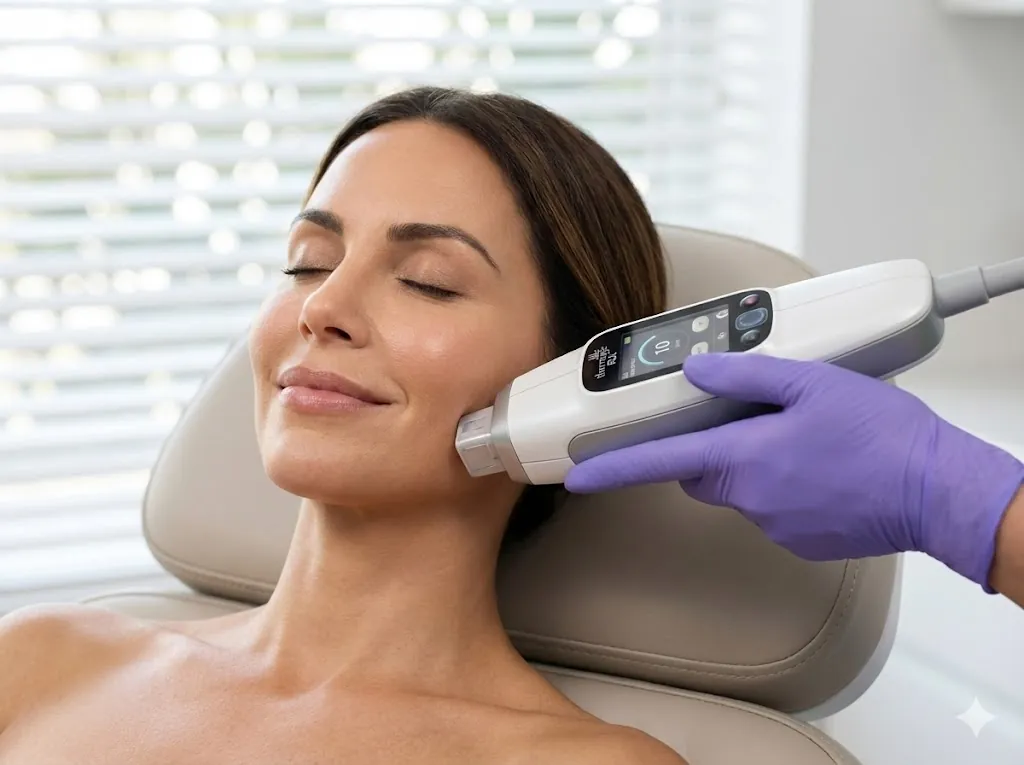
After a skin assessment and cleansing, numbing cream may be applied, the handpiece is passed over the area with a rubber-band-snap feeling, and soothing ointment and sun protection are applied before you leave.
When you visit Richmond Anti-Aging Clinic (RAAC) for a PicoWay session, the process is streamlined and medically supervised:
- Consultation: A thorough skin analysis using advanced imaging to identify the depth and type of pigment.
- Preparation: The skin is cleansed, and depending on the intensity of the treatment (especially for tattoo removal), a topical numbing cream may be applied.
- The Procedure: The physician or trained technician glides the PicoWay handpiece over the target area. The sensation is often described as a light snap of a rubber band.
- Post-Treatment Care: We apply a soothing ointment and sun protection. Because the PicoWay leaves the outer layer of skin intact, you can typically return to your daily activities in Richmond immediately.
Why Choose Richmond Anti-Aging Clinic (RAAC)?
Choosing where to receive laser treatment in the Greater Vancouver area is a decision that should be based on clinical expertise.
- Physician-Led Care: Dr. Charles Jiang (licensed) oversees all clinical protocols, with attention to safety.
- Advanced Technology: We invest in the latest PicoWay platforms, including multiple wavelengths (532nm, 785nm, 1064nm) to treat a range of skin types and ink colors.
- Bilingual Service: To better serve our Richmond community, our staff is fully bilingual in English and Chinese (Mandarin/Cantonese).
- Personalized Planning: We do not believe in one-size-fits-all. Your treatment parameters are adjusted based on your skin’s specific response and biological needs.
Frequently Asked Questions
How many sessions are typically required? Individual results depend on the condition being treated. For pigmented lesions, 1-3 sessions may suffice, while tattoo removal may require 4-8 sessions. A personalized timeline will be provided during your consultation. Is the treatment painful? Most patients find PicoWay treatments well-tolerated. The photoacoustic nature of the laser means less heat is generated, which typically results in less discomfort compared to older laser technologies. What is the expected recovery time? For skin rejuvenation, you may experience mild redness for 24-48 hours. For tattoo removal, some crusting or swelling may occur for a few days. Most people return to work the same or the following day. Is PicoWay safe for darker skin tones? Yes. Because the PicoWay minimizes heat (photothermal energy), it may lower the risk of post-inflammatory hyperpigmentation, which is why it is often considered for Fitzpatrick skin types IV-VI. How much does PicoWay cost? Contact us for current pricing, as costs vary based on the size of the treatment area and the number of sessions required.
Next Steps
If you are ready to address stubborn pigment, unwanted tattoos, or skin texture concerns with picosecond laser technology, the next step is a clinical assessment. Our team will evaluate your skin and provide a science-based recommendation tailored to your goals. Ready to See What PicoWay Can Do for You? Our medical team at Richmond Anti-Aging Clinic (RAAC) in Richmond is ready to create your personalized treatment plan. Book a consultation — available in English and Chinese.
Disclaimer: This article is for educational purposes only and does not constitute medical advice. Please consult with a qualified healthcare professional before undergoing any treatment.