How does cross-linked hyaluronic acid interact with the dynamic anatomy of the perioral complex? When considering an enhancement, many individuals begin by researching how modern soft-tissue techniques respect natural facial proportions rather than altering them unnaturally. Exploring a lip filler aesthetic treatment in Richmond reveals a distinct movement in 2026 toward subtle, tissue-respecting restorative adjustments. Whether you are seeking your initial appointment or looking into lip filler touch-ups and neuromodulator treatments to soften dynamic lines, understanding the cellular biology, rheological science, and anatomical mapping of the lips allows you to make an informed, confident decision.
At Richmond Anti-Aging Clinic (RAAC) in Richmond, BC, clinical procedures prioritize anatomical harmony and patient education. Here is a scientific overview of what occurs beneath the surface during dermal filler procedures, the clinical evidence supporting modern techniques, and how clinical candidacy is evaluated.
Mechanism of Action: Hyaluronic Acid and Tissue Integration
To understand how modern dermal fillers function, one must look at the cellular structure of human skin and the extracellular matrix (ECM). Hyaluronic acid (HA) is a naturally occurring glycosaminoglycan distributed widely throughout human connective, epithelial, and neural tissues. In the labial mucosa and vermilion borders, endogenous HA binds water molecules up to one thousand times its molecular weight, providing hydration, mechanical cushioning, and tissue turgor.
The Cross-Linking Chemistry
In its natural biological state, endogenous HA possesses a rapid turnover rate, breaking down within twenty-four to forty-eight hours through enzymatic degradation by endogenous hyaluronidases and oxidative stress. To make hyaluronic acid viable for aesthetic volume support, bioengineers use cross-linking agents—most commonly 1,4-butanediol diglycidyl ether (BDDE).
During synthesis, uncoiled HA polymer chains undergo chemical stabilization with BDDE, forming covalent ether bonds between the hydroxyl groups of adjacent polysaccharide backbones. This cross-linking produces a cohesive three-dimensional hydrogel matrix. The degree of modification is calibrated so that the resulting hydrogel resists rapid enzymatic cleavage while preserving biocompatibility and a low immunogenic profile.
Rheological Principles: Elasticity, Viscosity, and Cohesivity
Different planes of the lip complex require specific rheological properties:
- Elastic Modulus ($G'$): Measures the gel's firmness and capacity to resist shear deformation. A moderate $G'$ provides gentle projection to the vermilion border without creating unnatural stiffness.
- Viscous Modulus ($G''$): Represents liquid-like dissipation of energy under dynamic strain.
- Cohesivity: Reflects the intermolecular affinity holding the hydrogel together. High cohesivity helps prevent micro-fragmentation during the repetitive muscular movements of speaking, chewing, and smiling, allowing the gel to integrate evenly into the submucosa.
When cross-linked HA is introduced to the vermilion border or the wet-dry mucosal junction, water drawn from local interstitial fluids swells the hydrogel matrix until an osmotic equilibrium is achieved. Over the following days, fibroblasts interact with the implant periphery, yielding a soft, natural feel.
For those interested in exploring procedural options, you can Learn more about Lip Filler to understand specific treatment pathways.
Clinical Evidence and Biomechanical Studies
Subsurface lip augmentation has evolved from an empirical art into an evidence-based medical discipline guided by peer-reviewed literature.
Anatomical Depth and Vascular Mapping
A pivotal clinical investigation published in Plastic and Reconstructive Surgery evaluated the precise depth and pathway of the superior and inferior labial arteries across numerous human anatomical specimens. The authors demonstrated that the main arterial trunk travels within or deep to the orbicularis oris muscle in the vast majority of cases. Consequently, injecting within the immediate subcutaneous plane or wet-dry mucosal submucosa may reduce the potential for intravascular compromise.
Hydrogel Longevity and Tissue Accommodation
In a clinical trial assessing HA hydrogels in perioral tissue, writing in the Aesthetic Surgery Journal, researchers examined the biomechanical integration of resilient hyaluronic acid gels under dynamic mechanical stress. Using high-frequency ultrasonography, the researchers noted that cohesive gels distributed evenly between muscle bundles without displacing regional tissue architecture. Biopsies demonstrated stable matrix retention and negligible foreign body reaction.
Tissue Remodeling and Cellular Response
Research published in Dermatologic Surgery analyzed cellular responses following targeted HA placement. The investigators noted that local mechanical stretching of resident fibroblasts by the cross-linked gel matrix upregulates the synthesis of procollagen and endogenous extracellular components. This secondary bio-inductive effect helps maintain tissue quality and hydration as the hydrogel gradually breaks down.
If you have questions about how these clinical findings apply to your unique facial profile, you can Book a Consultation to speak with a practitioner.
Comparison: Soft Tissue Approaches for Perioral Aesthetics
When exploring options, individuals often compare hyaluronic acid fillers with alternative modalities such as biostimulatory agents, fat grafting, and neuromodulators. While inquiries often encompass regional considerations—including how clinical standards compare globally, whether someone searches for lip filler richmond nsw or perioral restoration locally—the primary distinction lies in biological behaviour.
| Modality | Primary Mechanism | Structural Target | Reversibility | Best Suited For |
|---|---|---|---|---|
| Hyaluronic Acid Fillers | Physical hydrogel space-occupying matrix; water attraction | Vermilion border, dry/wet mucosa | Yes (enzymatic with hyaluronidase) | Precise vermilion definition, volume replenishment, asymmetric correction |
| Collagen Biostimulators | Subclinical inflammatory response inducing de novo neocollagenesis | Deep dermis, supraperiosteal zone (avoided in dynamic red lip) | No immediate reversal | Structural temple, cheek, and lateral jawline volume support |
| Autologous Fat Grafting | Adipocyte and adipose-derived stem cell survival | Deep subcutaneous tissue, perioral fat pads | Surgical excision only | Broad lower-face structural restoration |
| Neuromodulators | Acetylcholine release inhibition at motor endplates | Orbicularis oris superficial fibers | No (gradual biological clearance) | Softening dynamic vertical lip lines; subtle outward mucosal roll |
Because of the extreme mobility and thin epithelial barrier of the lips, particulate biostimulators are generally contraindicated in the red lip itself due to the risk of visible nodule formation. Cross-linked HA remains the standard approach for precise, reversible labial volume adjustments.
Clinical Candidate Evaluation and Safety Protocols
Determining suitability for perioral dermal filler involves an in-depth clinical assessment. At Richmond Anti-Aging Clinic (RAAC), treatment is conducted under the guidance of Dr. Charles Jiang, a licensed physician in British Columbia. Dr. Jiang oversees clinical safety protocols, evaluates structural suitability, and ensures that dynamic facial balance is respected.
Structural Assessment Criteria
During a formal clinical consultation, the practitioner assesses:
- Incisor Show and Dental Support: The underlying maxillary and mandibular bone structure, along with dental occlusions, dictates how the soft tissues drape over the mouth.
- Lip-to-Nose and Lip-to-Chin Ratios: Balanced aesthetics generally follow the golden ratio or specific ethnic demographic baselines, where the lower lip typically retains a slightly fuller profile than the upper lip.
- Tissue Turgor and Solar Elastosis: Thinning vermilion borders or photoaged skin require conservative product selection with lower modulus gels to avoid superficial irregularities.
- Dynamic Muscle Hyperactivity: Patients exhibiting hyperdynamic orbicularis oris contraction may benefit from combination approaches using conservative neuromodulator units alongside structural filler.
Contraindications and Clinical Limitations
Safety requires strict adherence to contraindication screenings. Contraindications include:
- Active local infection (such as active herpes simplex virus outbreaks) or chronic inflammatory conditions near the target site.
- Autoimmune conditions in active flare, which may elevate the risk of delayed-type hypersensitivity reactions.
- Known hypersensitivity to cross-linked hyaluronic acid or local anesthetics like lidocaine.
- Concurrent use of high-dose anticoagulants, which substantially elevates the likelihood of extensive hematoma.
- Unrealistic expectations regarding total facial restructuring.
Navigating Investment: Variables Influencing Filler Procedures
Prospective patients frequently search online for terms such as lip filler cost, lip filler cost vancouver, or lip filler cost near me to plan their care. In aesthetic medicine, accurate pricing cannot be determined using a generic menu. Because human anatomy differs, financial variables depend on individual clinical needs.
Cost factors generally reflect:
- Target Volume Requirements: Subtle hydration or minor edge definition may call for a smaller aliquot of gel compared to structural volume restoration for age-related tissue atrophy.
- Rheological Formulation: Different cross-linking technologies require tailored manufacturing processes, which influence product selection.
- Physician Oversight: Procedures supervised or performed by qualified medical professionals prioritize strict infection control, vascular safety mapping, and follow-up medical support.
Because exact dosing and product selection are determined by physical anatomy, pricing is personalized at consultation following a medical assessment.
The Step-by-Step Treatment Process and Recovery Timeline
Understanding the clinical timeline helps patients prepare for both the procedure and the healing phase.
Step 1: Pre-Procedure Clinical Mapping
The medical team photographs the baseline profile, evaluates dynamic muscle movements, and cleanses the skin with medical-grade antiseptic solutions (such as chlorhexidine gluconate). A topical anesthetic is applied to support comfort.
Step 2: Precise Placement
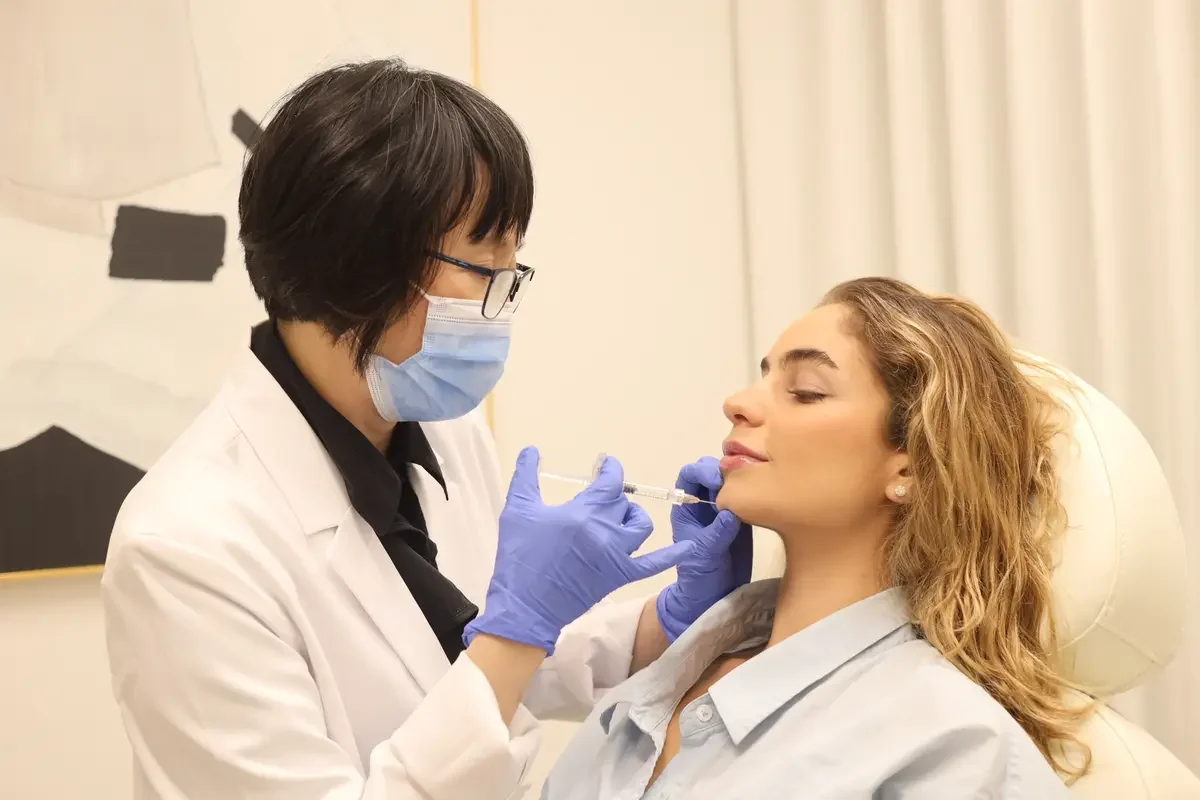
Using either an ultra-fine needle or a blunt-tipped microcannula, the clinician administers the cross-linked HA into the precise anatomical target (subcutaneous or submucosal plane). Small, controlled micro-droplets or retrograde linear threads are placed to create smooth distribution.
Step 3: Gentle Molding
The physician performs gentle manual palpation to integrate the hydrogel into the surrounding tissue bundles, avoiding excessive mechanical force that could cause localized bruising.
Recovery Timeline
- Hours 1 to 24: Mild localized swelling, erythema, and tenderness are normal responses to micro-trauma. Intermittent cold compress application can help soothe the tissue.
- Days 2 to 4: Edema reaches its peak and begins to subside. Minor asymmetry may appear temporarily due to uneven swelling patterns.
- Weeks 2 to 3: Hydrogel water absorption reaches equilibrium, and initial micro-bruising resolves. The filler integrates with the submucosal matrix, yielding a soft, natural result.
Why Choose Richmond Anti-Aging Clinic (RAAC)?
When seeking aesthetic treatments, the clinical setting and provider qualifications are paramount. Richmond Anti-Aging Clinic (RAAC) offers dedicated care characterized by:
- Physician-Led Clinical Care: All clinical evaluations, treatment plans, and injectable therapies are guided by Dr. Charles Jiang, a licensed physician in British Columbia, with attention to safety and natural aesthetics.
- Advanced Technology and Formulations: RAAC selects modern hyaluronic acid hydrogels designed for flexible tissue integration, along with sterile microcannula delivery systems.
- Personalized Treatment Plans: Treatments are customized around your unique dental support, labial architecture, and personal aesthetic objectives.
- Bilingual Consultations: Our clinical staff provides thorough consultations in both English and Chinese, ensuring clear communication at every stage of care.
To begin your personalized treatment journey, Book a Consultation with our clinical team.
Frequently Asked Questions
1. Ready to refresh your look?
Taking the step toward facial rejuvenation begins with an in-depth conversation. A comprehensive clinical assessment allows our medical team to evaluate your natural anatomy, review your medical history, and outline options tailored specifically to your facial proportions.
2. What are dermal fillers, and what can they do?
Dermal fillers are sterile, injectable biocompatible gels, predominantly composed of cross-linked hyaluronic acid. They are designed to restore lost volume, enhance anatomical borders (such as the vermilion border), soften perioral wrinkles, and correct structural asymmetries caused by genetics or natural aging.
3. What are collagen biostimulators like sculptra?
Collagen biostimulators utilize micro-particles, such as poly-L-lactic acid, to elicit a controlled subclinical tissue response that encourages the body's fibroblasts to produce new type I and type III collagen. Unlike hyaluronic acid gels, which provide immediate volume, biostimulators work gradually over several months. They are utilized for structural facial volume in the cheeks, temples, and jawline, but are generally avoided in dynamic red lip tissues.
4. How do i find a safe practitioner for new trends?
To prioritize clinical safety, select a clinic led by a licensed physician who possesses in-depth knowledge of facial vascular anatomy. Ensure the provider uses authentic medical products regulated by Health Canada, follows strict sterile injection protocols, and maintains emergency reversal agents (such as hyaluronidase) on site. Avoid non-medical settings or providers who cannot clearly discuss anatomical risks.
5. How long does lip filler last?
Hyaluronic acid filler in the lips typically lasts between six and twelve months. Longevity varies based on individual metabolic rates, the specific rheology of the cross-linked gel used, and the mechanical activity of the surrounding orbicularis oris muscle. Over time, the hydrogel is broken down naturally through normal enzymatic processes.
Next Steps
If you are evaluating your options for perioral rejuvenation, scheduling a professional evaluation is the ideal next step. A one-on-one session allows our medical team to analyze your labial architecture, address questions regarding product safety, and develop a customized treatment roadmap aligned with your personal goals.
Ready to See What Lip Filler Can Do for You?
Our medical team at Richmond Anti-Aging Clinic (RAAC) in Richmond is ready to create your personalized treatment plan. Book a consultation — available in English and Chinese.
This article is for educational purposes only and does not constitute medical advice. Please consult with a qualified healthcare professional before undergoing any treatment.