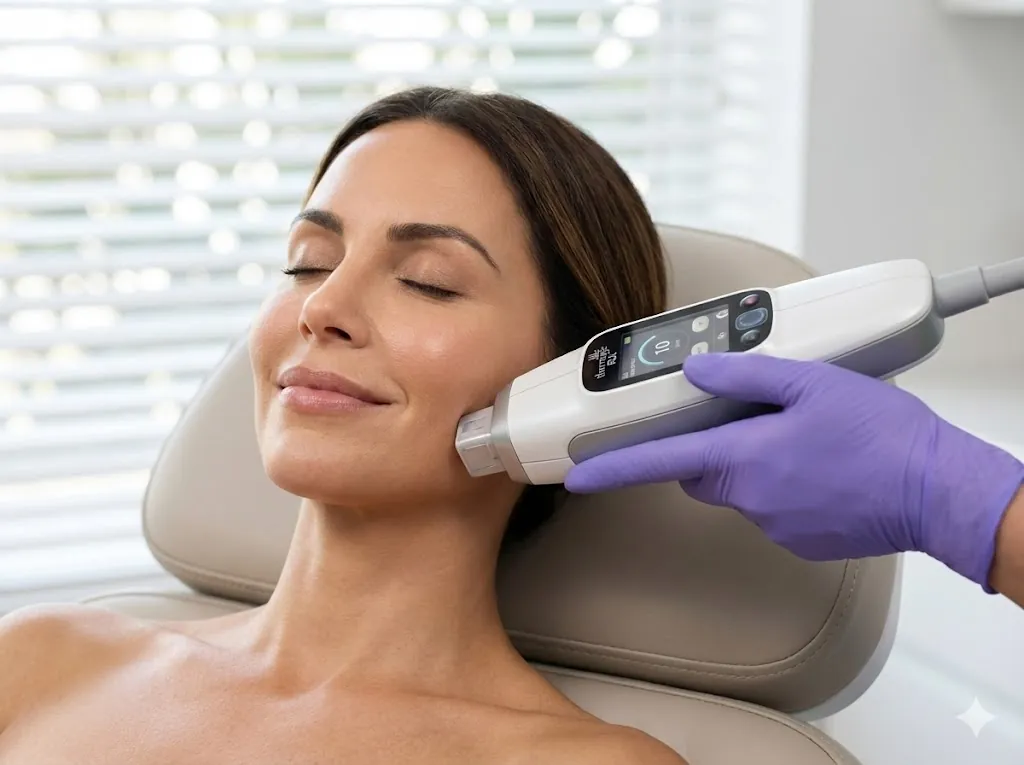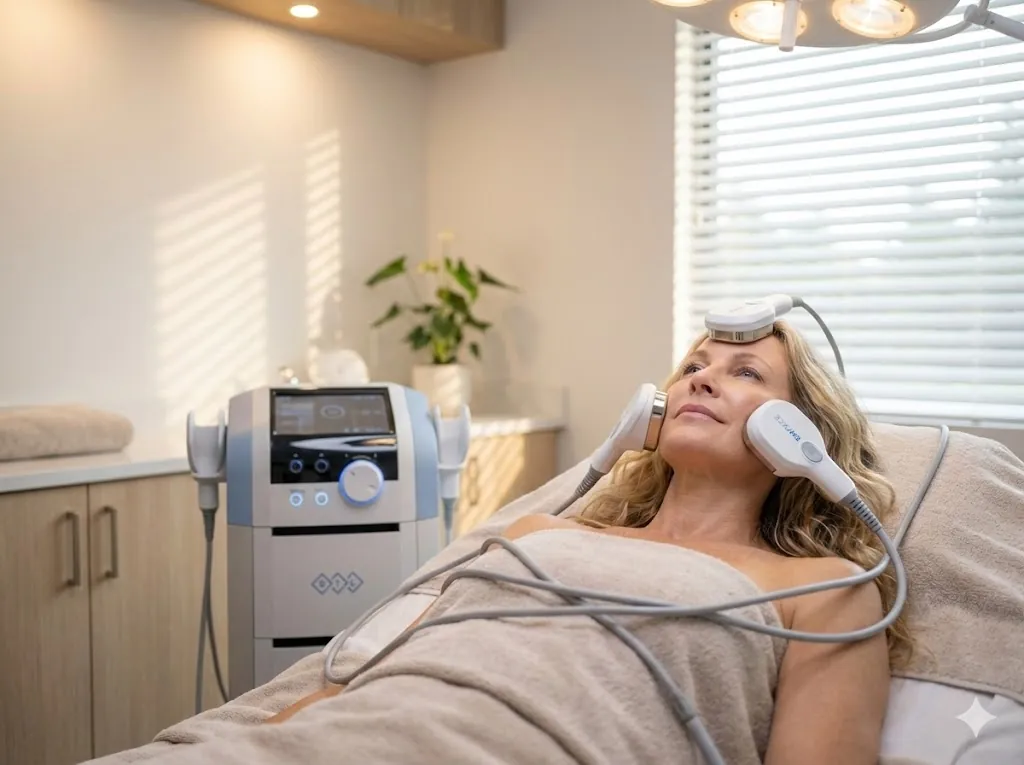
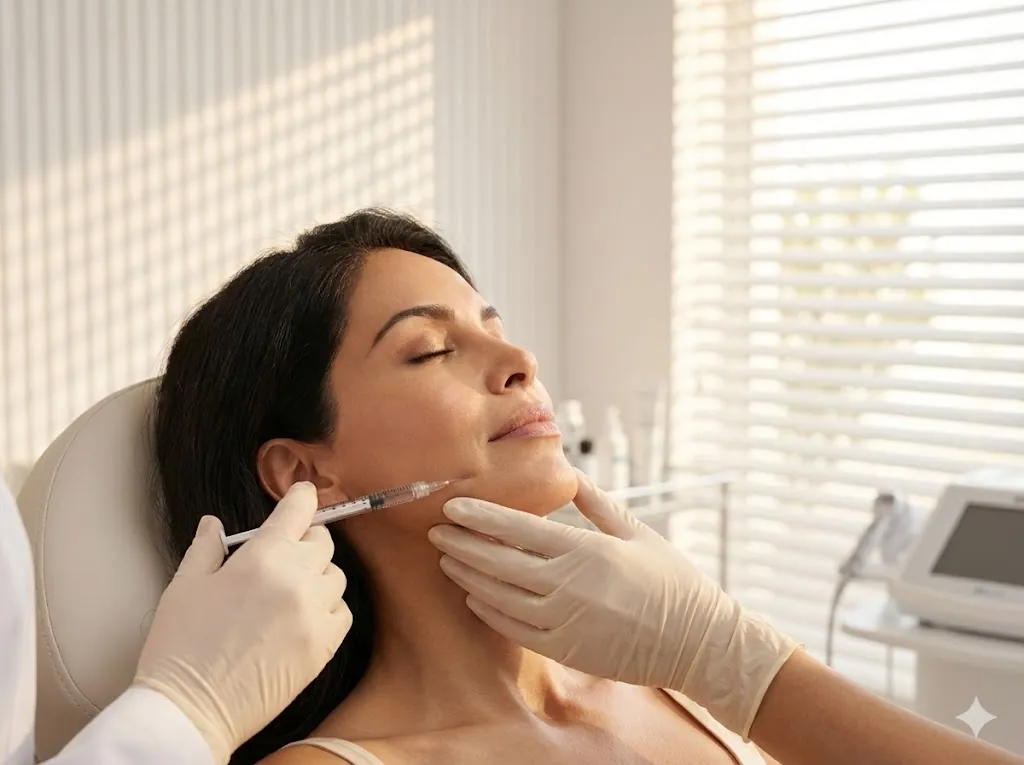
Skin boosters and dermal fillers are both injectable hyaluronic acid, but they do different jobs. Skin boosters (also called booster filler or skin boosting injections) hydrate and improve skin texture and glow. Dermal fillers restore volume and contour, such as cheeks or chin. Which you need depends on whether your goal is skin quality or structure.
One of the most common questions we hear at RAAC Richmond is: "What's the difference between skin boosters and fillers?" Despite both being injectable hyaluronic acid (HA) products, they serve fundamentally different purposes. Understanding this distinction is key to achieving your aesthetic goals — and avoiding treatments that won't deliver what you're hoping for.
The Fundamental Difference: Skin Quality vs. Volume
Think of it this way:
- Dermal fillers = Architecture — adding structure, volume, and contour (like building walls and pillars)
- Skin boosters = Interior design — improving the quality, texture, and glow of the "walls" themselves
Both are important, but they solve different problems. A house with beautiful walls but poor interior finish looks incomplete. A beautifully finished interior in a structurally deficient building won't hold up. Results vary, and addressing both may help.
What Are Skin Boosters?
Skin boosters are ultra-soft, free-flowing hyaluronic acid formulations designed to be injected superficially into the skin to improve hydration, elasticity, firmness, and overall skin quality. They don't add volume or change facial contours — instead, they enhance the health and luminosity of the skin itself.
Skin Booster Products
Restylane Skinboosters (Vital/Vital Light)
- Developed by Galderma; available in Canada
- Stabilized HA using NASHA technology
- Specifically designed for skin quality improvement
- Proven in clinical studies to improve skin roughness, elasticity, and hydration for up to 6 months
- Excellent for face, neck, decolletage, and hands
Juvederm Volite
- Developed by Allergan; available in many markets
- Uses VYCROSS crosslinking technology (same platform as Voluma and Volbella)
- Single-session treatment with results lasting up to 9 months
- Clinically shown to improve skin quality, hydration, and smoothness
- Ideal for face, neck, and decolletage
Other Options:
- Profhilo — A newer bio-remodeling product with ultra-pure HA; gaining popularity globally
- Belotero Revive — Merz's entry into the skin booster space
How Skin Boosters Are Injected: The Micro-Injection Grid Technique
The injection technique for skin boosters is distinctly different from filler placement:
- Grid mapping: The treatment area is mapped into a grid pattern, typically with injection points spaced 1-1.5cm apart
- Superficial injection: Using a fine needle or short cannula, micro-droplets of HA are deposited into the superficial dermis — much shallower than filler injections
- Even distribution: The grid pattern ensures uniform hydration across the entire treatment area
- Multiple passes: Some protocols use 2-3 passes over the same area in a single session
- Treatment course: Typically 3 sessions spaced 2-4 weeks apart, followed by maintenance every 4-6 months
The technique requires patience and precision — it's not about injecting volume at specific points, but about evenly saturating the skin with hydration.
What Skin Boosters Treat
- Dull, dehydrated skin — the most common indication
- Fine lines and crepey texture — especially on neck and decolletage
- Rough, uneven skin texture — improving overall smoothness
- Early signs of aging — before structural volume loss becomes significant
- Post-procedure skin recovery — often used after laser or chemical peels
- Acne scarring — improving the quality of scarred skin
- Smoker's lines — fine perioral lines that don't respond well to fillers
- Hand rejuvenation — improving skin quality (complementary to Radiesse volume restoration)
What Are Dermal Fillers?
Dermal fillers are gel-based injectable products designed to add volume, structure, and contour to specific areas of the face and body. They come in varying consistencies (from ultra-soft to firm) depending on their intended use.
Common Filler Products and Their Uses
| Product | Consistency | Best For |
|---|---|---|
| Juvederm Voluma | Firm | Cheeks, chin, jawline |
| Juvederm Volbella | Soft | Lips, perioral lines |
| Juvederm Volift | Medium | Nasolabial folds, marionette lines |
| Restylane Lyft | Firm | Cheeks, hands, midface |
| Restylane Defyne | Medium | Deep folds, jawline |
| Restylane Kysse | Soft-medium | Lips |
| Belotero Balance | Ultra-soft | Fine lines, tear troughs |
How Fillers Are Injected
Filler injection is more architectural:
- Deep placement: Into the subcutaneous fat, periosteum (on bone), or deep dermis
- Strategic points: Specific anatomical landmarks for lifting and contouring
- Bolus and linear threading: Depositing product in concentrated areas for structural effect
- Immediate visual result: Volume and contour changes are visible right away
What Fillers Treat
- Cheek volume loss — restoring midface fullness
- Nasolabial folds — deep smile lines
- Marionette lines — lines from mouth corners to chin
- Lip enhancement — volume, definition, and proportion
- Under-eye hollows (tear troughs) — reducing dark circles and hollowness
- Jawline definition — creating sharper contours
- Chin augmentation — adding projection
- Temple filling — correcting hollowed temples
- Non-surgical rhinoplasty — smoothing nasal profile
Head-to-Head Comparison
| Feature | Skin Boosters | Dermal Fillers |
|---|---|---|
| Primary goal | Skin quality improvement | Volume and contouring |
| HA type | Free-flowing, non-crosslinked or lightly crosslinked | Heavily crosslinked, gel-like |
| Injection depth | Superficial dermis | Deep dermis, subcutis, periosteum |
| Technique | Grid pattern, micro-droplets | Strategic bolus/linear threading |
| Immediate result | Subtle glow, hydration (full effect over weeks) | Visible volume change immediately |
| Sessions needed | 3 initial + maintenance | Usually 1 session |
| Duration | 6-9 months | 6-24 months (varies by product) |
| Pain level | Mild (many small injections) | Mild-moderate (fewer, deeper injections) |
| Downtime | Small bumps 24-48h, mild redness | Swelling 2-5 days, possible bruising |
| Ideal age range | 25-70+ (preventive to corrective) | 30-70+ (corrective) |
| Cost per session | Quoted at consultation | Quoted at consultation (area-dependent) |
When to Choose Skin Boosters
Choose skin boosters if your primary concern is:
- "My skin looks tired and dull"
- "I want that glass skin glow"
- "My neck/chest skin is getting crepey"
- "I want to maintain skin quality as I age"
- "I've had fillers but my skin still doesn't look great"
Skin boosters are also excellent as a complement to other treatments. These treatments may be combined with:
- Neuromodulators (neuromodulator injections) for expression lines
- Dermal fillers for structural correction
- Laser treatments for pigmentation
- Medical-grade skincare routines
When to Choose Dermal Fillers
Choose fillers if your primary concern is:
- "I've lost volume in my cheeks/temples"
- "I want fuller lips"
- "My nasolabial folds are very deep"
- "I want a sharper jawline or chin"
- "I look tired because of under-eye hollows"
Learn more about our comprehensive dermal filler treatments.
The RAAC Combination Approach
At RAAC Richmond, Dr. Charles Jiang frequently recommends a combination approach for patients who want comprehensive facial rejuvenation:
Phase 1: Structure (Fillers)
Address volume loss and contour — cheeks, jawline, chin, temples as needed.
Phase 2: Quality (Skin Boosters)
Once the "architecture" is restored, improve the skin quality overlying those structures — hydration, glow, texture.
Phase 3: Expression (Neuromodulators)
Soften dynamic wrinkles with neuromodulator injections for a complete rejuvenation.
Phase 4: Maintenance
- Skin boosters every 4-6 months
- Neuromodulators every 3-4 months
- Fillers every 12-24 months (depending on product)
This layered approach is designed to address multiple concerns, and results vary from person to person.
Cost Comparison in Richmond BC
| Treatment | Per Session | Annual Maintenance |
|---|---|---|
| Skin boosters (3 initial sessions) | Quoted at consultation | Quoted at consultation |
| Dermal fillers (cheeks + lips) | Quoted at consultation | Quoted at consultation |
| Combination (boosters + fillers) | Quoted at consultation | Quoted at consultation |
Frequently Asked Questions
Q: Can I get skin boosters and fillers at the same appointment? A: Yes, in many cases. Dr. Jiang often performs both in a single session — fillers first (deeper), then skin boosters (superficial) — saving you time and visits.
Q: Do skin boosters hurt? A: The micro-injection grid technique involves many small injections, but each is superficial and quick. Topical numbing cream is applied beforehand, and many products contain lidocaine. Discomfort during treatment varies from person to person.
Q: Will skin boosters make my face look bigger or puffy? A: No. Skin boosters don't add volume. Small temporary bumps at injection sites resolve within 24-48 hours. The result is improved skin quality, not added size.
Q: How soon will I see results from skin boosters? A: You'll notice improved hydration within a few days. The full skin quality improvement develops over 2-4 weeks after each session, with cumulative benefits across the treatment course.
Q: Are skin boosters safe for sensitive or rosacea-prone skin? A: Generally yes, though Dr. Jiang evaluates each patient individually. The HA used in skin boosters is biocompatible and rarely causes reactions. In some rosacea cases, a modified protocol may be recommended.
Book Your Consultation
Not sure whether you need skin boosters, fillers, or both? Book a consultation at RAAC Richmond. Dr. Jiang will assess your skin quality, volume, and overall facial aging pattern to recommend the ideal treatment plan — whether that's one product or a customized combination.
Dr. Charles Jiang, MD — 29+ years of medical expertise. RAAC Richmond Anti-Aging Clinic: 5580 No. 3 Rd Unit 110, Richmond BC V6X 0R8. Serving Richmond, Vancouver, Burnaby, Surrey, and Metro Vancouver.