When exploring non-invasive methods to address mild to moderate skin laxity, understanding what to anticipate helps set realistic aesthetic goals. Learn more about Ultherapy and how micro-focused ultrasound works beneath the surface of the skin to stimulate natural renewal processes. Unlike superficial treatments, Ultherapy delivers acoustic energy to foundational tissue layers. Because the process relies on the body's internal collagen production, visible Ultherapy results do not appear overnight; instead, they emerge gradually as structural proteins regenerate.
At Richmond Anti-Aging Clinic (RAAC) in Richmond, our clinical focus centers on guiding individuals through evidence-informed aesthetic options. Understanding the physiological mechanism, the recovery phases, and the factors that influence tissue longevity enables you to make informed decisions about your skin care plan.
What Is Ultherapy and How Does SMAS Lifting Actually Work?
To understand the development of skin firming, it helps to ask: what is ultherapy and how does smas lifting actually work?
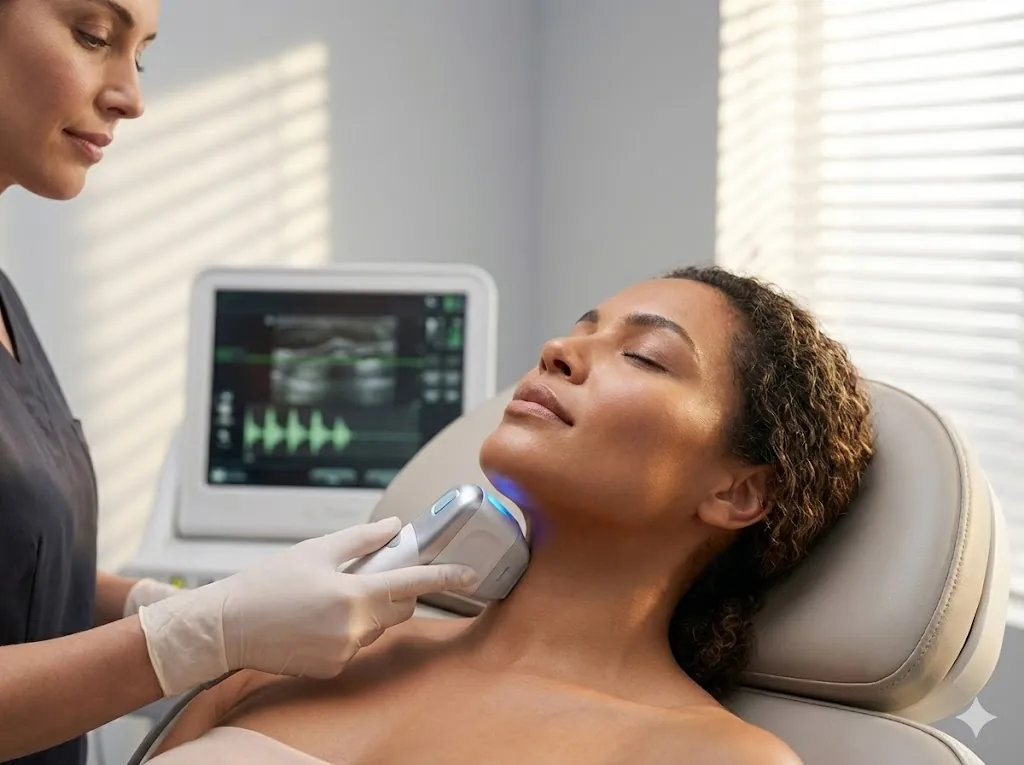
Ultherapy is a non-surgical aesthetic procedure that utilizes micro-focused ultrasound (MFU) energy paired with real-time visualization. During treatment, acoustic waves bypass the epidermis and dermis without disrupting the superficial skin barrier. This energy converges at targeted depths—typically 1.5 mm, 3.0 mm, and 4.5 mm—generating microscopic thermal coagulation points.
The 4.5 mm depth addresses the Superficial Musculoaponeurotic System (SMAS), an organized sheet of collagenous connective tissue that envelops facial muscles. In surgical rhytidectomy (facelift surgery), plastic surgeons physically elevate this same SMAS layer to create structural lift. Ultherapy delivers thermal coagulation points to the SMAS, raising tissue temperature to approximately 60°C to 70°C. This level of thermal exposure triggers immediate collagen contraction followed by a wound-healing response known as neocollagenesis and neoelastogenesis.
Over the ensuing weeks and months, fibroblasts synthesize new, organized collagen bundles, gradually improving tissue tensile strength and creating subtle skin tightening.
The Ultherapy Results Timeline: What Changes to Expect
Because tissue remodeling relies on biological synthesis, the Ultherapy results timeline unfolds across distinct physiological phases. While individual responses differ depending on biological age, baseline skin thickness, and lifestyle factors, the progression typically follows this sequence:
Immediate Post-Procedure (Day 1 to Week 2)
Immediately after clinical delivery, some individuals notice minor initial firmness. This is largely attributed to temporary heat-induced contraction of pre-existing collagen fibrils, accompanied by mild tissue edema. This initial tightness is not the final outcome. The true regenerative cascade is just beginning at the cellular level.
Early Remodeling (Weeks 3 to 8)
During this window, the body's inflammatory signaling shifts into active tissue synthesis. Macrophages clear micro-thermal debris, and fibroblasts begin laying down immature Type III collagen fibers. Externally, visible changes are generally minimal during this period, though some individuals notice subtle improvements in skin texture and contour along the submental region or jawline.
Progressive Firming (Months 2 to 3)
Between 60 and 90 days post-treatment, immature collagen begins maturing into resilient Type I collagen. Tensile strength increases within the dermis and deep facial fascial planes. Patients may notice gradual lifting along the brow, a slightly more defined jawline, and softening of mild crepiness in the upper neck; results vary.
Peak Maturation (Months 3 to 6)
Most individuals observe their primary outcomes around month three to month six. Tissue architecture reaches its renewed baseline density, providing subtle structural support. The extent of lift varies based on the degree of pre-existing laxity, genetic disposition, and intrinsic metabolic response.
If you want an assessment of how your tissue profile may respond, you can Book a Consultation with our clinical team.
Managing Recovery: How Long Does Ultherapy Swelling Last?
A frequent practical question from prospective patients is: ultherapy swelling how long should one plan for?
Because micro-focused ultrasound targets deep layers beneath the skin surface, the outer epidermal layer remains unbroken. However, thermal energy delivered to the SMAS and deep dermis naturally initiates a localized inflammatory response. When considering how long does ultherapy swelling last, mild puffiness typically peaks within 24 to 48 hours and generally resolves within 3 to 7 days.
Other typical post-treatment sensations include:
- Erythema (Redness): Superficial flushing often fades within several hours following the appointment.
- Tenderness: A sensation comparable to muscle soreness when pressing along the jawbone or cheekbones may persist for one to two weeks as deep tissue heals.
- Mild Bruising or Tingling: Occasional minor bruising along bony prominences or temporary sensory tingling may occur, typically subsiding on its own within a few days to weeks.
Applying cold compresses (as directed by your clinician) and sleeping with the head slightly elevated during the first two nights can help ease temporary fluid accumulation.
Treatment Areas: Facial Tightening and Body Contouring Applications
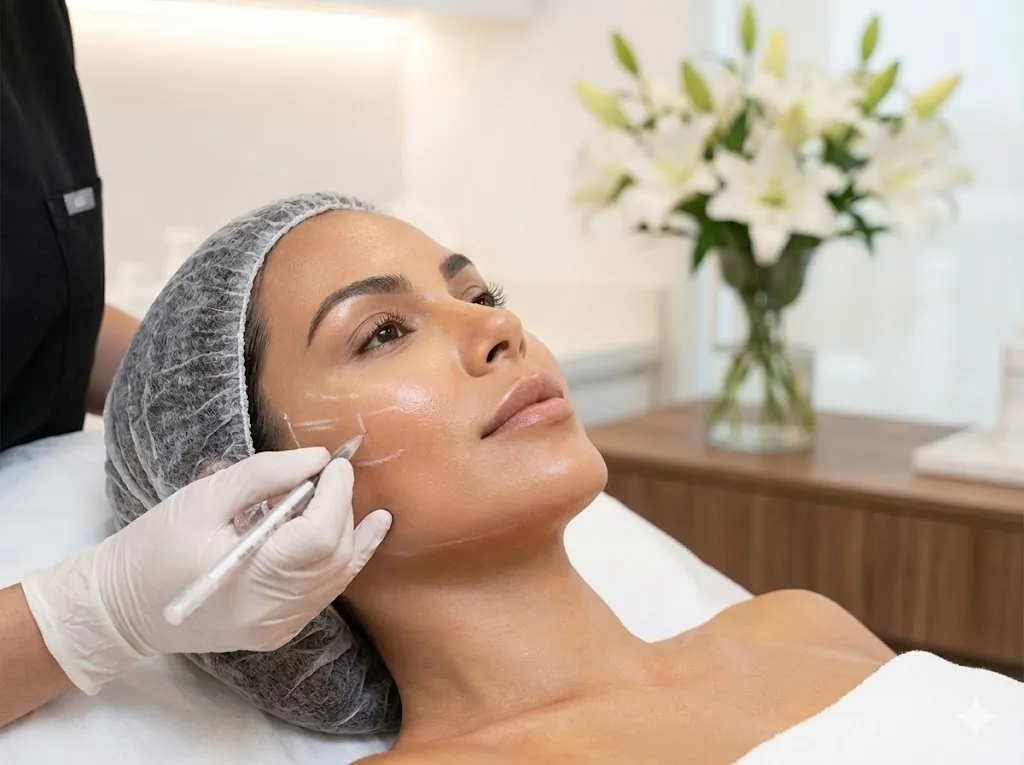
Ultherapy is one option frequently selected for targeting focal laxity in the upper, mid, and lower facial thirds, as well as the neck and décolletage. Common facial target zones include:
- Brow and Upper Eyelid: Delivering acoustic energy to the forehead can provide a subtle lifting effect that reduces heaviness above the eyes.
- Submental Area and Jawline: Focused heating along the lower face and beneath the chin helps address mild sagging and softening jowls.
- Neck and Chest: Addressing horizontal neck bands and smoothing crepiness across the décolletage.
Beyond facial rejuvenation, specialized transducers allow for ultherapy aesthetic treatment across select off-face regions. Often referred to as ultherapy body, deeper focal applications can target areas experiencing mild skin looseness, such as the skin above the knees, inner arms, or post-pregnancy abdominal skin laxity. Suitability for body applications depends on skin thickness and localized fat composition.
Comparing Non-Surgical Skin Tightening Technologies
Selecting the right modality requires understanding how various energy-based devices interact with facial anatomy. The following comparison outlines the primary non-surgical skin-tightening technologies available in modern aesthetic medicine.
| Technology / Modality | Primary Target Depth | Energy Source | Best Suited For | Typical Maintenance Cadence |
|---|---|---|---|---|
| Ultherapy (MFU-V) | Deep SMAS (4.5 mm), deep dermis (3.0 mm), superficial dermis (1.5 mm) | Micro-focused ultrasound with live imaging | Structural lifting of jawline, brow, submental laxity | Every 12 to 24 months |
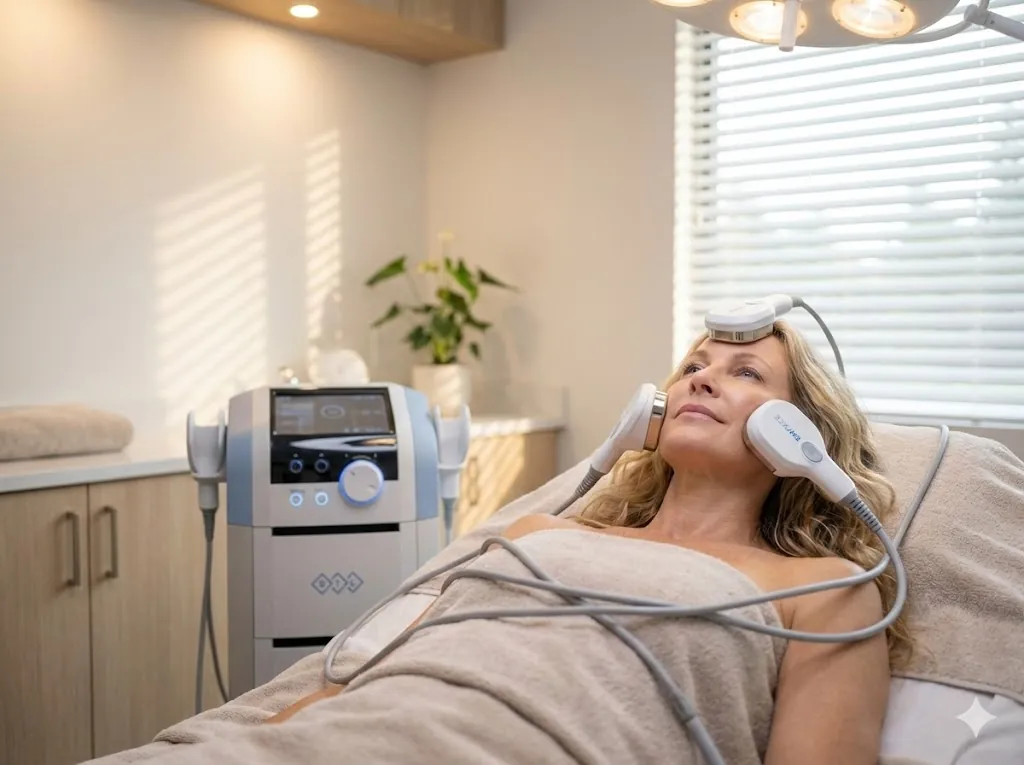
| Monopolar Radiofrequency (RF) | Bulk dermal heating (up to 3.0–4.0 mm) | Capacitive radiofrequency electrical currents | Global skin surface smoothing, fine lines, crepey texture | Every 12 to 18 months |
| RF Microneedling | Sub-dermal to mid-dermal (0.5 mm to 4.0 mm via physical needles) | Radiofrequency delivered through micro-insulated pins | Skin texture, pore size, superficial scars, localized laxity | Series of 3 to 4 sessions, then annual maintenance |
| Non-Invasive Ultrasound/RF Hybrid | Mid-to-deep dermal layers | Combined ultrasound and radiofrequency | Generalized skin toning and maintenance | Periodic series of treatments |
During an assessment, a clinician evaluates tissue elasticity, fat distribution, and bone structure to determine which modality—or combination approach—aligns with your facial anatomy.
Is Ultherapy Worth It? Candidacy and Clinical Oversight
Individuals considering non-invasive rejuvenation often ask: is ultherapy worth it?
The answer depends heavily on baseline tissue anatomy and personal expectations. Ultherapy does not duplicate the pronounced repositioning of a surgical facelift, nor does it remove substantial subcutaneous adipose deposits. Instead, it offers a non-surgical alternative designed to create subtle, natural-looking structural support without incisions.
Favorable Candidates Typically Present With:
- Mild to moderate tissue laxity, such as early jowl formation or minor submental skin pooling.
- Good biological healing capacity and adequate underlying dermal thickness.
- A desire to maintain facial structure without surgical recovery periods.
Factors That Influence Longevity:
- Biological Aging Rate: Intrinsic aging continues regardless of intervention. Ongoing collagen degradation will gradually affect treated areas.
- Sun Exposure and Lifestyle: Ultraviolet radiation accelerates elastosis and degrades newly formed collagen. Daily broad-spectrum sun protection helps preserve results.
- Physician Oversight and Evaluation: At Richmond Anti-Aging Clinic (RAAC), patient assessments are conducted under the medical direction of Dr. Charles Jiang, a licensed physician in British Columbia. Clinical oversight ensures that tissue depth is measured accurately and that candidacy is determined based on individual skin anatomy rather than generic protocols.
With contemporary equipment updates, such as modern visualization platforms, clinicians can map tissue layers in real time, with attention to targeted energy delivery.
To explore your individual candidacy, Book a Consultation with our medical team.
Why Choose Richmond Anti-Aging Clinic (RAAC)?
Selecting the proper clinic for ultrasound-based lifting ensures you receive structured, medically supervised aesthetic care. Key aspects of our practice in Richmond include:
- Physician-Led Clinical Protocols: Medical direction by Dr. Charles Jiang, a licensed physician in British Columbia, ensures all assessments, anatomical evaluations, and safety standards meet rigorous clinical benchmarks.
- Advanced Visualized Technology: We utilize verified ultrasound visualization systems that allow clinicians to see the specific layers of tissue they are treating, avoiding bone and vascular structures while targeting the SMAS precisely.
- Personalized Aesthetic Planning: We do not apply standardized treatment templates. Energy pulses, depths, and vectors are tailored to your facial symmetry and skin thickness.
- Bilingual Patient Care: Our clinical and administrative staff provide consultations and post-treatment follow-ups fluently in English and Chinese, ensuring clear communication throughout your aesthetic journey.
Frequently Asked Questions
1. how long does ultherapy swelling last
Mild swelling typically develops within 24 to 48 hours following micro-focused ultrasound delivery. In most individuals, this inflammatory fluid buildup resolves within 3 to 7 days. Occasional deep tissue tenderness when pressing along the bone may linger for up to two weeks, which reflects normal underlying healing.
2. 超声刀多久做一次
超声刀(Ultherapy)的维持时间因人而异。由于胶原蛋白的新生和重组通常在治疗后3至6个月达到较为明显的状态,且人体自然衰老过程持续进行,临床上通常建议每12至24个月进行一次评估或维持治疗,具体间隔时间需由执业医生根据个人的皮肤松弛程度与代谢反应进行个性化定制。
3. what is ultherapy and how does smas lifting actually work?
Ultherapy is a medical aesthetic procedure that applies focused acoustic ultrasound energy to deep anatomical structures, particularly the SMAS (Superficial Musculoaponeurotic System) at depths of up to 4.5 mm. By creating controlled thermal coagulation points at temperatures between 60°C and 70°C, it causes immediate protein tightening and stimulates fibroblasts to produce new collagen and elastin fibers over several months.
4. Ready to embrace the future of aesthetic care?
Modern aesthetic medicine emphasizes proactive, regenerative approaches that stimulate your own cellular repair mechanisms rather than relying solely on superficial modifications. Non-invasive ultrasound technology reflects this shift by encouraging structural neocollagenesis beneath the surface of the skin.
5. What are the biggest aesthetic treatment trends in 2026?
In 2026, the aesthetic landscape is largely defined by tissue-regenerative therapies, personalized multi-modal combination plans, and energy devices paired with high-definition real-time imaging. Patients increasingly favor gradual, subtle transformations that respect natural anatomy while prioritizing skin longevity and structural integrity.
6. Sun spots vs melasma vs freckles: what is the difference?
Sun spots (solar lentigines) are discrete, flat pigmented macules caused by cumulative ultraviolet exposure over time. Freckles (ephelides) are smaller, genetically influenced spots that darken with sun exposure and fade in winter. Melasma is a deeper, symmetrical, patchy hyperpigmentation triggered by a combination of hormonal fluctuations, genetic susceptibility, vascular factors, and UV light.
7. Skin Tightening Treatments In 2026: Which Technologies May Work?
Technologies that demonstrate physiological efficacy in clinical literature include micro-focused ultrasound (which targets the deep SMAS plane), monopolar capacitive radiofrequency (which provides volumetric heating through the mid-to-deep dermis), and radiofrequency microneedling (which combines mechanical micro-punctures with targeted thermal coagulation). The most appropriate choice depends on whether the primary concern is structural sagging, surface crepiness, or dermal thinning.
8. Is Ultherapy right for you in 2026? ...
Whether ultrasound-based lifting is suitable for you depends on your degree of soft-tissue laxity, anatomical fat pads, and personal timeline. If you have mild to moderate laxity and prefer an outpatient procedure with modest recovery time, Ultherapy may be an appropriate consideration. A formal clinical evaluation is necessary to confirm that your skin elasticity is capable of mounting an effective collagen remodeling response.
Next Steps for Your Treatment Journey
Achieving natural, refined facial rejuvenation starts with an objective anatomical evaluation. Rather than guessing which energy platform matches your skin condition, meeting with a trained clinician allows you to discuss expected timelines, comfort options, and long-term maintenance strategies.
Ready to See What Ultherapy Can Do for You?
Our medical team at Richmond Anti-Aging Clinic (RAAC) in Richmond is ready to create your personalized treatment plan. Book a consultation — available in English and Chinese.
This article is for educational purposes only and does not constitute medical advice. Please consult with a qualified healthcare professional before undergoing any treatment.