Does EMFace work? For the right person, it may help: EMFace heats the skin with radiofrequency while HIFES contracts facial muscles, aiming to improve skin quality and muscle tone in mild to moderate laxity. Change is gradual and subtle, not a surgical lift, and results vary. A physician decides suitability.
"Does EMFace actually work?" is hard to answer with a simple yes or no. EMFace works differently from Ultherapy or Thermage: it acts on both the skin and the facial muscles, and the change it produces is gradual and subtle. Below we take the most common questions in order: how it works, who it suits, how many sessions are typical, when change appears, and who should not have it.
Does EMFace work?
For the right person, it may help. EMFace heats the skin with radiofrequency while HIFES (high-intensity facial electrical stimulation) contracts facial muscles, with the aim of improving skin quality and muscle tone. It is used for mild to moderate facial laxity and fine lines. Change is gradual and natural-looking, and it does not replace surgery or fillers. Results vary, and a physician decides suitability.
If you are hoping to look fresher with slightly firmer contours, how EMFace works lines up with that goal. If you want a pronounced lift or to fill hollows, it is usually not the right treatment on its own.
How does EMFace work?
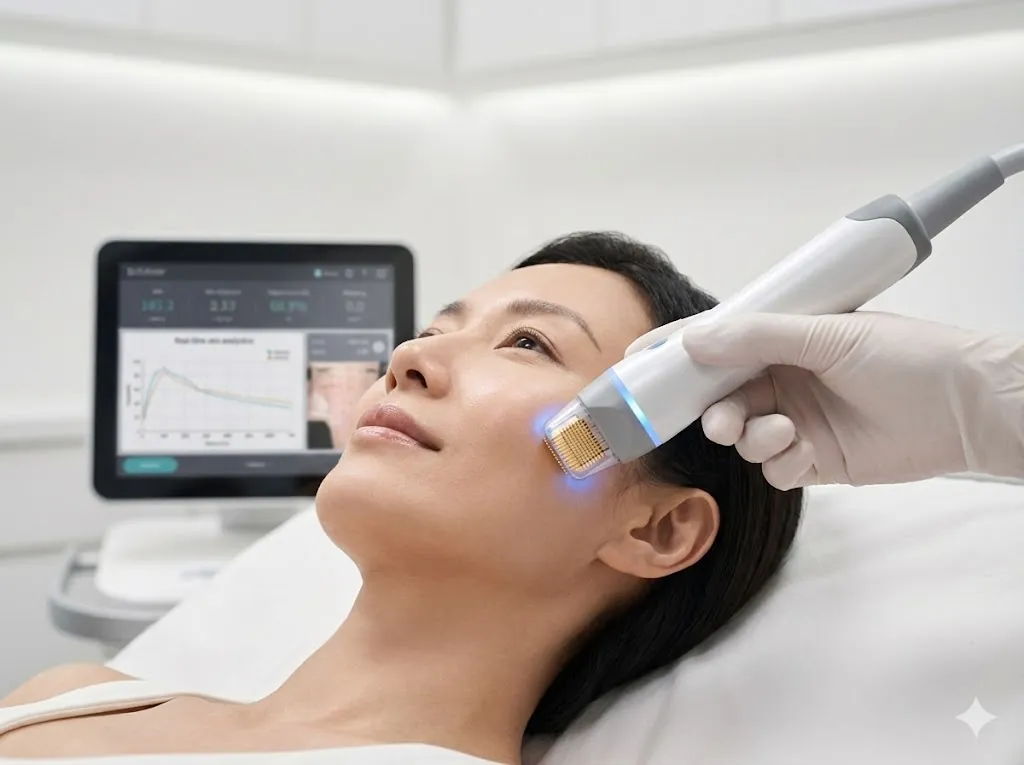
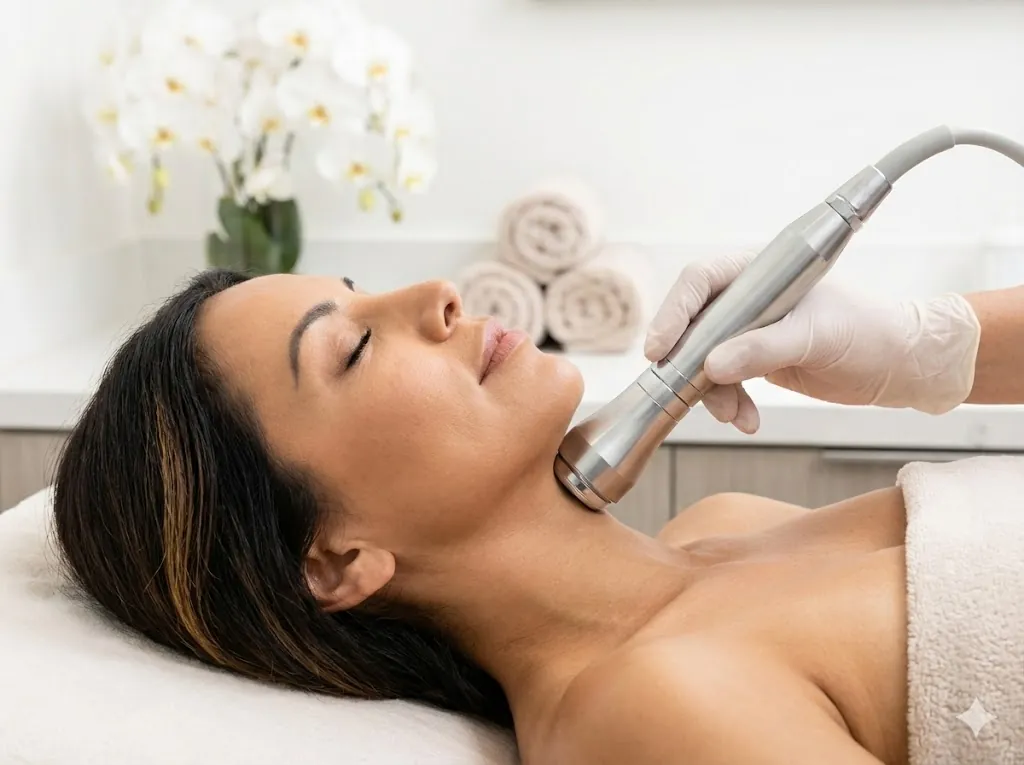
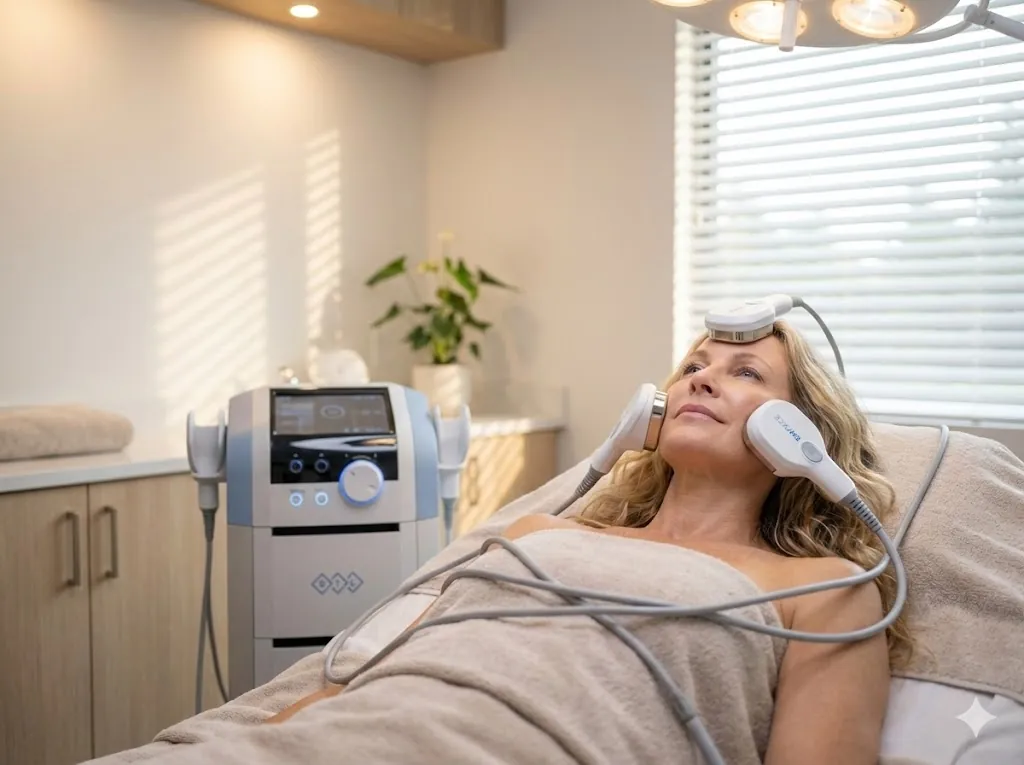
EMFace uses applicators placed on the face to deliver two energies at once. Radiofrequency heats the dermis to stimulate collagen and elastin. HIFES makes specific facial muscles contract repeatedly to improve their tone. Both are delivered simultaneously through the same applicator.
Why treat muscle at all? Facial ageing is not only looser skin; the tone of the muscles that support the skin also declines with age. Many energy-based devices focus on skin or connective tissue, while EMFace is designed to address both skin and muscle.
The applicators sit on the forehead and cheeks and are hands-free during treatment, so you can lie back and relax.
Who is EMFace suitable for?
It tends to fit people with:
- Mild to moderate facial laxity: cheeks and jawline starting to soften without marked sagging.
- Reduced muscle tone: a generally tired look and less defined contours.
- Concerns about fine lines and texture: a wish for firmer, more resilient skin.
- A preference for needle-free, non-invasive care with little disruption to daily life.
- Patience for gradual change: comfortable with a course of sessions and change developing over months.
Who should not have EMFace, and when is it not enough?
EMFace is not suitable during pregnancy or breastfeeding, with a pacemaker or defibrillator, with certain medical or metal implants, with an active skin infection or open wound in the area, or with a severe medical condition. On its own it may not be enough for marked sagging, advanced laxity or concerns that are mainly about volume loss.
In those cases a physician may suggest Ultherapy, which works at deeper levels, radiofrequency tightening with Thermage, filler-type treatments, or explain when surgery may be more appropriate.
How many EMFace sessions will I need?
At RAAC we typically recommend a course of 4–6 sessions, roughly a week apart, depending on how your skin responds. One or two areas take about 30 minutes per session; more areas take about twice as long. After the course, maintenance is usually reviewed every six to twelve months. Your physician sets the number based on your situation.
Why more than one? Muscle tone and collagen both respond to repeated stimulation over time, so a single session usually produces limited change.
When will I see EMFace results, and how long do they last?
Many people notice initial change two to four weeks into the course, and it continues to develop over about three months as collagen builds. How long it lasts varies with age, skin condition and lifestyle, and RAAC usually reviews maintenance every six to twelve months.
To judge the change fairly, compare photos taken before the course and about three months after it, in the same light and at the same angle. That is more reliable than checking the mirror day to day.
What does EMFace feel like, and are there side effects?
You feel warmth along with rhythmic contractions of the facial muscles, a bit like the face is exercising, and the energy can be adjusted for comfort. Most people resume normal activities the same day and can wear makeup afterwards. Temporary redness or mild warmth is possible and usually settles quickly.
EMFace is an energy-based treatment and does not act on nerve signalling the way injectable treatments do, so it does not freeze expression. Contact the clinic if anything unusual happens afterwards.
How is EMFace different from Ultherapy and Thermage?
They use different energies and work at different layers, so one does not simply replace another:
| EMFace | Ultherapy | Thermage | |
|---|---|---|---|
| Energy | Radiofrequency + HIFES muscle stimulation | Micro-focused ultrasound | Monopolar radiofrequency |
| Main target | Dermis + facial muscles | Deeper layers including the SMAS | Dermis and deeper collagen-rich layers |
| Typical schedule | A course of several sessions | Usually one session | Usually one session |
| Sensation | Warmth + muscle contractions | Deep warmth and prickling | Brief heat with cooling and vibration |
Which one, or which combination, fits depends on the depth and degree of laxity and is decided at consultation. For more detail, see how EMFace compares with other non-invasive lifting options.
How should I prepare for an EMFace consultation?
- Arrive without makeup so your skin and facial structure can be assessed.
- Share your full medical history, especially any pacemaker, defibrillator or implant.
- Mention recent injectables, thread lifts or laser treatments.
- Decide which areas matter most: forehead, cheeks or jawline.
- Check that you can attend the full course of sessions and plan your calendar ahead.
How does RAAC approach EMFace?
We review your medical history and the treatment area, confirm suitability, and plan the course around your facial structure and goals, combining it with other treatments where appropriate. Pricing depends on the course and areas treated, and you receive a written quote after your consultation. Consultations are available in English, Mandarin and Cantonese.
RAAC is on No. 3 Road in Richmond, BC, a short walk from Lansdowne Station on the Canada Line.
Further reading
This article is for educational purposes only and does not constitute medical advice. Please consult with a qualified healthcare professional before undergoing any treatment.