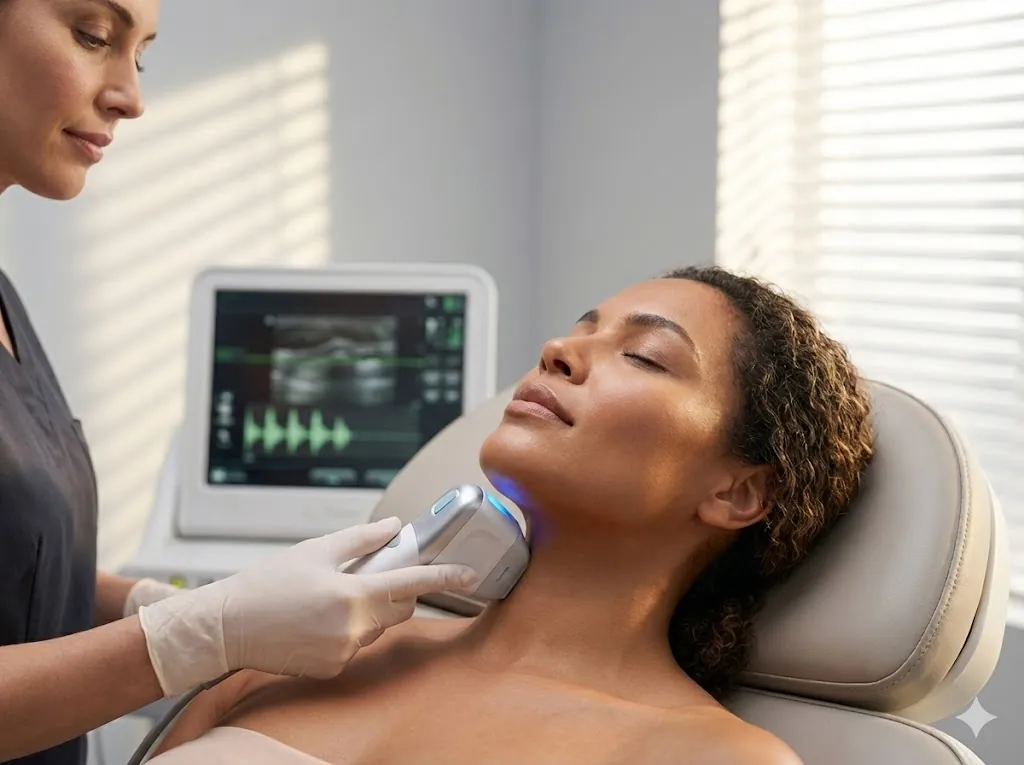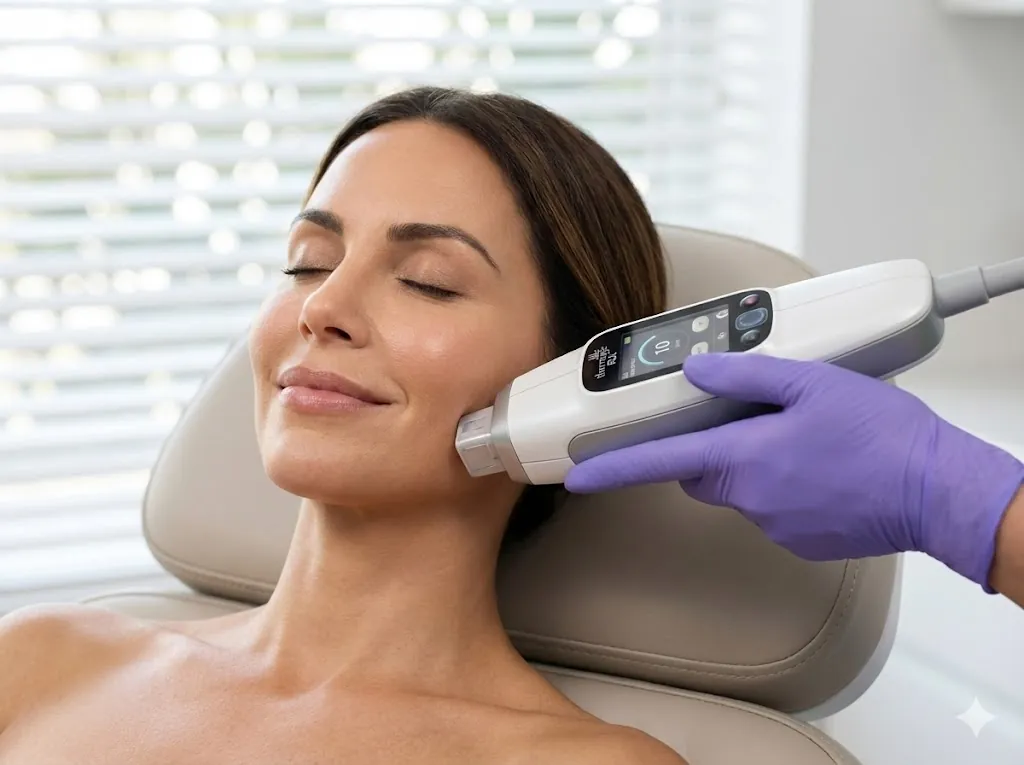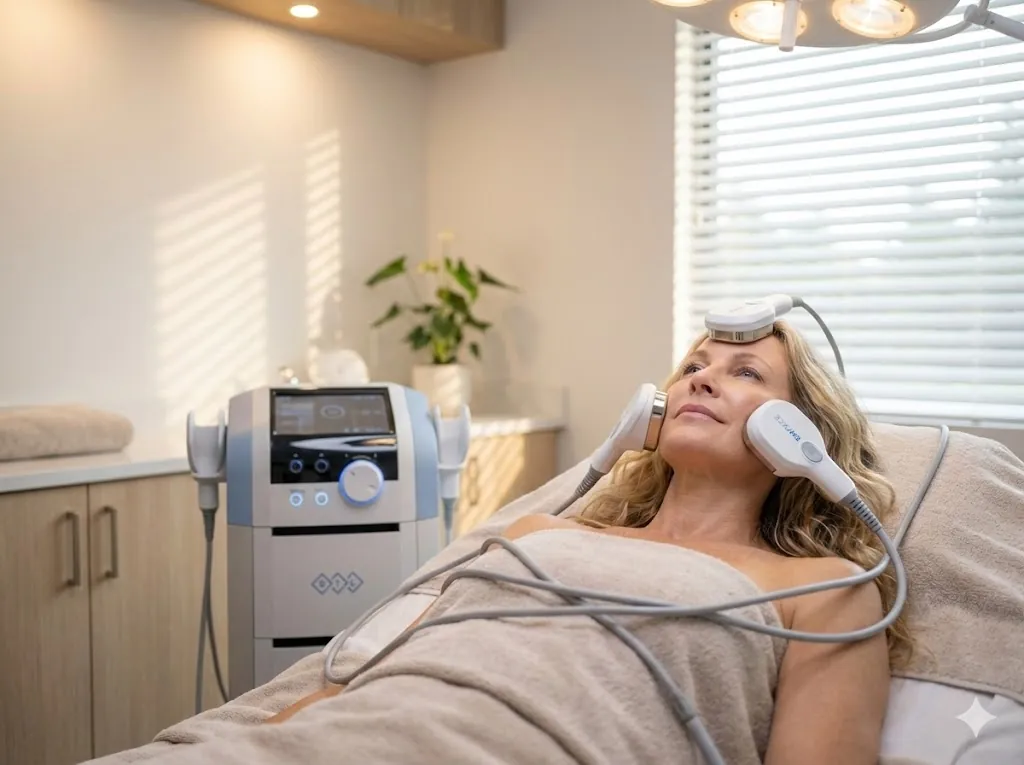
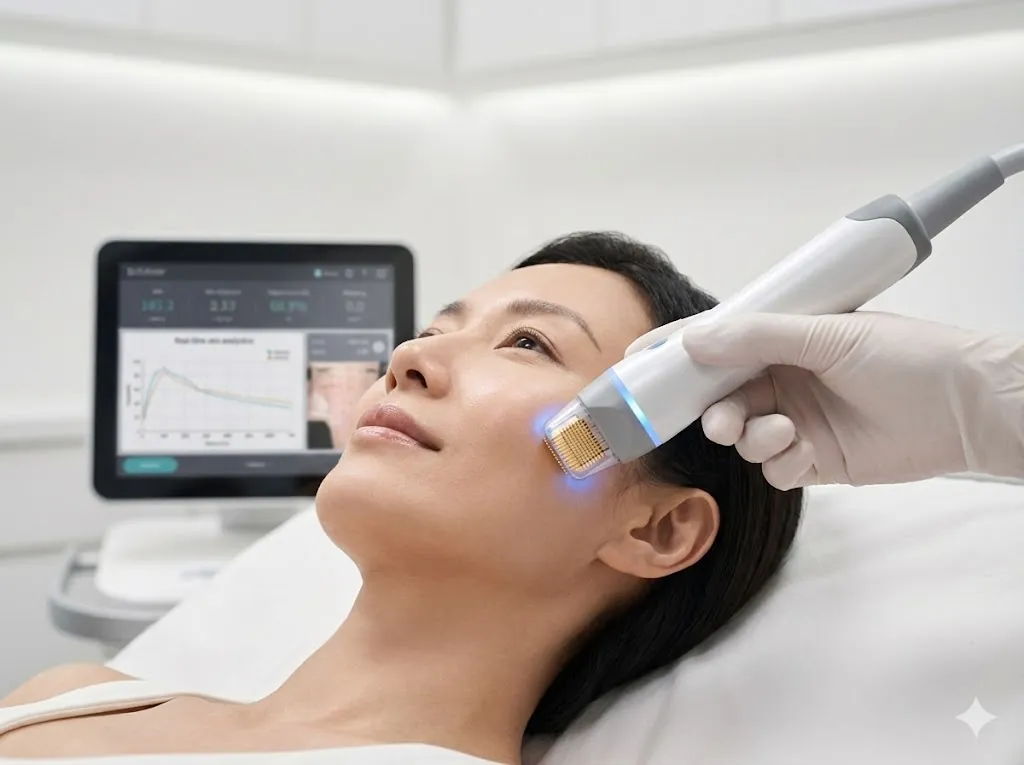
Sylfirm X is radiofrequency microneedling that adds a pulsed-wave (PW) mode to the continuous-wave (CW) mode used for collagen building. CW heats deeper tissue to remodel collagen; PW targets abnormal vessels and pigment near the basement membrane. Depth is set by the insulated needles, so it can be considered for melasma, redness and indented acne scars.
Sylfirm X is a radiofrequency microneedling device that adds a pulsed-wave mode, aimed at abnormal blood vessels and pigment, to the continuous-wave mode used for collagen remodeling. Unlike conventional RF microneedling, it is often considered for melasma, rosacea redness and acne scarring as well as texture; most protocols involve several sessions, and suitability is set at a physician-led evaluation.
What Is Sylfirm X?
Sylfirm X is a next-generation radiofrequency microneedling (RF microneedling) device that combines pulsed wave and continuous wave RF energy with ultra-fine microneedles to remodel tissue at multiple skin depths simultaneously. Unlike conventional RF microneedling platforms, Sylfirm X is designed to selectively target abnormal blood vessels and pigmentation at the basement membrane zone — a capability that may expand its clinical applications beyond standard skin tightening for some patients. Learn more about Sylfirm X at Richmond Anti-Aging Clinic (RAAC) — including our full treatment protocols and what to expect at your appointment. This article is an evidence-based exploration of how the technology works, what the peer-reviewed literature supports, how it compares to adjacent devices, and how candidacy is evaluated at our clinic. If you are already confident this treatment is right for you, Book a Consultation with our physician team.
How does Sylfirm X work?
Sylfirm X delivers radiofrequency energy through insulated microneedles in two modes: pulsed waves that target abnormal vessels and melanin clusters near the basement membrane, and continuous waves that heat deeper tissue to stimulate collagen.
Understanding
why Sylfirm X produces its results requires a brief tour of skin physiology and the physics of radiofrequency energy delivery.
Dual-Wave RF Technology
Sylfirm X delivers two distinct waveform modes through its insulated microneedle array: Pulsed Wave (PW) RF: Short, repetitive bursts of energy that selectively destroy abnormal blood vessels (neovascularization) and melanin clusters concentrated at the dermal-epidermal junction, without thermally damaging the surrounding healthy tissue. This selectivity arises because PW RF exploits the impedance differential between pathological vessel walls and normal dermal matrix — diseased tissue absorbs energy preferentially. Continuous Wave (CW) RF: Sustained energy delivery that generates controlled thermal injury columns throughout the dermis, triggering the classical wound-healing cascade: platelet activation, growth factor release (including TGF-β, VEGF, and FGF), and fibroblast recruitment. This is the same mechanism shared by all RF microneedling platforms — but Sylfirm X layers it on top of the PW mode. Together, these two modes work in different ways: vascular targeting, pigment disruption, and progressive collagen neogenesis within a single treatment session.
The Basement Membrane Zone Advantage
The basement membrane zone (BMZ) — the thin extracellular matrix layer separating the epidermis from the dermis — is the origin point for many refractory pigmentation conditions, including melasma and post-inflammatory hyperpigmentation, as well as the neovascular proliferation underlying rosacea-associated erythema. Sylfirm X's PW mode specifically disrupts aberrant cellular activity at this junction depth (approximately 50–150 µm) while leaving the overlying epidermis largely intact. This sub-epidermal targeting carries a critical practical implication: it allows treatment of darker skin phototypes (Fitzpatrick III–V) with substantially lower risk of post-inflammatory hyperpigmentation compared to ablative lasers or intense pulsed light (IPL), which deposit energy more superficially and non-selectively into epidermal melanin.
The Collagen Remodeling Cascade
The CW RF mode induces focal coagulation zones in the reticular dermis, adjustable from approximately 600 to 3,500 µm depth. Controlled heat denatures existing collagen triple helices, which the body interprets as micro-injury requiring repair. Over the subsequent weeks to months:
- Macrophages clear denatured collagen debris from the coagulation zones.
- Fibroblasts deposit new Type I and Type III procollagen in the injured area.
- Procollagen matures into organized collagen fibrils, increasing dermal volume and tensile strength.
- Elastin fiber networks are partially reconstituted, improving skin recoil. The net histological result — typically measurable 3–6 months post-treatment — is dermal thickening, reduced follicular pore diameter, and improved resistance to gravitational laxity.
What does the research say about Sylfirm X?
Published studies report measurable improvement in melasma, rosacea-related redness and skin texture after Sylfirm X treatment, although the evidence base is still growing and individual responses vary, which is why a physician reviews each case.
Sylfirm X has accumulated a growing body of peer-reviewed investigation across its primary indications. The following represents a representative overview of the published literature.
Vascular and Pigmentation Outcomes
Published research in the Journal of Cosmetic Dermatology has evaluated Sylfirm X in patients presenting with refractory melasma and rosacea-associated erythema. Histological analysis at twelve weeks post-treatment confirmed measurable reduction in abnormal sub-basement membrane vasculature and melanin density, with statistically significant improvement in Melasma Area and Severity Index (MASI) scores relative to baseline. The authors specifically highlighted the PW mode's histological selectivity as the mechanism differentiating outcomes from those achievable with conventional CW RF devices. Research published in Dermatologic Surgery has assessed facial erythema and telangiectasia outcomes in patients treated with pulsed-wave RF microneedling. The study documented measurable reductions in vascular lesion density on high-resolution dermoscopy, with tolerability demonstrated across Fitzpatrick skin types II through V and a low adverse event rate. Transient erythema was the most commonly reported side effect, resolving within 48–72 hours in the majority of participants. A split-face comparison appearing in Lasers in Surgery and Medicine evaluated Sylfirm X against conventional continuous-wave RF microneedling in patients with atrophic acne scarring. The Sylfirm X-treated side showed improvement in scar depth as measured by three-dimensional optical profilometry, along with lower transient erythema scores at 48 hours — findings the authors attributed to the PW mode's more selective thermal deposition profile limiting collateral epidermal heating. Across these and related investigations, a consistent pattern emerges: Sylfirm X's dual-mode architecture achieves clinically meaningful improvements in pigmentation, vascular dyschromia, and textural irregularity with a favorable side-effect profile relative to ablative comparators.
Device class: Sylfirm X is a medical-grade device operated by trained clinicians. Confirm current device approval status with your treating physician.
How does Sylfirm X compare with conventional RF microneedling and lasers?
Unlike conventional RF microneedling, Sylfirm X can also target pigment and vessels; unlike IPL it does not rely on surface melanin, and unlike fractional CO2 laser it is non-ablative, which generally means shorter social downtime.
Understanding where Sylfirm X sits in the landscape of energy-based devices helps both patients and clinicians determine which technology — or combination — is best suited to a given presentation.
| Technology | Primary Mechanism | Depth Reached | Targets Pigment/Vessels? | Fitzpatrick Safety Range |
|---|---|---|---|---|
| Sylfirm X | PW + CW RF via microneedles | Epidermis → reticular dermis | Yes (PW mode) | III–V with calibrated settings |
| Fractional CO₂ Laser | Ablative thermal columns | Epidermis + dermis | Pigment only | I–III preferred |
| IPL (Intense Pulsed Light) | Broad-spectrum photothermal | Superficial dermis | Pigment + vessels | I–III only |
| Conventional RF Microneedling | CW RF only | Dermis | No | All types |
| Microfocused Ultrasound (MFU) | HIFU thermal coagulation | SMAS / deep dermis | No | All types |
| Laser Genesis (Nd:YAG) | Selective photothermolysis | Papillary dermis | Vessels (mild) | II–IV |
- Unlike IPL, Sylfirm X does not require epidermal melanin as a chromophore, and is considered lower-risk on medium-to-dark skin tones — a clinically important advantage given the Fitzpatrick III–V skin types prevalent in the Greater Vancouver patient population.
- Unlike fractional CO₂ laser, Sylfirm X leaves the epidermis largely intact (non-ablative), enabling shorter social downtime, typically 24–72 hours versus 7–14 days for ablative fractional resurfacing.
Candidate Evaluation: Who Benefits Most?
Not every patient presenting with pigmentation, vascular concerns, or laxity is an optimal Sylfirm X candidate. At Richmond Anti-Aging Clinic (RAAC), every prospective patient undergoes a physician-led evaluation before treatment is recommended.
Strong Candidate Profiles
Melasma: Patients with hormonally driven or UV-exacerbated melasma, especially those who have achieved partial but inadequate response to topical depigmenting agents alone. The PW mode targets BMZ melanin clusters without the rebound hyperpigmentation risk associated with ablative lasers. Rosacea with erythema and telangiectasia: PW RF selectively coagulates aberrant facial vessels, reducing the persistent flushing and visible capillaries characteristic of Rosacea subtypes I and II. Atrophic acne scarring: Rolling, boxcar, and mild ice-pick scars respond to CW RF's dermal remodeling; the PW mode may simultaneously address the post-inflammatory erythema that frequently coexists with active acne scarring. Mild-to-moderate skin laxity: Dermal collagen contraction produces a measurable lifting effect, particularly useful for early jowl laxity, neck crepiness, and perioral rhytides in patients not yet appropriate for surgical intervention. Large pores and oily skin texture: Thermal micro-injury shrinks sebaceous gland volume and reorganizes peri-follicular collagen architecture, reducing pore visibility. Post-inflammatory hyperpigmentation (PIH): Particularly valuable in darker skin phototypes where laser options carry substantially greater risk.
Contraindications: When Sylfirm X Is Not Appropriate
Dr. Charles Jiang — a licensed physician and RAAC's lead physician — personally evaluates candidacy and screens for the following disqualifying conditions:
- Active skin infection (bacterial, viral including active herpes simplex, fungal) in or adjacent to the treatment zone — treatment must be deferred until complete resolution
- Isotretinoin use within 6 months — impairs wound healing and materially increases the risk of abnormal scarring
- Implanted electronic devices (pacemakers, cochlear implants, deep brain stimulators) — RF energy is absolutely contraindicated
- Pregnancy or active breastfeeding
- Autoimmune connective tissue disorders (e.g., active lupus erythematosus, scleroderma) — unpredictable inflammatory response and impaired wound healing
- Keloid or hypertrophic scarring history — elevated risk of adverse textural outcomes at treatment sites
- Metal implants in or near the treatment field — require specific protocol adjustments and physician review
- Active malignancy or prior radiation to the treatment area
- Severe uncontrolled rosacea (subtype III/IV) — requires medical management prior to any energy-based treatment. If you take anticoagulants, NSAIDs, or certain supplements (fish oil, high-dose vitamin E), your practitioner will discuss whether any adjustments are appropriate for you before treatment. Book a Consultation with Dr. Jiang's team for a thorough candidacy evaluation.
What happens during a Sylfirm X treatment?
A Sylfirm X visit starts with numbing cream, followed by a microneedling pass at depths chosen for each area; temporary redness and mild swelling are expected afterward, and improvement builds gradually over the following weeks and months.
Pre-Treatment Preparation
Topical anesthetic cream is applied 30–45 minutes before the procedure. Baseline photography and skin analysis are completed at the initial consultation. Patients with active melasma may benefit from a 4–6 week priming regimen (topical retinoids, azelaic acid, or a depigmenting agent) to reduce melanin burden and minimize post-treatment rebound.
The Procedure
Treatment time ranges from 20 to 45 minutes depending on the areas treated. The handpiece delivers microneedles at controlled depths (0.5 mm to 4 mm, adjusted by anatomical zone and indication) while simultaneously emitting RF energy in PW mode, CW mode, or a combined sequence. The sensation is often described as warm pressure with brief "pins and needles" pulses during RF discharge. The vast majority find the procedure well-tolerated under topical anesthesia.
Recovery and Post-Treatment Timeline
- Immediately post-procedure: Erythema and mild edema resembling a moderate sunburn; resolves in 24–72 hours for most patients.
- Days 2–5: Mild bronze discoloration or micro-crusting at needle channels may appear, particularly at higher energy settings. This is a normal and expected part of the healing sequence.
- Weeks 2–4: Collagen synthesis begins in earnest; early improvements in texture and pore size often become visible in this window.
- Months 2–3: Peak collagen remodeling; maximal improvement in pigmentation, vascular tone, and laxity becomes apparent.
- Aftercare essentials: Broad-spectrum mineral SPF 30+ daily (non-negotiable for melasma and pigmentation patients), a gentle hydrating serum, and avoidance of exfoliating acids and active ingredients for 5–7 days. Most protocols involve 3–5 sessions spaced 4–6 weeks apart for full initial correction, with maintenance sessions every 6–12 months thereafter.
What can Sylfirm X not do?
Sylfirm X cannot cure melasma, which can return with sun exposure and hormonal change; it gives moderate rather than pronounced tightening, and deep ice-pick acne scars may need other procedures alongside it.
Transparent communication about what Sylfirm X can and cannot accomplish is a clinical obligation, not a marketing choice. Melasma is chronic, not curable: RF microneedling can achieve significant clearance, but melasma recurs with UV exposure and hormonal fluctuation. Ongoing photoprotection and periodic maintenance are required indefinitely. Severe laxity requires a different approach: Sylfirm X produces real but moderate tissue tightening. Patients with significant skin redundancy often need microfocused ultrasound (HIFU), thread lifting, or surgical consultation alongside RF microneedling. Deep ice-pick acne scars have limited response: No energy-based device reliably improves deep, narrow ice-pick scarring; subcision or TCA CROSS may be required as adjuncts. Results are not immediate: Patients expecting transformation at one week post-treatment will be disappointed. Setting accurate timelines — improvement visible at 4–6 weeks, peak results at 3 months — is essential to appropriate expectations. Multiple sessions are the norm, not the exception: A single session produces observable change in some patients, but protocol completion is required for full outcome. Darker phototypes require conservatively titrated settings: Fitzpatrick V–VI patients benefit from Sylfirm X's lower epidermal injury profile, but energy parameters must be carefully calibrated — operator experience on diverse skin types is not optional.
Why Choose Richmond Anti-Aging Clinic (RAAC)?
Patients considering Sylfirm X in the Richmond and Greater Vancouver area have no shortage of options. RAAC is committed to practices that directly affect outcomes. Physician-led evaluation and oversight. Every new patient is personally evaluated by a physician. No treatment plan is implemented without physician review of the indication, candidacy, and proposed protocol. Personalized, multi-modality thinking. Many people in Richmond present with overlapping concerns — melasma and rosacea, or acne scarring and early laxity. We design combination protocols rather than applying a one-size template. Deep experience with Fitzpatrick III–V skin. The Greater Vancouver patient population includes a high proportion of East and Southeast Asian skin types, where the risk calculus for energy-based treatments differs significantly from lighter phototypes. Our team's calibration experience across this range is extensive. Bilingual care. Our team communicates fluently in both English and Mandarin Chinese. Concerns and aftercare instructions can be discussed in either language. Honest consultations. We tell patients clearly what will not work for their condition as clearly as what will. That transparency is how we build relationships that extend across years, not a single booking.
Frequently Asked Questions
How many Sylfirm X sessions will I need? Most patients complete 3–5 sessions spaced 4–6 weeks apart for full initial correction. Maintenance sessions every 6–12 months help sustain results, particularly for conditions like melasma that are prone to recurrence with UV exposure. Is Sylfirm X safe for Asian skin tones? Yes. Sylfirm X is particularly well-suited to Fitzpatrick III–V skin types — including the East and Southeast Asian skin common in Richmond and Greater Vancouver — because its pulsed-wave mode avoids the epidermal melanin overheating that causes post-inflammatory hyperpigmentation with ablative lasers. Settings must still be calibrated by an experienced operator. How does Sylfirm X differ from other RF microneedling devices? Sylfirm X adds a pulsed-wave (PW) RF mode that selectively targets abnormal vasculature and pigmentation at the basement membrane zone. Most RF microneedling devices deliver only continuous-wave RF, which remodels collagen but cannot address vascular or pigmentary pathology with equivalent selectivity. What is the downtime? Most patients experience 24–72 hours of redness and mild swelling comparable to a moderate sunburn. Micro-crusting at needle channels may appear through day 5. Most patients can return to social activities within 2–3 days using mineral SPF and light coverage. Can Sylfirm X permanently eliminate melasma? No energy-based treatment permanently cures melasma, as it is driven by ongoing hormonal and UV factors. Sylfirm X can achieve significant and sustained clearance when combined with strict photoprotection and appropriate topical maintenance — but recurrence without prevention is the expected course of the condition. Is the procedure painful? Topical anesthetic cream applied 30–45 minutes before treatment renders the procedure tolerable for the large majority of patients. The typical sensation is warm pressure with brief pins-and-needles pulses during RF delivery.
Next Steps
If you are researching Sylfirm X for melasma, rosacea, acne scarring, or general skin renewal, the most valuable next step is a thorough physician consultation — not a booking form. A proper evaluation allows Dr. Jiang's team to assess your skin directly, confirm candidacy, rule out contraindications, and build a protocol matched to your specific anatomy and goals. Book a Consultation — available in English and Mandarin Chinese — and experience what a physician-led, evidence-based approach looks like at Richmond Anti-Aging Clinic (RAAC) in Richmond, BC.
Ready to See What Sylfirm X Can Do for You? Our medical team at Richmond Anti-Aging Clinic (RAAC) in Richmond is ready to create your personalized treatment plan. Book your consultation today — available in English and Chinese.
This article is for educational purposes only and does not constitute medical advice. Please consult with a qualified healthcare professional before undergoing any treatment.