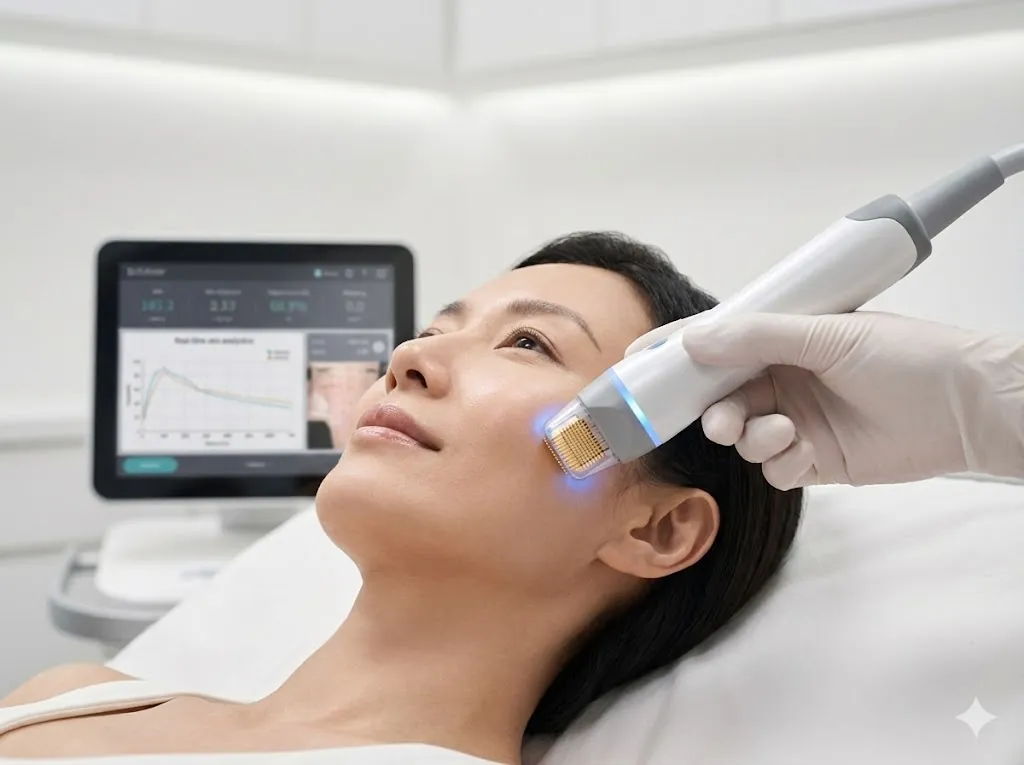
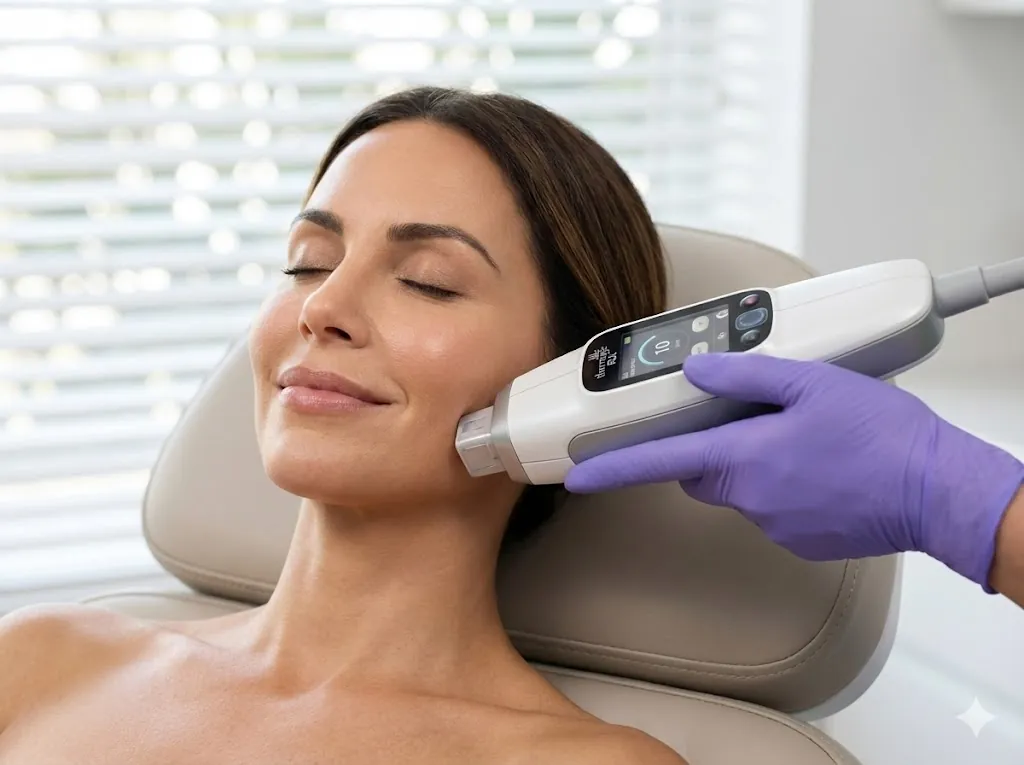
One of the most common questions before Thermage FLX is simple: how do I know the tip is genuine? This checklist covers what you can verify yourself before and on the day of treatment. It is not aimed at any particular clinic and applies wherever you have Thermage. You do not need technical knowledge, just a look and a question at a few key moments.
Why does it matter whether a Thermage tip is genuine?
Thermage delivers radiofrequency energy to the skin through the treatment tip, and each tip is a single-use consumable. A tip of unknown origin, a reused tip or a modified one may deliver energy unevenly, which can reduce the effect or raise the risk of burns. Checking the tip confirms that the energy comes from a new tip used the way the manufacturer designed it.
Tip type (eye, face or body) also shapes how the treatment is done, so checking the model is a way to confirm the plan matches the area being treated.
What does a genuine Thermage FLX tip look like?
By the manufacturer's design, FLX tips come in sealed packaging labelled with the model. Each tip carries a chip: once it is attached, the system recognizes the tip type and tracks used and available pulses, and the tip cannot be used beyond its allowance. Different areas use different tip models.
That gives you three checkpoints: the packaging before opening, the system screen once the tip is attached, and the written plan before and after treatment.
What tip types are there, and where is each used?
Thermage FLX uses different tips for different areas: an eye tip for the thinner, more delicate skin of the eyelids and around the eyes; a face tip for larger areas such as the cheeks, jawline and neck; and a body tip for areas such as the abdomen, arms and thighs. Each type differs in treatment depth and in the area each pulse covers.
So a plan covering the full face plus the eyes usually involves more than one tip. When you receive a plan, check that each tip model matches a planned area. If the plan only says "full-face Thermage" without naming the tip, ask for it to be added so you have something to check the packaging against on the day.
A checklist you can use before treatment
Work through these at your consultation and on the day:
- Confirm the system is Thermage FLX. Ask which generation the system and handpiece are. FLX is the fifth generation of Thermage.
- Ask for the tip to be unboxed in front of you, rather than brought in already opened.
- Check the seal. Look at the box and seal before opening for any sign it was opened and resealed.
- Match the model to the area. The model on the packaging should fit the planned area; eye treatment, for example, should involve an eye tip.
- Scan the code on the packaging. If the box has a scannable code, ask for it to be scanned in front of you or scan it with your own phone.
- Look at the system screen. Once the tip is attached, ask to see the tip type and available pulses displayed.
- Look again afterwards. Compare the pulses actually used with the plan.
- Get the plan in writing, with areas, tip model and planned pulses.
- Ask who assesses and who treats. Suitability should be confirmed by a physician.
- Take a photo for your records, with permission, of the packaging and label.
These are reasonable requests, and there is no need to feel awkward about making them.
What should I look at during unboxing?
Focus on three things: whether the outer packaging and seal are intact with no sign of repackaging, whether the model on the box matches the planned treatment area, and whether the label information is clear and complete. Then check that the system recognizes the tip normally once it is attached.
If anything is unclear, ask for an explanation on the spot. If the answer does not reassure you, postponing treatment is a perfectly reasonable choice.
How do I check the pulse count?
Before treatment, ask roughly how many pulses are planned for each area and have that written into the plan. The system records pulses during treatment, and at the end you can ask to see the usage on screen and compare it with the plan.
Keep in mind that the pulse count is only one part of the plan. How energy is distributed and which areas should be avoided are decided by a physician based on your facial structure, and more pulses do not automatically mean a better outcome.
Why do quotes vary so much between providers?
Quotes depend on the treatment area, tip type, pulse count and overall plan, so a single total is hard to compare. Ask for the areas, tip model and planned pulses in writing, and compare plans on the same terms. The more transparent the plan, the easier it is to judge.
We do not discuss specific prices in this article.
What else should I check besides the tip?
A genuine tip is the baseline, not the whole picture. Equally important: whether a physician assessed your suitability and any contraindications, whether the plan is built around your facial structure, whether common reactions (brief redness, mild swelling, tingling or tenderness) and post-treatment contacts were explained, and whether your expectations are realistic.
Who should not have Thermage?
Thermage is generally not advised, or needs a physician's assessment first, during pregnancy or breastfeeding; with a pacemaker or metal implants in the treatment area; after a recent thread lift or high-energy laser in the same area; with an open wound, active infection or inflammation at the site; or with extremely sensitive skin or a neuropathic pain condition.
How should I prepare?
- Save this checklist on your phone and go through it on the day.
- Arrive without makeup, and bring a list of medications and recent aesthetic treatments.
- Prepare your questions: which tip, which areas, how many pulses, and who to contact afterwards.
- Allow enough time so treatment does not start in a rush.
How RAAC handles Thermage tips
At RAAC we use genuine Solta FLX tips, unboxed in front of you and scannable before treatment. Whether Thermage suits you and which areas to treat are decided first at a consultation with a medical team led by Dr. Charles Jiang, a licensed physician in British Columbia. Pricing depends on the treatment area and tip and is quoted after your consultation. Consultations are available in English, Mandarin and Cantonese, and you are welcome to raise every item on the checklist above.
RAAC is on No. 3 Road in Richmond, BC, a short walk from Lansdowne Station on the Canada Line.
Further reading
This article is for educational purposes only and does not constitute medical advice. Please consult with a qualified healthcare professional before undergoing any treatment.