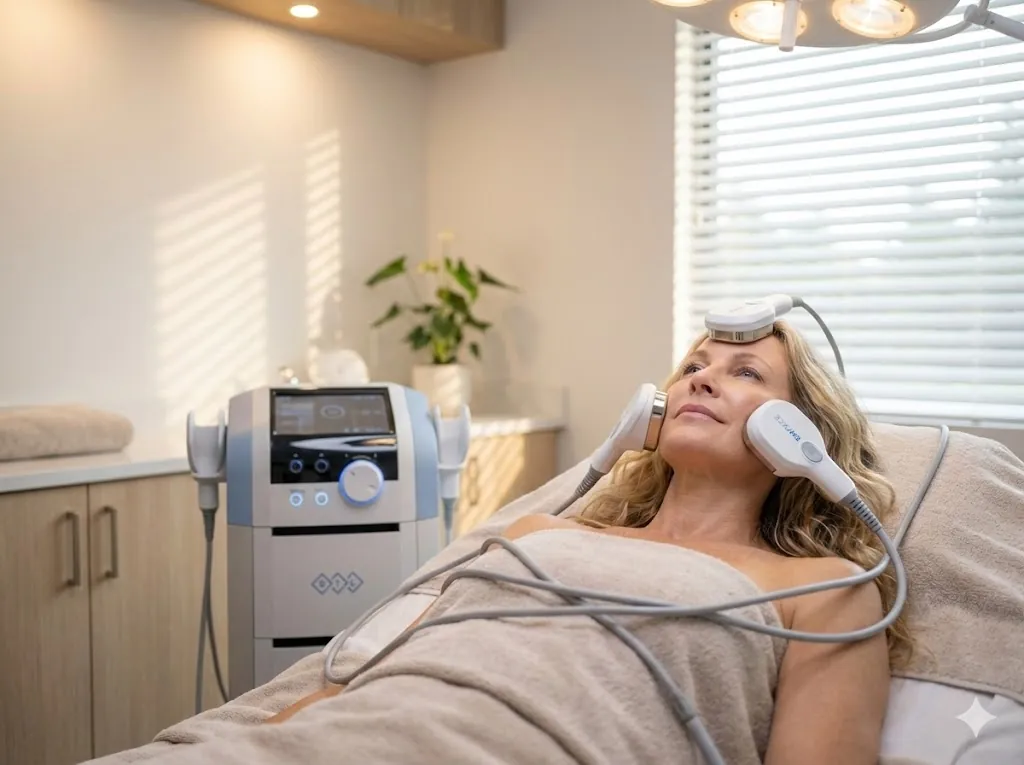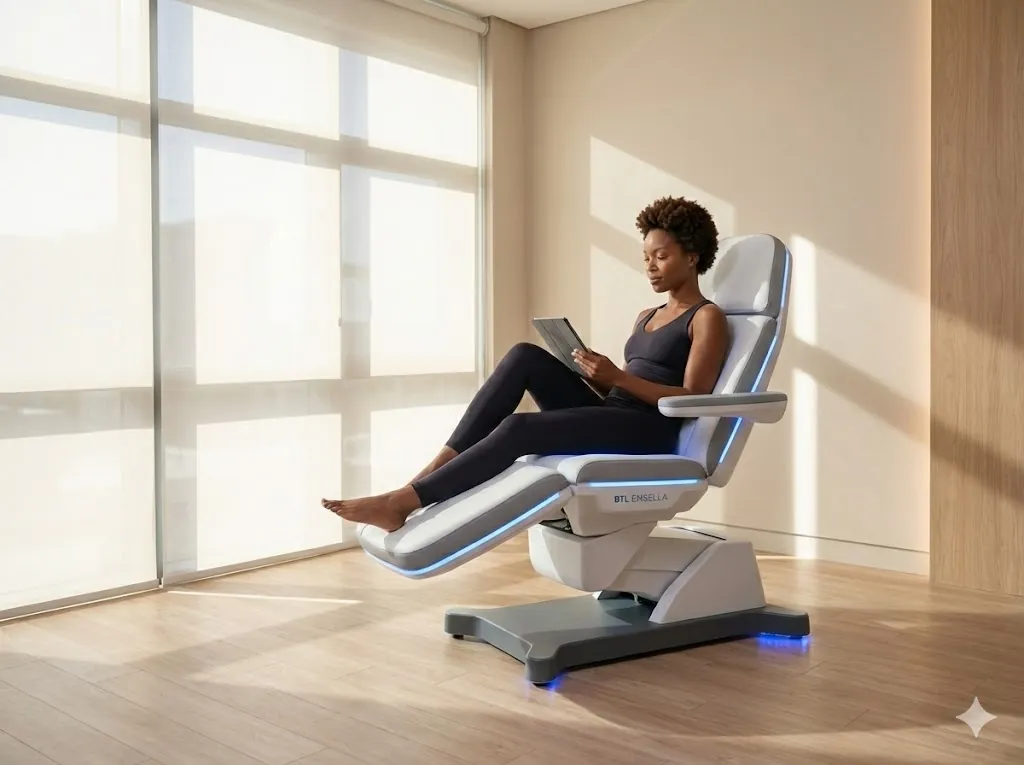
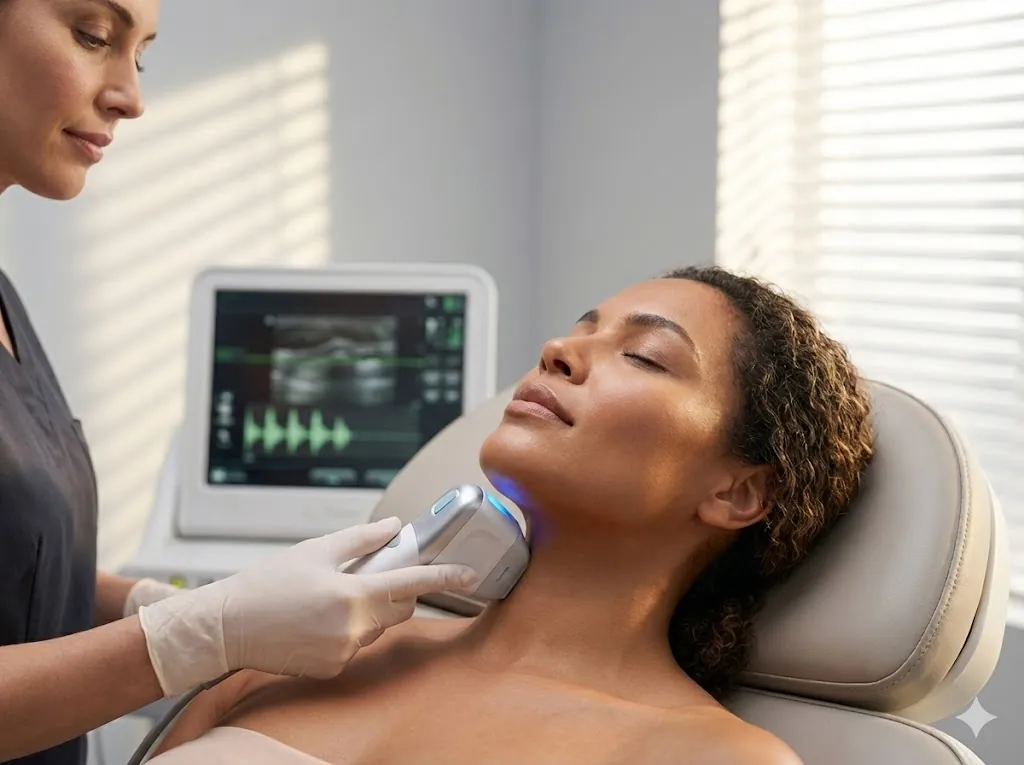
Thermage FLX and Ultherapy are both non-surgical skin tightening treatments, but neither is universally better. Thermage uses radiofrequency to tighten skin and improve texture across the face, eyes and body. Ultherapy uses focused ultrasound to reach the deeper SMAS layer for lifting the brow, jawline and neck. The right choice depends on your laxity pattern. For body areas, see Ultherapy Body.
Thermage FLX and Ultherapy are both non-surgical treatments for mild to moderate skin laxity, but they work differently. Thermage uses radiofrequency to tighten skin and improve texture across the face, eyes and body, while Ultherapy uses focused ultrasound to reach the deeper SMAS layer for lifting the brow, jawline and neck. Both are usually done once a year and typically peak at 3 to 6 months.
If you're researching non-surgical skin tightening in Richmond or Vancouver, two names dominate the conversation: Thermage FLX and Ultherapy. Both are physician-administered, clinically proven technologies — but they work in fundamentally different ways. Understanding these differences is critical to choosing the treatment that will deliver the best results for your unique skin concerns.
At RAAC Richmond Anti-Aging Clinic, Dr. Charles Jiang has over 29 years of medical experience and performs skin tightening procedures using both technologies. This guide reflects his clinical expertise and honest assessment of each platform.
How do Thermage FLX and Ultherapy work?
Thermage FLX heats the deeper skin and underlying tissue with radiofrequency so collagen contracts and then rebuilds, while Ultherapy uses visualized, focused ultrasound to heat precise points at set depths, including the SMAS layer tightened in a facelift.
Thermage FLX: Radiofrequency (RF) Energy
Thermage FLX uses monopolar radiofrequency energy to deliver volumetric heating to the deep dermis and subcutaneous tissue. The RF energy heats collagen fibers to approximately 65-75°C, causing immediate collagen contraction followed by a prolonged period of new collagen synthesis (neocollagenesis).
Key features of Thermage FLX:
- 5th generation technology with AccuREP™ tuning system
- Vibration-based comfort technology replaces older cooling-only systems
- Treats all skin layers simultaneously — epidermis through subcutaneous fat
- Works on any skin type (Fitzpatrick I-VI), including darker skin tones
- Single-pass treatment protocol reduces treatment time significantly
Ultherapy: Micro-Focused Ultrasound (MFU)
Ultherapy uses micro-focused ultrasound with visualization (MFU-V) to deliver precise thermal energy to specific tissue depths. It creates thermal coagulation points (TCPs) at targeted depths — including the SMAS layer (superficial muscular aponeurotic system), which is the same tissue layer surgeons tighten during a facelift.
Key features of Ultherapy:
- A medical-grade device for non-invasive lifting of the brow, chin, and neck
- Real-time ultrasound visualization allows practitioners to see tissue layers
- Targets specific depths: 1.5mm, 3.0mm, and 4.5mm transducers
- Creates focused micro-injuries that trigger deep tissue remodeling
- Particularly effective for lifting rather than just tightening
What is the difference between Thermage and Ultherapy?
In short, Thermage is mainly for tightening and texture, including the eyes and body, while Ultherapy is mainly for lifting at deeper layers; both typically need one session a year and peak at around 3 to 6 months.
| Factor | Thermage FLX | Ultherapy |
|---|---|---|
| Energy type | Radiofrequency (RF) | Micro-focused ultrasound |
| Primary effect | Tightening + contouring | Lifting + tightening |
| Tissue depth | Dermis + subcutaneous | SMAS + dermis (targeted depths) |
| Skin type suitability | All skin types (I-VI) | All skin types (I-VI) |
| Treatment time (full face) | 45-60 minutes | 60-90 minutes |
| Comfort level | Moderate (improved with FLX) | Moderate to high discomfort |
| Downtime | Minimal | Mild redness/swelling |
| Results onset | Immediate tightening + 3-6 month improvement | Gradual over 2-6 months |
| Peak results | 3-6 months | 3-6 months |
| Duration of results | 1-2 years | 1-2 years |
| Sessions needed | 1 session annually | 1 session annually |
| Cost (Richmond) | Quoted at consultation (face) | Quoted at consultation (face) |
Which Is Better for Your Specific Concerns?
Choose Thermage FLX If You Want:
- Overall skin tightening and texture improvement across the face
- Treatment for body areas (abdomen, arms, thighs, knees) — Thermage has body-specific tips
- Jawline contouring and reduction of jowling
- A treatment suitable for darker skin tones with minimal risk
- Eyelid tightening — Thermage has a specialized eye tip (0.25 cm²) that can safely treat upper and lower eyelids (cost for the eye area is explained at consultation)
- Improved skin texture and pore size in addition to tightening
Choose Ultherapy If You Want:
- Brow lifting — Ultherapy is uniquely effective for lifting drooping eyebrows
- Neck and submental (under-chin) lifting — deep SMAS-level treatment
- Jawline definition with a true lifting vector
- Treatment supported by clinical evidence for lifting specifically
- Precise depth targeting — useful when specific tissue planes need treatment
Consider Combining Both:
Combining both technologies may be considered for some patients. A common protocol:
- Ultherapy for deep lifting (SMAS layer) of the mid-face, jawline, and neck
- Thermage FLX for surface tightening, texture improvement, and eye area treatment
This combination addresses all tissue depths comprehensively — similar to what surgery achieves but without incisions, anesthesia, or extended downtime.
Does Thermage or Ultherapy hurt more?
Ultherapy is generally the more uncomfortable of the two: most patients rate Thermage FLX around 3 to 5 out of 10 and Ultherapy around 5 to 7, and pain-relief options are available for Ultherapy.
Thermage FLX Comfort
The FLX generation represents a significant improvement in comfort over earlier Thermage versions:
- AccuREP™ technology automatically optimizes energy delivery for each pulse
- Vibration-integrated handpiece reduces pain perception (gate control theory)
- Most patients rate discomfort as 3-5 out of 10
- No numbing cream required in most cases (though available if preferred)
- Treatment can be performed with conversation — no sedation needed
Ultherapy Comfort
Ultherapy is generally considered the more uncomfortable of the two:
- Creates focused thermal injury points that can cause sharp, brief pain during delivery
- Most patients rate discomfort as 5-7 out of 10
- Pre-treatment strategies at RAAC: oral analgesic, optional topical numbing, Pro-Nox™ (nitrous oxide) available
- Pain is transient — felt only during energy delivery, not between pulses
- Dr. Jiang adjusts energy levels based on patient feedback for optimal comfort-to-efficacy balance
When will I see results from Thermage or Ultherapy, and how long do they last?
Thermage may show mild tightening right away, while Ultherapy shows little change at first; both usually peak around 3 to 6 months and gradually soften over 12 to 24 months, so annual maintenance is common.
After Thermage FLX:
- Immediately: Mild tightening noticeable in many patients; slight redness (resolves in hours)
- Week 2-4: Skin feels firmer, smoother; makeup applies more evenly
- Month 2-3: Visible tightening along jawline and midface; friends may comment
- Month 4-6: Peak results — maximum collagen remodeling achieved
- Month 12-24: Results gradually soften; annual maintenance recommended
After Ultherapy:
- Immediately: No visible change; possible mild redness or swelling
- Week 2-4: Subtle changes begin; skin may feel slightly tighter
- Month 2-3: Progressive lifting becomes apparent
- Month 3-6: Peak results — full lifting and tightening effect
- Month 12-24: Gradual decline; touch-up sessions extend results
Who Should Avoid These Treatments?
Both treatments are contraindicated for:
- Active skin infections or open wounds in the treatment area
- Pregnancy or breastfeeding
- Electronic implants (pacemakers, defibrillators) in the treatment area
- Severe cystic acne in the treatment zone
Thermage-specific: Patients with metallic implants in the treatment area should inform their physician.
Ultherapy-specific: Not recommended over areas with active cold sores (can trigger outbreaks).
How much do Thermage FLX and Ultherapy cost in Richmond?
Prices are discussed at consultation and depend on the area treated, such as full face, eyes, neck or body, and on the protocol, including whether the two are combined.
| Treatment | Area | Price Range |
|---|---|---|
| Thermage FLX | Full face | Quoted at consultation |
| Thermage FLX | Eyes only | Quoted at consultation |
| Thermage FLX | Face + neck | Quoted at consultation |
| Thermage FLX | Body (per area) | Quoted at consultation |
| Ultherapy | Full face | Quoted at consultation |
| Ultherapy | Face + neck | Quoted at consultation |
| Ultherapy | Neck/chin only | Quoted at consultation |
| Combination | Ultherapy + Thermage | Custom pricing |
Prices reflect 2024-2025 rates at RAAC Richmond. Exact pricing depends on treatment area size and protocol.
Frequently Asked Questions
Q: Can I do both Thermage and Ultherapy at the same time? A: They can be combined but are typically performed 4-6 weeks apart to allow each technology to initiate its own collagen remodeling cascade without interference.
Q: How many sessions do I need? A: Both are designed as single-session treatments with annual maintenance. Some patients with significant laxity may benefit from a second session after 6 months.
Q: Will either treatment replace a facelift? A: Neither replaces surgery for advanced sagging. They are best for mild-to-moderate laxity — think "turning back the clock 3-5 years" rather than 15-20 years.
Q: I'm in my 30s — is it too early? A: Absolutely not. Starting in your 30s-40s is actually ideal for prevention. You'll maintain collagen density and delay the need for more aggressive interventions.
Q: Which is better for Asian skin? A: Both are safe for all skin types. For some patients with typically thicker dermis and a robust collagen response, Thermage FLX may be considered.
Book Your Skin Tightening Consultation
The best way to determine which technology — or combination — is right for you is an in-person assessment. Book a consultation at RAAC Richmond with Dr. Jiang's team.
Related treatments:
Dr. Charles Jiang, MD — 29+ years of medical expertise. RAAC Richmond Anti-Aging Clinic: 5580 No. 3 Rd Unit 110, Richmond BC V6X 0R8. Serving Richmond, Vancouver, Burnaby, Surrey, and Metro Vancouver.