"Will my face be covered in bumps?", "Can I go to work the next day?" and "Do I have to keep doing this forever?" are the questions people ask most before booking skin boosters. A skin booster places small, evenly spaced amounts of stabilized hyaluronic acid into the dermis to improve hydration, glow and fine-line texture. It is not meant to add volume or change your contours the way a filler does. Below is what your skin usually looks like afterwards, how long recovery takes, and how a course is spaced, based on the information on our treatment page. Your own plan is confirmed at consultation.
One clarification first. Here "skin booster" means a hyaluronic acid based injection into the skin. Some mixed formulas are sold under the same name in other markets, with different ingredients, effects and risks, and this article does not cover them. You can ask your physician exactly which product is used.
What does skin look like right after skin boosters?
Straight after treatment, small raised bumps appear at each injection point, a bit like mosquito bites. They are the hyaluronic acid sitting in the skin before it spreads, and our treatment page notes they typically flatten within 24 to 48 hours. Pinpoint marks, mild redness and swelling are common, and some people bruise a little. Most people go back to work the next day, and bruising can usually be covered with makeup.
In more detail:
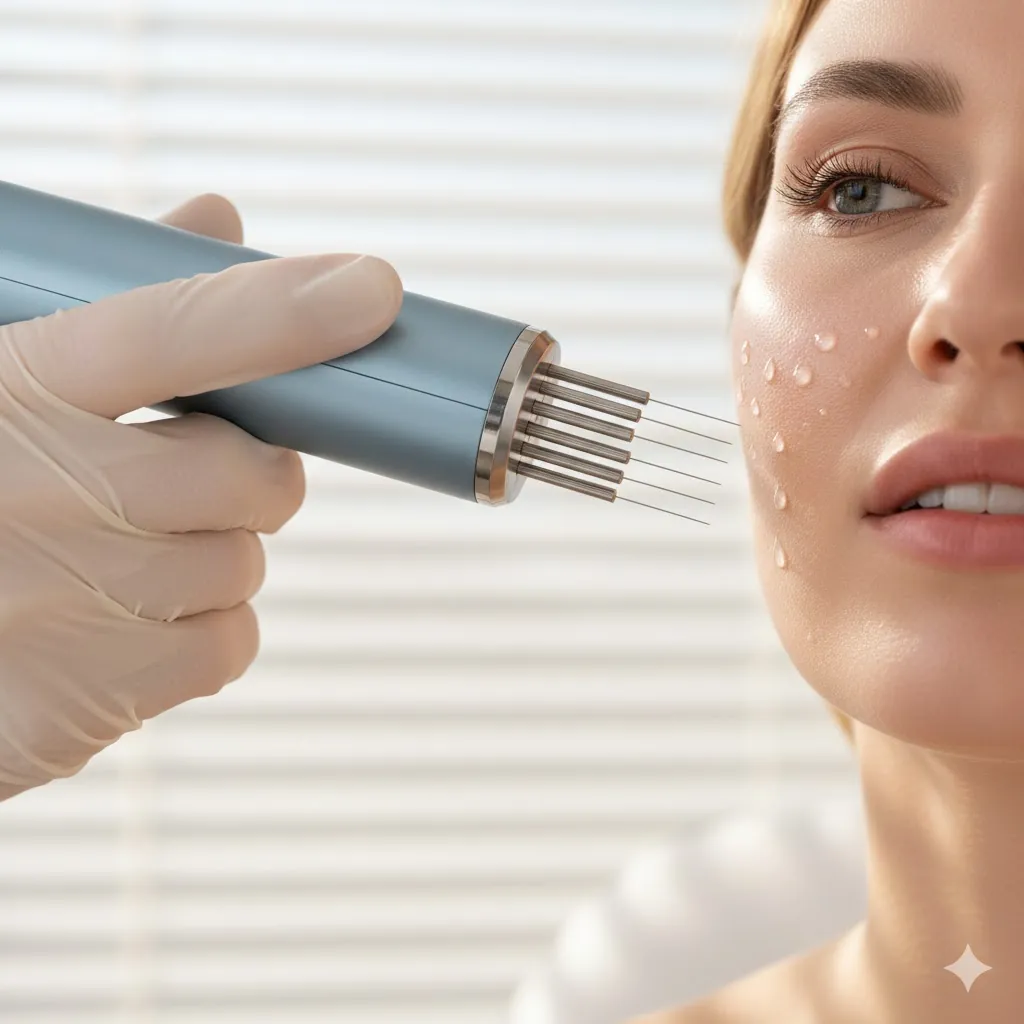
- Bumps: more distinct with hand injection, more even with an injector device. Do not press or massage them flat; let them settle.
- Redness and pinpoint marks: usually gone within hours to a day or two, a little longer for reactive skin.
- Bruising: more likely around the eyes and forehead, and usually fades over several days.
- Tightness or fullness: some people feel it, and it goes as the bumps settle.
The plump, glassy look in the first few days is partly bumps and mild swelling. It is not the final result, so do not judge the treatment by it.
How long is skin booster downtime?
Most people resume normal activities the same day or the next. Our aftercare notes: no makeup for 6 hours, do not touch or massage the area for 24 hours, skip strenuous exercise for 24 to 48 hours, and avoid saunas, hot tubs and sun exposure for 3 days. If a wedding or photo shoot is coming up, plan ahead and leave at least a few days for bumps and marks to clear.
Keep your skincare simple afterwards: a gentle cleanser, a good moisturizer and daily sunscreen. Ask your physician when to restart acids, exfoliants or retinoids.
When will I see results from skin boosters?
Our treatment page notes that skin usually looks more hydrated and luminous within 1 to 2 weeks, the change builds over 4 to 6 weeks as collagen production increases, and the skin can keep improving for up to about 3 months. Results vary with your skin, age, sleep and sun habits.
Why does it take time? Hyaluronic acid attracts and holds water, which helps the dermis stay hydrated straight away. The improvement in texture and fine lines also depends on the skin's repair response and new collagen, and that unfolds over weeks. The usual result is better skin quality, not a different face.
How many skin booster sessions do I need, and how often?
According to our treatment page, some products are given as a course of 3 sessions spaced 3 to 4 weeks apart, while others can be a single session. After the course, maintenance is usually every 6 to 9 months. The number of sessions and the product depend on your skin and goals, and are decided at consultation.
Do you have to keep going forever? Skin boosters are not a one-time fix. The body gradually breaks hyaluronic acid down, and the skin keeps ageing. Stopping does not leave your skin worse than before; it slowly returns to how it was without treatment. Whether and how often to maintain is your call, made with your physician.
What are the side effects of skin boosters?
Common effects are temporary bumps, redness, swelling, pinpoint marks and bruising. Less common are small firm lumps, unevenness, infection or an allergic reaction. Like any hyaluronic acid injection, there is also a rare but serious risk of product entering or pressing on a blood vessel (vascular occlusion). Severe pain, skin that turns white, dusky or mottled, or any change in vision after treatment means you should contact the clinic or seek emergency care immediately.
Small volumes placed superficially lower the stakes, but they do not remove risk, which is why skin boosters belong in a medical setting with trained staff. Also call the clinic if bumps are still obvious after several days, if redness and pain are increasing, or if you notice pustules or a fever.
How are skin boosters different from fillers and facials?
- Compared with dermal fillers: fillers add volume and shape contours, using larger amounts placed deeper. Skin boosters use small, evenly spread amounts to improve skin quality without changing your face shape. See skin boosters vs fillers for more.
- Compared with a facial such as HydraFacial: a facial works on the skin surface with essentially no disruption to your day. A skin booster reaches the dermis, which means brief bumps and marks but a deeper level of hydration.
Many people combine the two. Your physician plans the order and spacing. Our treatment page also notes that when skin boosters are paired with energy devices such as Thermage or Ultherapy, the device treatment usually comes first.
Who should not have skin boosters?
Skin boosters are generally not advised, or need a physician's assessment first, during pregnancy or breastfeeding, with infection or inflammation in the area (including an active acne flare), with a known allergy to hyaluronic acid or lidocaine, or after recent injections or skin treatments in the same area. People who scar easily, have an autoimmune condition or take blood thinners should be assessed first.
It is also not a good idea to squeeze a session in during the week before a major event.
How should I prepare for my skin booster appointment?
- Arrive without makeup so your physician can assess dryness, dullness, fine lines and pores.
- Our pre-care notes: avoid alcohol and medications that can increase bruising, such as aspirin, for 3 days beforehand. Your physician decides whether any medication should change; do not stop one on your own.
- Pause retinoids and exfoliants 3 to 5 days before, and avoid waxing or laser in the area for 2 weeks before.
- Mention any recent aesthetic treatments: injections, lasers or peels.
- Decide what matters most to you (dryness, dullness, fine lines or overall glow) and say so.
How does RAAC approach skin boosters?
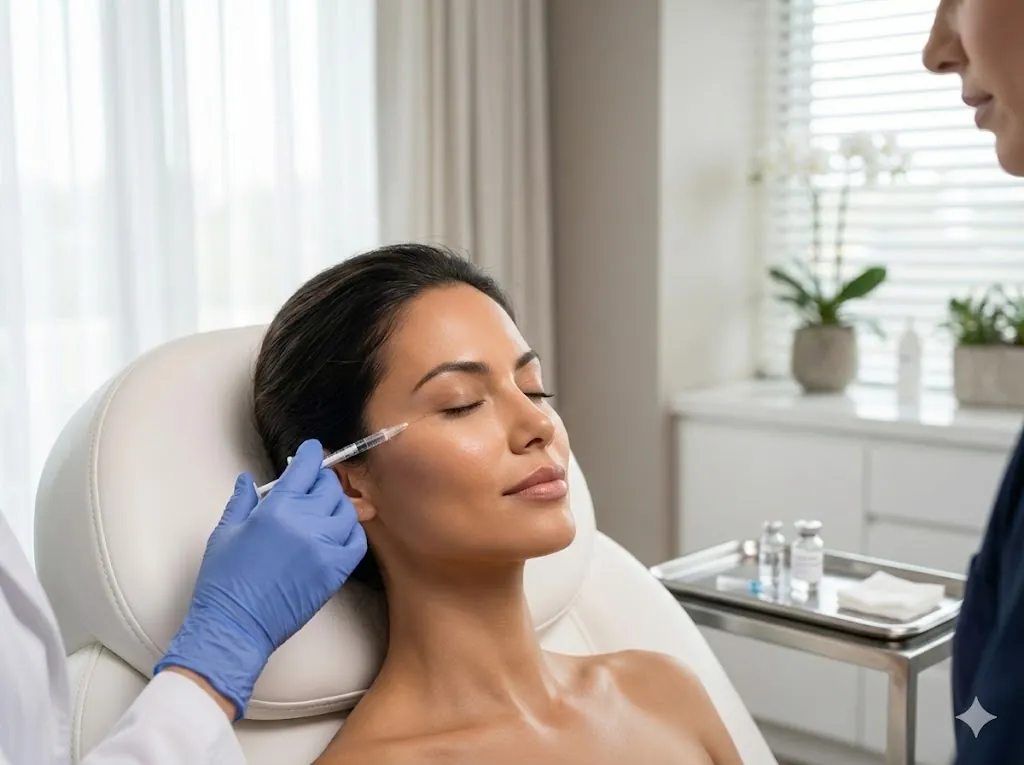
At RAAC, a medical team led by Dr. Charles Jiang, a licensed physician in British Columbia, assesses your skin first and selects a suitable hyaluronic acid product. Topical numbing cream is applied for 30 to 45 minutes, and some products also contain lidocaine. The product is then placed evenly into the dermis with fine needles or an injector device. Pricing depends on the product and areas and is explained after consultation. Consultations are available in English, Mandarin and Cantonese.
The clinic is on No. 3 Road in Richmond, BC, a short walk from Lansdowne Station on the Canada Line.
Frequently asked questions
Should I massage the bumps flat? No. They usually settle within 24 to 48 hours, and pressing them can make redness and bruising worse. If they are still obvious after several days, contact the clinic.
Do skin boosters hurt? Numbing cream is applied first, and some products contain lidocaine, so most people find it tolerable. Tell your physician if you are sensitive to needles.
When can I wear makeup? Our aftercare notes say after 6 hours. Apply it gently and with clean hands.
Further reading
This article is for educational purposes only and does not constitute medical advice. Please consult with a qualified healthcare professional before undergoing any treatment.