If you are searching for how long Ultherapy swelling lasts, you are probably close to booking and want to know one practical thing: will it get in the way of work, family events or photos? This guide walks through what usually happens after Ultherapy PRIME at RAAC, stage by stage, based on the manufacturer's labelling and the aftercare process we follow. Your own plan and what to expect are confirmed at your consultation.
Does Ultherapy cause swelling?
It can, but for most people the swelling is mild. The usual after-effects are redness, slight swelling and tenderness when the area is pressed. Redness tends to fade within hours, swelling eases over a few days, and tenderness or small patches of numbness can last a few weeks in some people. Most people resume normal activities the same day.
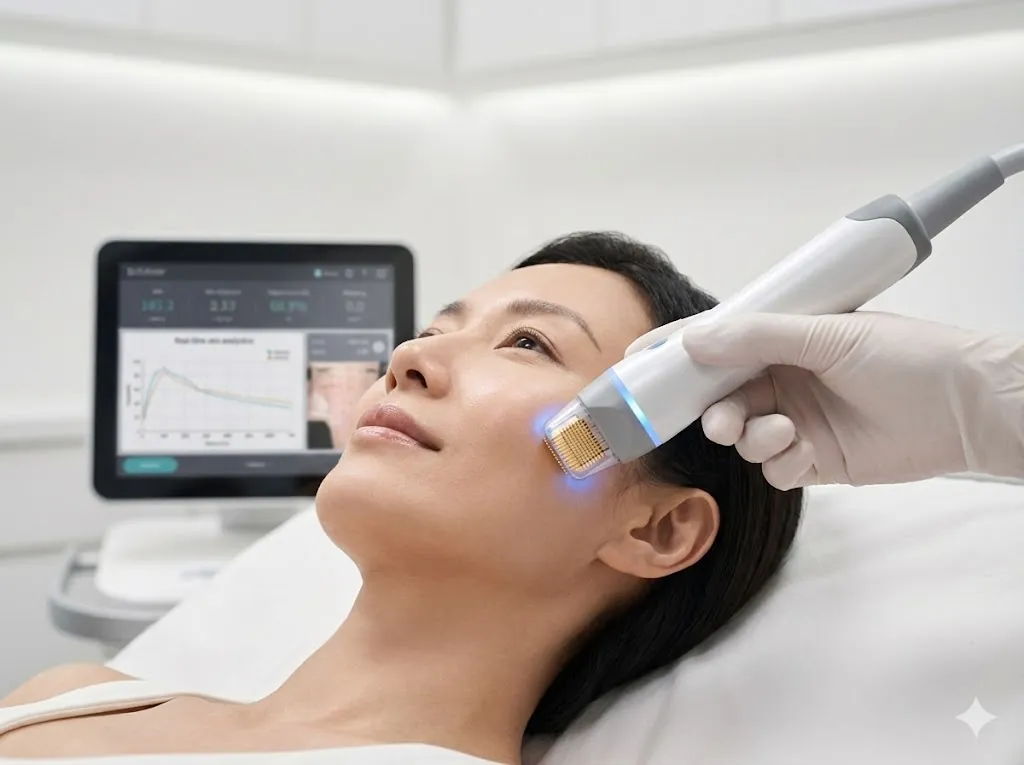
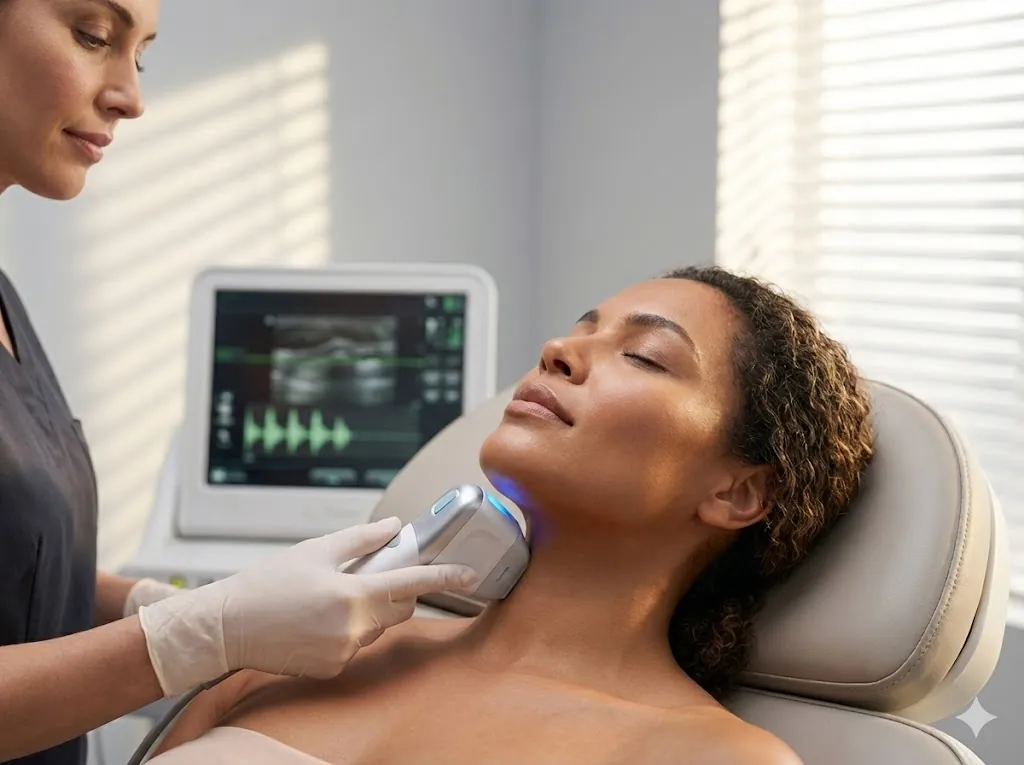
Why does it swell at all? Ultherapy uses micro-focused ultrasound to deliver energy to set depths under the skin, including the SMAS layer that a surgical facelift also works on. The energy creates rows of tiny thermal coagulation points while the skin surface is left intact. The body responds with a short-lived healing reaction, and some fluid in the tissue is a normal part of that response. It is also the starting point for the collagen remodelling that produces the gradual change later on.
How noticeable it is depends on a few things:
- Treatment area. The jawline, under the chin and the neck tend to feel more swollen and tender than the brow or forehead.
- Extent and depth. Larger plans and more passes with the deeper transducers usually mean a more noticeable reaction.
- Your own tendencies. If you already puff up easily, drink a lot of water late at night or eat salty food, you may look fuller the next morning.
What side effects can Ultherapy cause?
The manufacturer's labelling lists redness, swelling, tenderness, and tingling or numbness as common. Bruising and raised red lines (welts) are less common. Temporary nerve inflammation or temporary weakness of a facial muscle is rare. Almost all of these settle on their own, but tell your physician about anything unusual.
| How often | Reaction | What it usually looks like |
|---|---|---|
| Common | Redness, warmth | Right after treatment, usually gone within hours |
| Common | Mild swelling | Most noticeable on days 1 to 3, then easing |
| Common | Tenderness, aching | More obvious when chewing or touching the jawline; days to weeks |
| Common | Tingling, small numb patches | Usually small areas; can last a few weeks |
| Less common | Bruising, welts | Usually fade within a week or two |
| Rare | Temporary nerve inflammation or muscle weakness | For example a temporarily uneven smile; call the clinic |
What does Ultherapy recovery look like, day by day?
Think of recovery in stages: redness and warmth on the day itself, the most noticeable swelling and tenderness over days one to three, most swelling gone within one to two weeks (sometimes with lingering numbness or tenderness), and gradual change from collagen remodelling starting around two to three months. Everyone's pace is a little different.
The day of treatment
Skin may look flushed, feel warm and feel slightly tight. Some people describe a dull ache along the jaw or neck, a bit like after a workout. There is no wound, so most people go home or back to work. A few notice a slight tightening right away; that is the tissue's immediate response and is separate from the collagen change that follows over the next months.
Days 1 to 3
This is when swelling is usually most noticeable, often more so first thing in the morning and less once you have been up and about. Pressing on the jawline, under the chin or the neck may feel tender, and chewing hard foods can ache a little. Some people notice a small patch of tingling or numbness. All of this is common at this stage.
Days 4 to 14
For most people the swelling has largely settled during this window, and others usually cannot tell you have had anything done. Tenderness fades gradually. Any bruising or welts typically lighten over the same period. Numbness tends to be the slowest to go and can carry into week three or four for some.
Weeks 2 to 6
Most reactions are behind you. A small numb area or mild tenderness on pressure can still be present in some people and usually keeps improving. Do not judge the result yet: collagen remodelling has only just begun, so the mirror may not show much change.
Months 2 to 3 and beyond
According to the manufacturer, the change from Ultherapy develops gradually, typically becoming visible over two to three months, and some people continue to improve for several months after that. Our Ultherapy page notes that results from one treatment typically last a year or longer, depending on skin condition, age and how the skin is cared for. Individual results vary.
Can I go to work, wear makeup or exercise after Ultherapy?
Most people return to work the same day. Because the skin surface is intact, you can usually continue your skincare and makeup, following the aftercare notes your physician gives you on the day. Avoid saunas, hot yoga and hot tubs for about a week, and check with the team before returning to strenuous exercise.
- Skincare: use a gentle cleanser and moisturizer for the first few days and pause exfoliants and acids.
- Sun: be diligent with sunscreen, and add a hat when you are outside.
- Food and fluids: keep salt lower for a few days and avoid large amounts of water right before bed.
- Sleep: raise your head slightly and try not to sleep on the treated side.
How can I help swelling and tenderness settle?
There is no way to make swelling disappear instantly; it fades with time. Simple habits may make you more comfortable: sleep with your head raised, keep salt down, cleanse gently, stay out of high heat and do not press or massage the treated area hard. Ask your physician whether cold compresses or pain relief are appropriate for you rather than self-medicating.
In particular, skip at-home facial massage or contouring tools for now. The area is already tender, and firm pressure only adds discomfort.
When should I call the clinic?
Contact the clinic promptly if you notice an uneven smile or expression, weakness in part of the face, blistering or broken skin, pain or swelling that is getting worse rather than better, numbness that has not improved after several weeks, or anything else that worries you.
These are uncommon, but telling your physician early means the cause can be assessed and managed sooner.
Who should not have Ultherapy?
Ultherapy is generally not suitable, or needs a physician's assessment first, if you have an open wound or severe acne in the area, metal implants in the treatment area (dental implants excepted), a pacemaker or other electronic medical device, are pregnant or breastfeeding, or have an autoimmune condition.
Two more situations are worth thinking through:
- An important event within a week. Schedule treatment earlier so swelling and tenderness have time to settle.
- Significant laxity. Ultherapy is a non-surgical lifting option suited to mild to moderate laxity. If your laxity is more advanced, your physician will tell you plainly when surgery or another approach may suit you better.
How should I prepare for my Ultherapy appointment?
- Arrive without makeup so your skin can be assessed.
- Bring a list of medications and supplements, especially blood thinners. Your physician decides whether anything needs to change; do not stop a medication on your own.
- Mention recent injectable treatments, thread lifts or facial surgery.
- Avoid prolonged sun exposure beforehand.
- Write down your questions: which areas, which depths, and what reactions to expect.
How does RAAC approach Ultherapy?
At RAAC, a medical team led by Dr. Charles Jiang, a licensed physician in British Columbia, assesses you first: whether Ultherapy suits you and which areas need treatment. The number of lines is then planned around your facial structure rather than sold as a fixed package. We use Ultherapy PRIME with real-time ultrasound imaging, which shows the tissue layers during treatment. Consultations and follow-up are available in English, Mandarin and Cantonese.
The clinic is on No. 3 Road in Richmond, BC, a short walk from Lansdowne Station on the Canada Line. Pricing depends on the treatment areas and is quoted after your consultation.
Frequently asked questions
Does swelling make it hard to judge results? Yes. Early swelling can make the face look fuller or tighter than it really is. Wait two to three months before judging the change.
Is numbness after Ultherapy normal? Small areas of tingling or numbness are among the common reactions in the manufacturer's labelling, and most fade over a few weeks. If the area grows or does not improve, contact your physician.
Will chewing hurt after jawline treatment? Some people feel an ache when chewing harder foods for the first few days, and it usually eases as swelling settles. Softer foods can help in the meantime.
Further reading
This article is for educational purposes only and does not constitute medical advice. Please consult with a qualified healthcare professional before undergoing any treatment.