Ultherapy is a medical treatment that has to be planned around your face, so the consultation matters as much as the appointment itself. Two clinics can both say "Ultherapy" and still mean different devices, different levels of assessment and very different plans. Rather than comparing on price alone, go in with a short list of questions. These eight work for a consultation anywhere; at the end we explain how each is handled at RAAC.
If you are new to the treatment, start with our overview of Ultherapy PRIME.
Why ask questions before booking Ultherapy?
Because Ultherapy sends energy to several depths under the skin, and whether it suits you, which areas to treat and how much energy to use all depend on your facial structure. Asking about the device, the assessor, the plan and the expected recovery helps you judge whether a plan makes sense and reduces surprises afterwards.
Question 1: Which device do you use, and is there real-time ultrasound imaging?
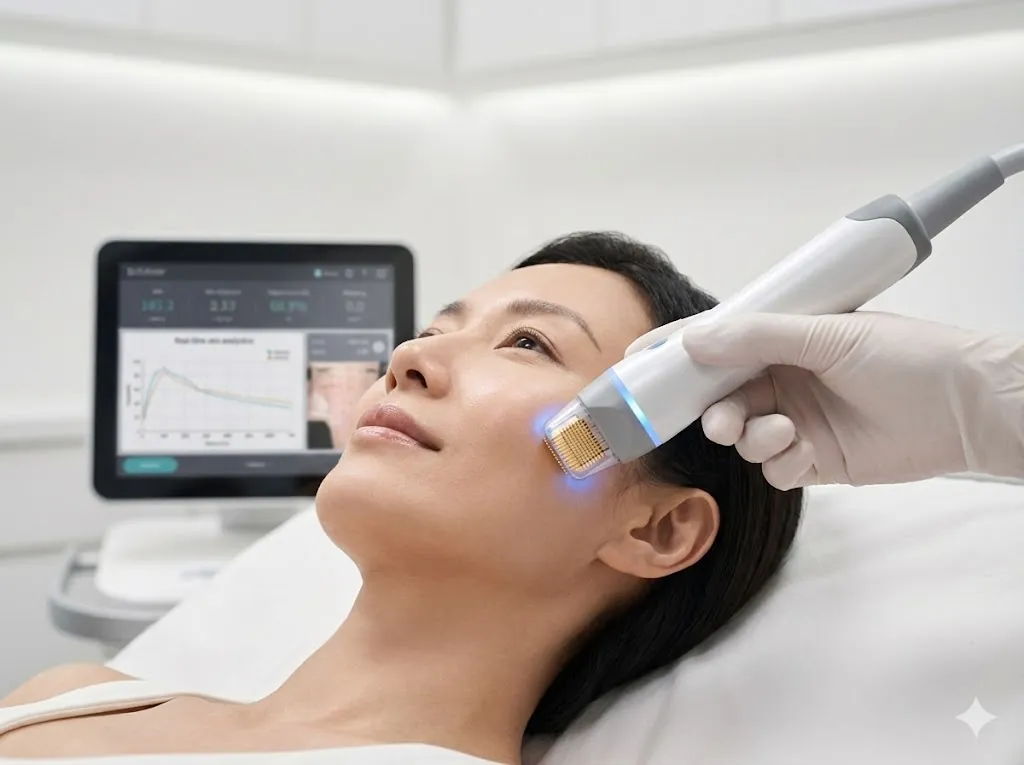
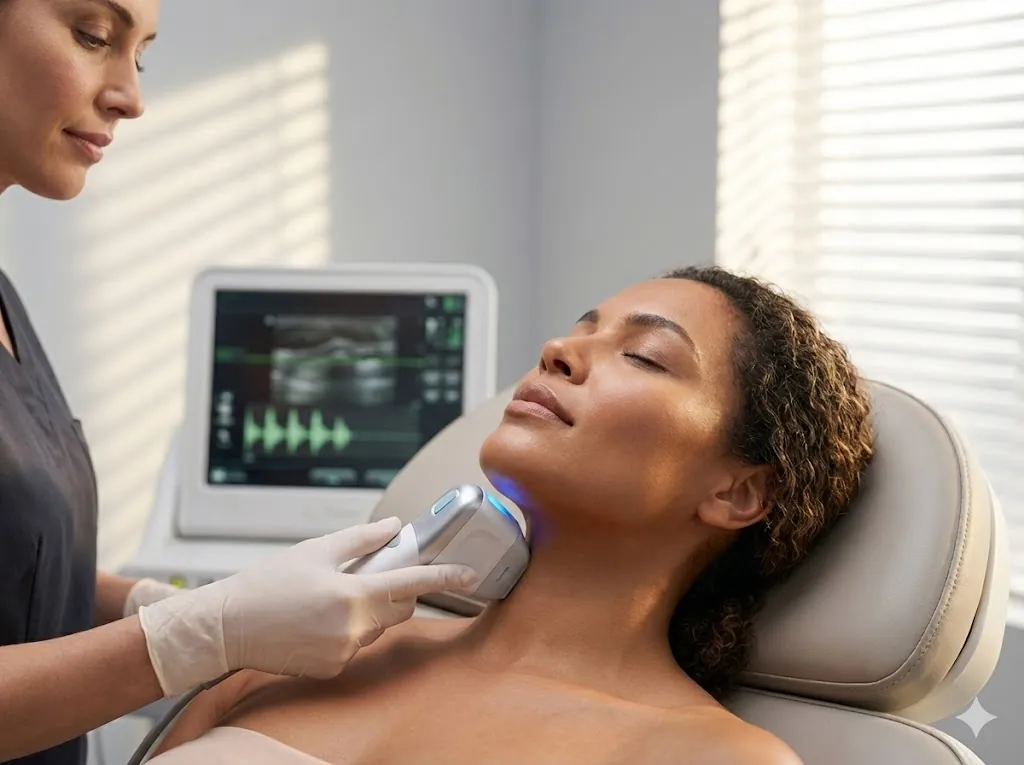
Ask for the device name and model. Ultherapy PRIME includes real-time ultrasound imaging (DeepSEE technology), so the practitioner can see the tissue layers on screen before placing energy. The general term "HIFU" covers devices that differ in design and in how they are used.
Why imaging matters: skin, fat and connective tissue thickness vary from person to person, and the same area sits at different depths on different faces. Seeing the layers gives the practitioner a visual basis for where the energy goes rather than relying on estimates.
Question 2: Who assesses me, and who performs the treatment?
Ask who does the assessment, who performs the treatment, and who handles follow-up. Ultherapy is a medical procedure, so suitability and contraindications should be confirmed by a physician.
Useful follow-ups:
- Will you review my full medical history and medications?
- Will you examine my skin, where the laxity sits and my facial structure?
- Will the person treating me follow the plan we discuss today?
Question 3: Is Ultherapy right for my concern, or would something else suit me better?
A straightforward answer explains what Ultherapy can and cannot do. It is mainly used for contour changes from mild to moderate laxity. If your main concern is volume loss or surface texture, or your laxity is more advanced, your physician may suggest another approach or explain when surgery may be more appropriate.
A common comparison is with Thermage. Ultherapy uses micro-focused ultrasound at deeper layers including the SMAS, while Thermage uses radiofrequency to heat the dermis and deeper collagen-rich layers. They work differently rather than one replacing the other. See Thermage vs Ultherapy for more.
Question 4: Which areas will you treat, and at what depths?
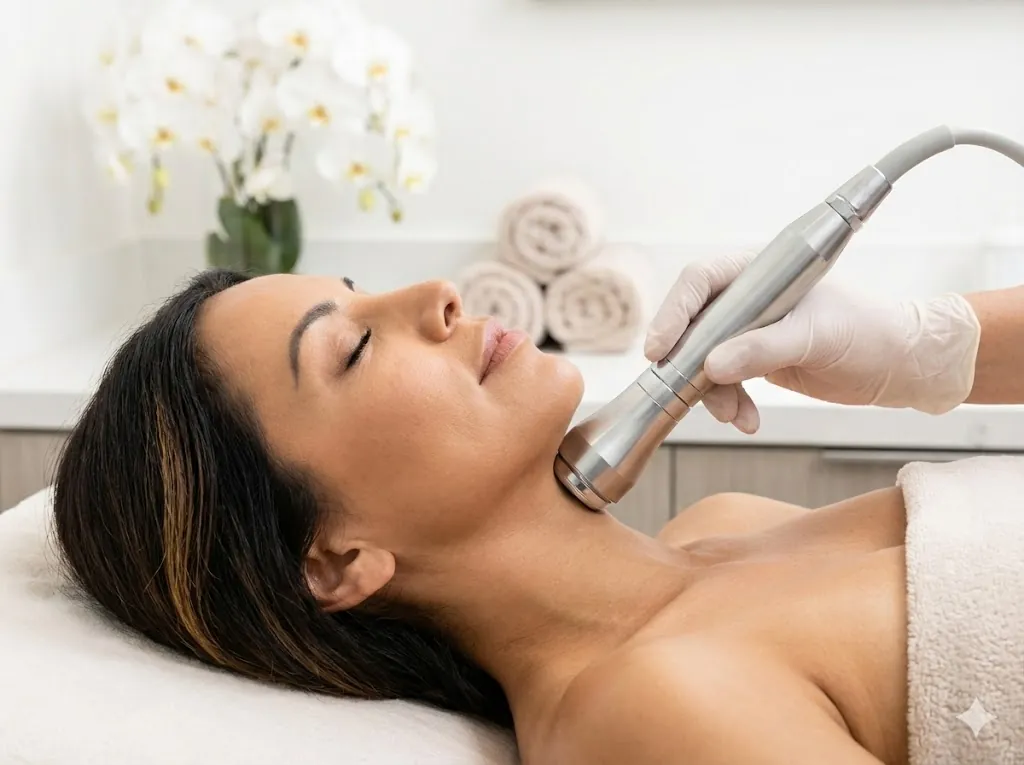
Ask which areas are in the plan (brow, mid-face, jawline, under the chin, neck, chest) and which depths will be used in each. According to the manufacturer, the standard Ultherapy transducers reach 1.5 mm, 3.0 mm and 4.5 mm, corresponding to the shallower dermis, a middle layer, and the SMAS.
Tissue thickness changes across the face. The forehead and eye area are thinner, while the jaw and neck are built differently, so a sensible plan rarely uses the same depths everywhere.
Question 5: How do you decide the number of lines?
The number of lines should come from your facial structure, where the laxity sits and the direction of change you want, not from a fixed number applied to every face. Ask roughly how many lines each area will receive, why, and how that relates to cost.
If a quote gives a single total with no breakdown by area or depth, ask for one. It also lets you compare plans fairly.
Question 6: How uncomfortable is it, and what comfort options do you offer?
Most people feel deep warmth and prickling during treatment. It varies by person, area and depth, and areas close to bone are often more noticeable. Ask what comfort measures are available and how you can signal during treatment if you need a pause or an adjustment.
Discomfort is not a measure of how well a treatment works. Your physician balances energy against comfort based on your feedback.
Question 7: What side effects should I expect, and who do I contact?
The manufacturer's labelling lists redness, swelling, tenderness, and tingling or numbness as common; bruising and welts as less common; and temporary nerve inflammation or muscle weakness as rare. Ask how long each usually lasts and exactly who to contact, and how, if something feels wrong after treatment.
For a stage-by-stage view of what to expect, our Ultherapy PRIME guide covers recovery in more detail.
Question 8: When will I notice change, how long does it last, and will I need maintenance?
According to the manufacturer, change develops gradually and typically becomes visible over two to three months. Our Ultherapy page notes that results from one treatment typically last a year or longer, depending on the individual and skin care. Ask when you should come back for review and whether and when maintenance makes sense for you.
What else is worth asking?
- How is pricing worked out? By area, by lines, or by plan, and what is included?
- What should I do beforehand? Whether any medication needs adjusting is the physician's decision; do not stop anything on your own.
- Does my history matter? Previous injectables, thread lifts or surgery can change the plan.
- When is follow-up?
Who should not have Ultherapy?
Ultherapy is generally not suitable with an open wound or severe acne in the area, metal implants in the treatment area (dental implants excepted), a pacemaker or other electronic medical device, or during pregnancy or breastfeeding. An autoimmune condition needs a physician's assessment first. If your laxity is significant and you are hoping for a surgical-level change, discuss that honestly at consultation.
How should I prepare for the consultation?
- Arrive without makeup.
- Bring a list of medications, supplements and allergies.
- Note any recent aesthetic treatments, such as injectables, thread lifts or lasers.
- Decide which areas matter most to you: brow and eyes, jawline, under the chin or neck.
- Save this list on your phone and work through it during the visit.
How are these questions answered at RAAC?
At RAAC, a medical team led by Dr. Charles Jiang, a licensed physician in British Columbia, assesses you before any plan is made, including whether Ultherapy suits you and which areas need treatment. We use Ultherapy PRIME with real-time ultrasound imaging. Lines are planned around your facial structure rather than sold as a fixed package, and pricing depends on the treatment areas and is quoted after your consultation. Consultations are available in English, Mandarin and Cantonese, and every question above is welcome.
RAAC is on No. 3 Road in Richmond, BC, a short walk from Lansdowne Station on the Canada Line.
Further reading
This article is for educational purposes only and does not constitute medical advice. Please consult with a qualified healthcare professional before undergoing any treatment.